




Dental implants are something most people have heard of but very few actually understand — and somehow still one of the most misunderstood treatments in dentistry.
Dental implants are the only tooth replacement solution that works at the bone level, preserving density and restoring full function through a process called osseointegration.
Most of what patients read before their first consultation is either too vague to be useful or too technical to make sense of. This guide cuts through all of that. It covers what implants actually are, who they work for, what the process feels like from beginning to end, and what questions are worth asking before you commit to any provider.
What Dental Implants Actually Are — and Why They Work Differently Than Other Solutions
A dental implant is a small titanium post that is placed directly into the jawbone, where it acts as an artificial root. Once it fuses with the bone — a process called osseointegration — it provides a permanent, stable foundation for a crown, bridge, or full-arch restoration.
That is what sets dental implants apart from every other tooth replacement available. Dentures sit on top of the gum. Bridges rely on the teeth next to the gap for support. Dental implants go into the bone itself — which is why they feel and function so much closer to a natural tooth.
They also do something no other restoration can: they keep the jawbone active. When a tooth is lost, the bone underneath begins to deteriorate because there is no longer a root stimulating it. Dental implants stop that process. For patients who have already been wearing dentures for years, this is often the detail that changes everything about how they think about their treatment.
Who Is Actually a Good Candidate for Dental Implants
This is one of the first questions patients ask, and the honest answer is that most healthy adults are candidates — but it depends on a few specific factors that only a proper clinical evaluation can confirm.
- Bone density is the most critical factor. Dental implants need sufficient bone in the jaw to anchor securely. Patients who have been missing teeth for a long time may have experienced some bone loss, which can sometimes be addressed through bone grafting before implant placement.
- Overall health matters too. Uncontrolled diabetes, certain medications, and heavy smoking can all affect how well the implant integrates with the bone. This does not necessarily rule implants out — it just means your dentist needs to understand your full health picture before recommending a treatment plan.
- Gum health is another factor. Active gum disease needs to be treated before implant placement. A healthy gum environment gives the implant the best possible chance of long-term success.
The only reliable way to know whether you are a candidate is a proper consultation — including a 3D CBCT scan, which gives your dentist a precise view of your bone structure, nerve positions, and sinus cavities. At Dental & Implant Centers of Colorado, this scan is part of every implant consultation.
The Different Types of Dental Implants — Matched to Your Situation
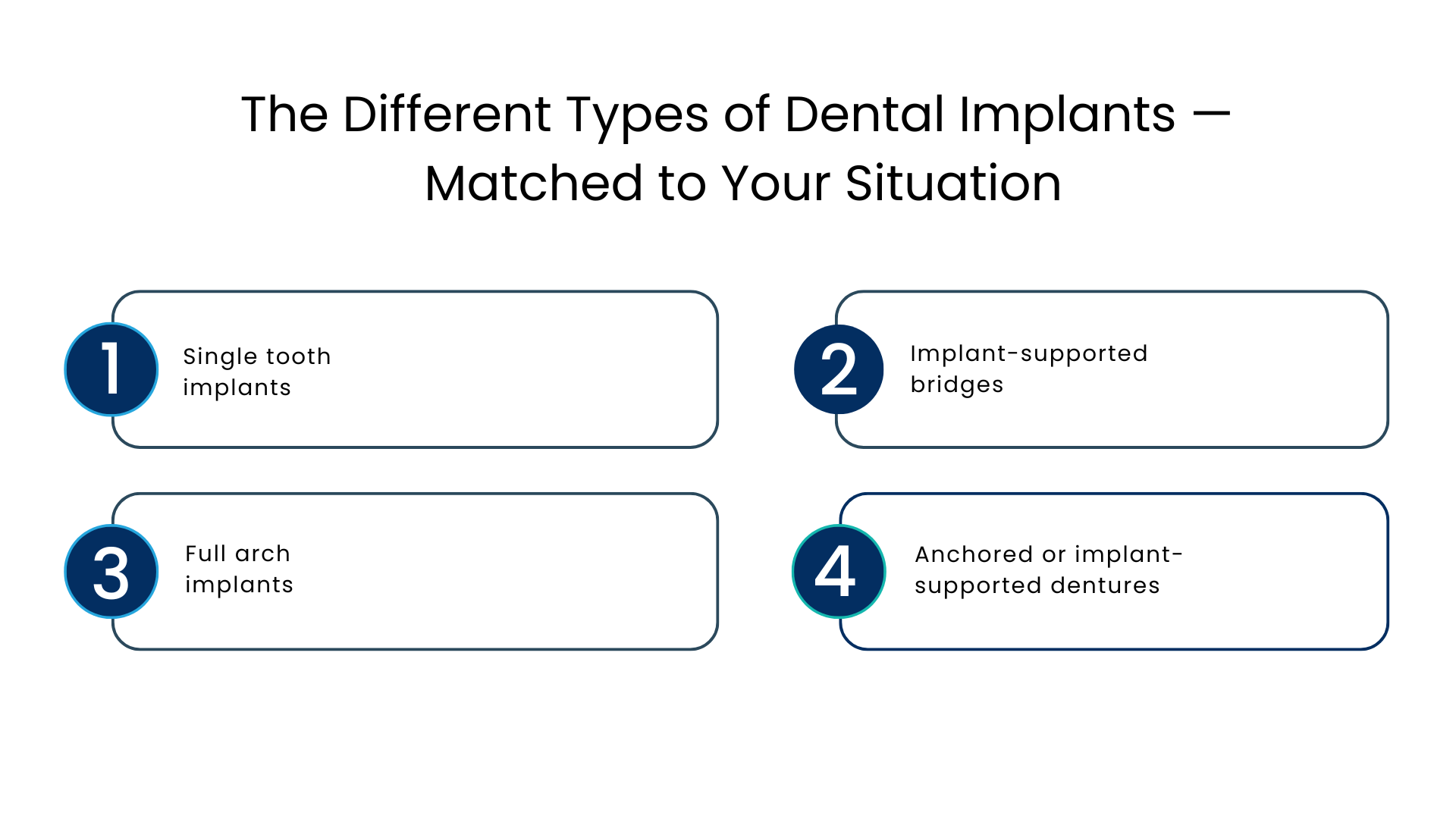
Not every patient needs the same solution. Dental implants come in several configurations depending on how many teeth are missing and where they are in the mouth.
- Single tooth implants replace one missing tooth with a single post and crown. This is the most straightforward case and the one most people picture when they first think about implants.
- Implant-supported bridges replace a section of consecutive missing teeth using two implants as anchors, with a bridge spanning the gap between them. No natural teeth are altered in the process — which is one of the key advantages over a conventional bridge.
- Full arch implants replace an entire arch — upper, lower, or both — using between four and six implants to support a full set of permanent teeth. This is sometimes referred to as All-on-4 or All-on-6, depending on the number of implants used.
- Anchored or implant-supported dentures use a small number of implants to secure a removable denture firmly in place. For patients who have been wearing conventional affordable dentures and are frustrated with fit and stability, this middle-ground solution can be genuinely life-changing. The denture snaps onto the implants and stays firmly in place throughout the day.
If you have been exploring affordable dentures and implants together, this anchored approach is often where that conversation leads — combining the cost accessibility of dentures with the security and bone-preservation benefits of implants.
What the Dental Implant Process Actually Looks Like — Step by Step?
One of the biggest barriers to getting started is simply not knowing what to expect. The process feels intimidating when described in clinical language. Here is what it actually looks like in plain terms.
- The consultation comes first. This is where everything begins, and at a good practice it should feel like a conversation — not a sales pitch. You will meet the team, have a 3D scan taken, and sit down with a prosthodontist to go through what the scan shows and what your realistic options are. You will leave with a personalised treatment plan and a clear cost breakdown before you commit to anything.
- Any preparatory work happens next. Some patients need extractions, gum treatment, or bone grafting before implant placement can begin. Not everyone does — but if you do, your dentist will explain exactly what is needed and why, before any work begins.
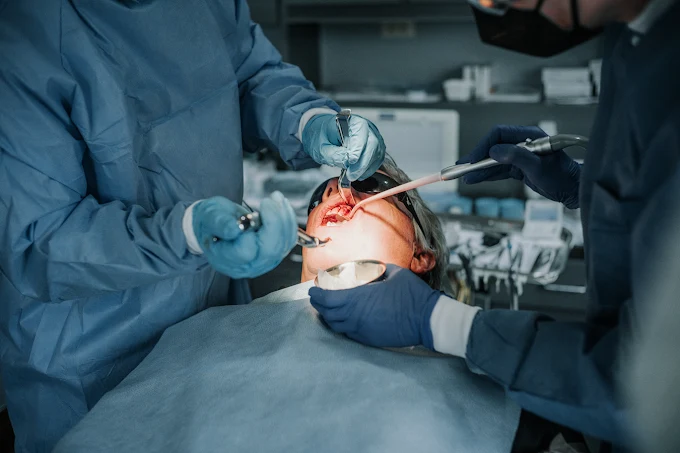
- Implant placement is a surgical procedure carried out under local anaesthetic. Most patients are surprised by how manageable it is. There is some discomfort in the days following placement, which is controlled with medication, and most people return to normal activity within a day or two.
- The healing period follows. This is the phase most people do not fully account for when they first start researching. The implant needs time to fuse with the bone — typically three to six months depending on the individual. During this time, a temporary restoration keeps your smile intact.
- The permanent restoration is placed last. Once the implant has fully integrated, your permanent crown, bridge, or full-arch prosthetic is fitted. This is the final step — and for most patients, it is the one that makes everything feel worth it.
Dental Implants and Cost — What Affects the Price and What to Ask
Cost is almost always the first concern patients bring up, and it is a fair one. Dental implant costs vary significantly depending on the number of implants needed, whether any preparatory work is required, and the type of restoration placed on top.
A single implant with a crown will cost considerably less than a full-arch solution. Bone grafting, if needed, adds to the overall cost. The materials used and the expertise of the placing dentist also factor in.
What matters more than a number quoted online is getting an exact figure based on your specific case — because two patients with very different clinical situations will have very different costs, even if they both need a dental implant.
Financing matters here. Most patients do not pay for dental implants in full upfront. Flexible payment plans, third-party financing with 0% interest periods, and in some cases Medicaid coverage for related services can make the monthly cost far more manageable than the total figure alone suggests.
Dental Implants in Denver — What Makes the Right Practice Worth Choosing
Dental implants in Denver are offered by dozens of practices — from general dentists who place the occasional implant to dedicated multi-specialty implant centres where this is the primary focus. The difference in outcomes between these two environments is significant, and it is worth understanding before you book anywhere.
The most important credential to look for is a prosthodontist — a specialist whose additional training goes specifically into the restoration and replacement of teeth. Having a board-certified prosthodontist leading the implant team, as Dr. Kaushal Dhawan leads the team at Dental & Implant Centers of Colorado, is a meaningful indicator of clinical depth that a general dental practice simply cannot match.
A multi-specialty practice also means that if you need extractions, bone grafting, gum treatment, or other preparatory work, it all happens in the same building with the same team — rather than being referred out at each stage. Your records stay in one place, your care stays consistent, and nothing falls through the gap between providers.
For patients considering dental implants near me, proximity matters — but the quality of the team matters more. A short drive to a specialist practice is almost always a better decision than choosing the nearest general dentist based on convenience alone.
What About Medicaid and Insurance Coverage for Dental Implants
This is an area where patients are often given incomplete or discouraging information, so it is worth being straightforward about it.
Standard Medicaid plans in Colorado do not typically cover dental implants as a standalone procedure. However, Medicaid does cover related dental services for eligible adults — including extractions and in some cases preparatory work — which can reduce the overall out-of-pocket cost of a broader treatment plan.
For patients who need a Medicaid dentist near me and are also interested in implants, the most practical approach is to have a consultation at a Medicaid-accepting practice, understand exactly what your plan covers, and then explore financing for the portion that is not covered.
Dental & Implant Centers of Colorado accepts Medicaid at all three locations and works with patients to understand exactly what their coverage includes before recommending any treatment.
Private insurance coverage for dental implants varies considerably by plan — some plans contribute toward the crown or restoration even when the implant itself is not covered. This is something the team verifies on your behalf before your first appointment.
How Dental Implants Compare to Other Treatments — Including Dentures and Veneers
Patients often arrive at an implant consultation having considered — or already tried — other solutions. Here is how dental implants sit alongside the most common alternatives.
Affordable dentures remain the fastest and most budget-accessible path to a full smile, particularly for patients who have lost most or all of their teeth. The trade-off is stability, bone preservation, and long-term fit. Dentures need to be refitted over time as the jaw changes shape, and they do not stimulate the bone the way implants do. That said, combining affordable dentures and implants — through an anchored or snap-in denture — often gives patients the best of both at a cost that sits between the two treatments.
Dental veneers are a cosmetic solution rather than a restorative one. They are applied to the surface of existing teeth to improve appearance — colour, shape, and symmetry. Dental veneers do not replace missing teeth and are not interchangeable with implants. Patients who ask about veneers alongside implants are usually addressing two separate concerns: replacing what is missing and improving the appearance of what remains. Both can be part of the same treatment plan at a multi-specialty practice.
Bridges are an alternative to a single implant for replacing one or a few missing teeth. The key difference is that a bridge requires the adjacent healthy teeth to be ground down to serve as anchors — permanently altering teeth that did not need treatment. Dental implants leave surrounding teeth completely untouched.
5 Questions to Ask Before You Commit to Any Implant Provider
Not all consultations are created equal. Here is what to ask before you agree to anything.
- Who is placing the implants — a general dentist or a prosthodontist? The training difference is significant. A prosthodontist has completed additional specialised training beyond dental school specifically in tooth restoration and replacement.
- What does the quoted price actually include? Ask whether the cost covers extractions, bone grafting if needed, the implant post, the abutment, and the final crown — or whether any of those are quoted separately.
- What imaging do you use during the consultation? A 3D CBCT scan is the clinical standard for implant planning. A practice that relies on standard X-rays alone is working with less information than the procedure requires.
- What financing options are available, and what would my actual monthly payment be? A trustworthy practice gives you a real number before you commit — not a range, not a rough estimate.
- What happens if something goes wrong after placement? Ask about the practice’s policy on follow-up care and what is covered if a complication arises after the procedure.
Conclusion
Dental implants are not just a dental procedure — for most patients, they are the moment things start to feel normal again. Eating without thinking twice, smiling without covering your mouth, speaking without worrying. That outcome is more accessible than most people assume before they walk through the door.
The right starting point is a conversation — one that costs nothing and commits you to nothing. At Dental & Implant Centers of Colorado, every consultation includes a 3D scan, a personalised treatment plan, and a clear cost breakdown before any decision is made. No pressure, no rush, no surprises.
Led by board-certified prosthodontist Dr. Kaushal Dhawan, our multi-specialty team serves patients across Cherry Creek/Denver, Boulder, and Westminster/Broomfield. Whether you are weighing dental implants against affordable dentures, exploring affordable dentures and implants combined, or simply ready to get a straight answer about dental implants in Denver — we are here for that conversation. Free consultations, 0% financing, and Medicaid acceptance at all three locations. Call us or schedule online whenever you are ready.
Frequently Asked Questions
Are dental implants painful?
The placement procedure is done under local anaesthetic, so most patients feel pressure rather than pain during the procedure itself. The days following placement involve some soreness and swelling, which is managed with medication. Most patients describe the recovery as far more manageable than they expected going in.
How long do dental implants last?
With good oral hygiene and regular dental visits, dental implants can last 15 years or significantly longer. The implant post itself is designed to be a permanent fixture. The crown or restoration placed on top may need to be replaced after 10 to 15 years depending on wear.
Am I too old for dental implants?
Age alone is not a disqualifying factor. Dental implants are routinely placed in patients well into their 70s and 80s. What matters is overall health and sufficient bone density — both of which are assessed properly at the consultation.
Can I get dental implants near me if I have gum disease?
Active gum disease needs to be treated before implant placement — but it does not permanently rule implants out. Many patients successfully receive implants after their gum health has been fully restored. Your dentist will assess and sequence the treatment accordingly.
What is the difference between dental implants and dental veneers?
Dental implants replace missing teeth by integrating with the jawbone and supporting a crown, bridge, or full restoration. Dental veneers are thin shells applied to the front surface of existing teeth to improve their appearance — colour, shape, and alignment. They serve completely different purposes, and some patients benefit from both as part of a wider smile plan.
Can I get affordable dentures and implants together?
Yes — implant-supported or anchored dentures are one of the most common treatment paths for patients replacing multiple or all of their teeth. A small number of implants secure the denture firmly in place, providing far greater stability than a conventional removable denture. The cost sits between standard affordable dentures and a fully fixed full-arch implant restoration.
What happens if I do not have enough bone for dental implants?
If a 3D scan reveals insufficient bone, bone grafting can build up the area before implant placement. This adds time and some additional cost to the overall treatment — but it opens dental implants up as a realistic path for patients who might otherwise be told they do not qualify.
Does a Medicaid dentist near me offer dental implants?
Standard Medicaid plans do not typically cover dental implants directly. However, a Medicaid-accepting practice can apply coverage toward related services — extractions, preparatory procedures — and help you finance the implant cost separately. Dental & Implant Centers of Colorado accepts Medicaid at all three locations and works with each patient individually to find the most affordable path forward.
How do I know if my dental implant consultation is trustworthy?
A trustworthy consultation involves a 3D scan, a personalised treatment plan, a firm and itemised cost breakdown, and absolutely no pressure to commit on the day. If a practice quotes you a price before examining your specific case — or skips the imaging entirely — those are signals worth taking seriously before you agree to anything.
