




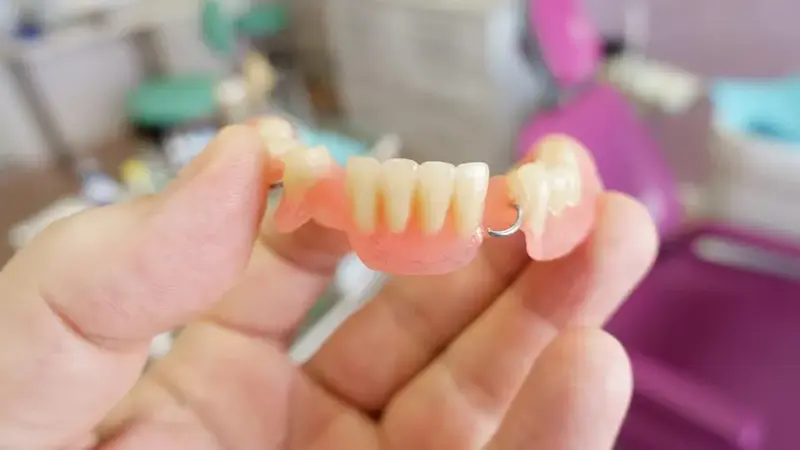
Not all denture options work the same way, and not all dental practices are equally equipped to figure out which one is right for your specific case. Full dentures, partial dentures, and implant-supported solutions each serve a different clinical purpose and the difference between a well-fitted set and a poorly fitted one is felt every single day. Here is what each option actually involves and what to look for in the specialist you choose to do it.
What a Denture Specialist Actually Does and Why It Matters?
The title matters more than most patients realise when they first start looking.
A denture specialist – specifically a prosthodontist – is a dentist who has completed several additional years of advanced clinical training beyond dental school, focused entirely on the restoration and replacement of teeth. That training covers the full spectrum of tooth replacement: full dentures, partial dentures, implant-supported restorations, crowns, bridges, and full mouth reconstruction.
A general dentist can offer dentures. Many do, and some do it well. But the depth of training between a general dentist offering dentures as one of many services and a prosthodontist whose entire clinical focus is tooth replacement is significant particularly when the case involves complexity, prior bone loss, a difficult bite, or a patient who has had poorly fitting dentures from a previous provider.
At Dental & Implant Centers of Colorado, every denture case is overseen by Dr. Kaushal Dhawan, a board-certified prosthodontist and the founder of the practice. Patients are not seen by a rotating roster of general dentists. They work with a specialist whose entire training was built around getting this right.
The practical difference shows up most clearly in fit. A denture that fits well changes how you eat, how you speak, and how you carry yourself. A denture that fits poorly even slightly becomes a daily source of frustration. Getting the fit right the first time is what specialist training is designed to ensure.
Full Dentures: Who They Are For and What to Expect
Full dentures, also called complete dentures, replace an entire arch of missing teeth upper, lower, or both. They rest directly on the gum tissue and are held in place by suction, the natural contours of the mouth, and in some cases denture adhesive.
They are the right fit for patients who have lost all or most of their teeth in one or both arches, and they remain the most accessible entry point for full tooth replacement in terms of upfront cost and treatment timeline.
What the process involves:
The fitting process for full dentures typically spans several appointments. Impressions are taken of the gums, measurements are made of the jaw relationship, and trial dentures are assessed for fit and appearance before the final set is completed. In some cases particularly when teeth need to be extracted first – immediate dentures can be placed on the same day as extractions, giving the patient a functioning set while the gums heal and the permanent dentures are made.
What patients find after fitting:
There is an adjustment period. Eating certain foods takes practice at first, and some patients notice changes in how they speak during the first few weeks. Most people adapt well within a month or two. The most important thing to understand going in is that conventional full dentures will need to be refitted or replaced over time, typically every 5 to 10 years because the jawbone changes shape after tooth loss, which gradually affects how the denture sits.
Affordable full dentures cost at DICC are full dentures made with quality materials and fitted with the same level of clinical care as any other restorative treatment. Affordable does not mean rushed, and it does not mean compromise on materials. It means transparent pricing, in-house financing, and a process that is designed to give patients a result they are genuinely happy with.
Partial Dentures: the Often-Overlooked Middle Ground
Partial dentures replace one or more missing teeth when some natural teeth remain. They are held in place by clasps that attach to the remaining teeth, and they are removed for cleaning.
They are frequently underestimated patients often assume that once they are missing enough teeth, full dentures are the only path. That is rarely the case. A well-made partial denture can restore significant function and appearance while preserving the remaining natural teeth, which continue to provide stability and prevent the bone from deteriorating as rapidly.
Who partial dentures are suited for:
- Patients missing several teeth in one arch with healthy remaining teeth
- Patients who are not candidates for implants at this stage
- Patients who need a more affordable interim solution while planning for a longer-term restoration
- Patients on Medicaid whose plan covers partial dentures for the missing teeth in their case
Affordable full dentures near me – people often think of full dentures, but partial dentures are equally important in the affordable full dentures category. A partial denture that fits well costs considerably less than a full implant-supported restoration, and for the right patient it delivers function and aesthetics that are genuinely comparable.
Implant-Supported Dentures – When Stability Becomes the Priority
This is where the conversation often shifts for patients who have been wearing conventional dentures for a while. Implant-supported dentures – also called anchored dentures or snap-in dentures – use a small number of dental implants placed in the jawbone to secure the denture firmly in place throughout the day.
The denture itself is similar in appearance to a conventional full denture, but the difference in daily experience is significant. It does not slip. It does not require adhesive. Patients can eat with confidence and speak without the background anxiety that comes with a denture that moves unpredictably.
The implants used to anchor the denture also do something no conventional denture can: they stimulate the jawbone and slow the deterioration that occurs after tooth loss. This means the fit of an implant-supported denture remains more stable over time than a conventional one, reducing the need for frequent refitting.
How implant-supported dentures actually feel different in real life?
Most patients who upgrade from conventional affordable full dentures to implant-supported ones describe the change in very practical terms. They stop thinking about their dentures during meals. They stop reaching for adhesive in the morning. They stop sitting slightly away from the table at family dinners because they are not confident about what might happen if they bite into something unexpected.
It sounds small until you have been living with the alternative.
The stability difference comes down to what is anchoring the denture. A conventional full denture relies on suction and the contour of the gums both of which change over time as the jawbone gradually shrinks after tooth loss. An implant-supported denture is physically attached to the jaw itself, which means the fit stays consistent far longer and the daily experience stays predictably comfortable.
The bone preservation benefit is just as important, even if it is less immediately felt. Every year without a tooth root stimulating the jaw, the bone in that area continues to shrink. With conventional dentures, that process continues unchecked, which is why dentures need refitting over time and why patients who have worn them for many years sometimes find their face shape has gradually changed. Implants interrupt that process even two or four implants used to anchor a denture make a meaningful difference to how the bone holds up over the following decade.
For patients weighing the cost of implant-supported dentures against conventional affordable full dentures near me, the honest framing is this: the upfront cost is higher, but the long-term cost in refittings, replacements, adhesive, and the compounding effects of bone loss often makes implant-supported the more economical choice over a ten to fifteen year horizon.
The patients who benefit most from implant-supported dentures are those who have been wearing conventional affordable full dentures and find them functional but uncomfortable slipping during meals, requiring adhesive throughout the day, or needing frequent refitting. For these patients, the upgrade to anchored dentures changes the daily experience considerably without the full cost of a fixed implant restoration.
Denture Specialist and Dental Implants – When the Conversation Gets Bigger
Some patients come in asking about dentures and walk out with a broader plan that includes dental implants. That’s not upselling. That’s what happens when a specialist looks at the full picture and realizes implants are genuinely the better option for that person.
The situation that comes up most often: a patient who’s been missing teeth long enough that they’ve lost significant bone. Conventional dentures can still work, but the fit is going to be off from day one – and it’ll get worse over time, because there isn’t enough bone structure underneath to hold them properly. In those cases, a few implants used to anchor the denture makes a real difference to how it performs years down the line.
Dr. Dhawan has training in both dentures and implants, which means both conversations happen in the same room. No second specialist, no referral, no navigating a handoff. The full picture gets assessed together, and the treatment plan reflects what actually makes sense for that patient – not just whatever a single-specialty practice happens to offer.
When the Conversation Is About More Than Just Replacing Teeth
Sometimes patients come in expecting to discuss dentures and discover during the consultation that not everything needs replacing – some teeth are fine structurally, they just don’t look the way the patient wants them to.
Dental veneers are for teeth that are still intact but discoloured, chipped, or shaped in a way someone’s unhappy with. They’re thin porcelain shells bonded to the front of existing teeth. They can change the appearance of a smile significantly without removing anything.
For someone getting partial dentures or implants, veneers can be part of the same plan improving what remains while replacing what’s gone. When both sides are handled in the same practice, the veneers and the replacement teeth are designed to look like they belong together from the beginning.
What to Do When an Emergency Comes Before Any of This
Not every patient reaches the denture conversation through research. Some get there after something breaks – a tooth that cracks beyond saving, an abscess that leads to an extraction, an accident. When that happens, the first thing that matters is getting care quickly.
DICC offers same-day emergency appointments and a 24/7 helpline for after-hours situations. The team handles what’s immediately wrong extraction, pain, stabilisation and starts the longer-term conversation in that same visit or the one right after.
Starting the denture conversation early matters more than people realise. What gets decided at the extraction stage can affect which replacement options are available later. A specialist who’s involved from the beginning gets a better result than one who’s handed a situation that’s already been partly decided.
If you’ve been putting this off – because of cost, because you weren’t sure what to expect, because you didn’t know where to start – here’s what actually happens at a DICC consultation.
You sit with a specialist. You get a proper clinical assessment. You leave knowing which option fits your situation, what it costs, what the monthly payment looks like, and what the timeline is from start to finish. The consultation is free. Nobody’s going to push you to commit on the day.
FAQs
What’s the difference between a denture specialist and a regular dentist?
A denture specialist – usually a prosthodontist – has several years of additional training beyond dental school, focused specifically on tooth replacement and restoration. A general dentist offers dentures among many other services. For anything complex, or for someone who’s had problems with fit before, the specialist is the more appropriate choice.
How long does getting dentures take?
It depends on the type and whether extractions are needed first. Standard full or partial dentures usually take several weeks across a few appointments, from impressions to final fitting. Immediate dentures can be placed the same day as extractions. Implant-supported dentures take longer, often several months – because the implants need time to fuse with the bone before the denture goes on top.
Are affordable full dentures actually decent quality?
Quality comes down to materials and skill, not price. Affordable full dentures at a reputable practice use the same materials as more expensive ones. What makes them affordable is transparent pricing and in-house financing not cutting corners on care.
What are implant-supported dentures, and are they worth it?
They use a small number of implants to anchor a full denture so it doesn’t move. No slipping, no adhesive, and the bone underneath stays healthier over time. For people frustrated with conventional dentures shifting around, the difference is significant. Whether it’s worth the extra cost depends on the person’s situation. That’s a conversation worth having at a consultation.
Can I get same-day dentures?
In some cases, yes when extractions and denture placement are coordinated in the same appointment. Not every situation qualifies, and the same-day denture is usually a temporary one while healing happens. Ask at your consultation whether it’s possible for you.
What implant options are available alongside dentures?
At DICC: single implants, implant-supported bridges, full arch restorations, and anchored dentures alongside conventional denture services. Having everything available in one place means the plan is built with all the options in view from the start.
What are veneers, and how do they relate to dentures?
Veneers improve the appearance of teeth that are already there they don’t replace missing ones. For someone planning partial dentures or implants, veneers can be part of the overall plan, improving what remains so the whole smile looks consistent.
What if I need emergency care before I can plan my dentures?
Call a practice with real same-day availability. DICC has a 24/7 helpline and sees emergency patients quickly. The immediate problem gets sorted, and the longer-term planning starts as soon as things are stable.
How do I know which option is right for me?
You won’t know for certain until a specialist assesses your bone health, your remaining teeth, your bite, and your overall oral health. What you can do is book a free consultation and get a clear, honest recommendation without pressure and without guesswork.
