




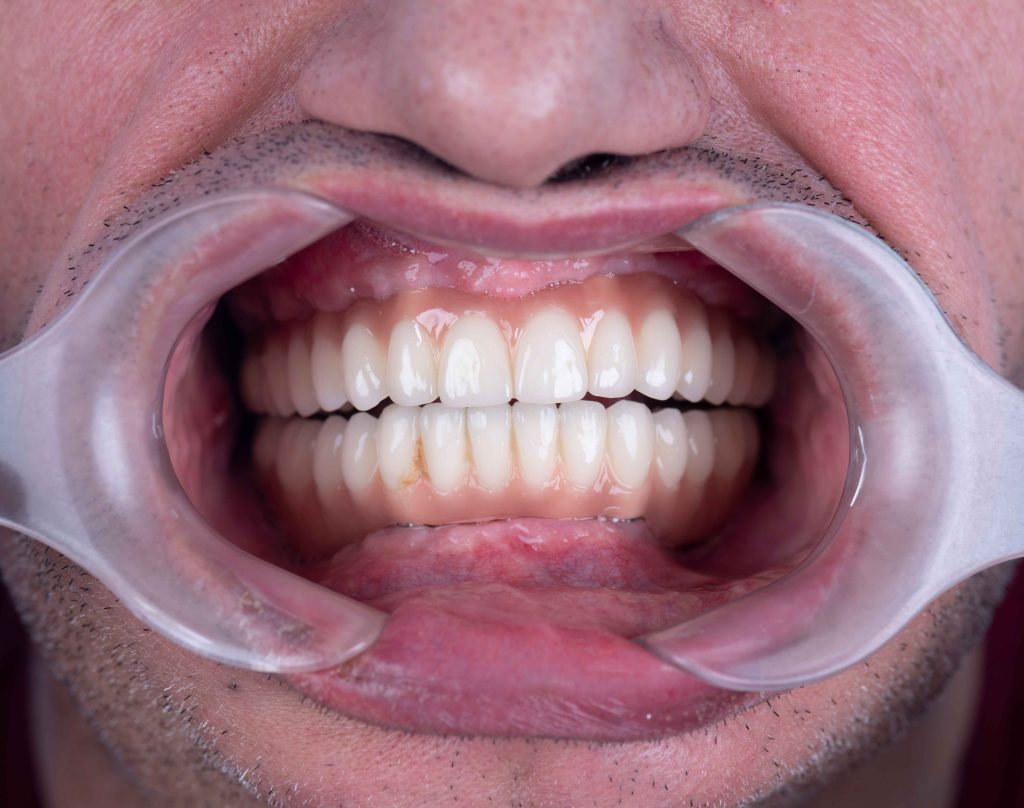
The ability to share a meal with friends or laugh without hesitation is a simple joy that can be lost with failing or missing teeth. Many people with traditional dentures avoid certain foods and feel anxious in social situations. Full mouth implants are about more than just dental hardware; they are about getting your life back. Because they are permanently fixed in place, they restore your ability to eat, speak, and smile with complete confidence. This treatment is a true transformation, allowing you to forget about your teeth and focus on living your life to the fullest again.
It isn’t easy to lose the majority or even all of your teeth. It may damage your self-esteem and cause you to find it hard to eat or speak properly. It is critical to make you smile and to be able to open your mouth like a regular person again. Full mouth dental implants are one of the most effective methods to resolve the problem of severe tooth loss. These dental implants have the potential to transform your teeth and your appearance over a long period of time, which is more than ordinary dentures.
Why Choose Full Mouth Implants Over Dentures?
When you’re considering a full smile restoration, traditional dentures and full mouth implants are two of the most common paths. While dentures can be a quick fix, dental implants offer a permanent, more natural solution with benefits that go far beyond just aesthetics. They are designed to function just like your natural teeth, integrating directly with your jawbone to provide unparalleled stability and strength. This fundamental difference is why so many people choose implants as a long-term investment in their health and confidence. Instead of dealing with messy adhesives or worrying about slippage, you can eat, speak, and smile as you normally would, without a second thought.
Prevents Jawbone Loss
One of the most significant, yet often overlooked, consequences of tooth loss is the deterioration of the jawbone. Without tooth roots to stimulate it, the bone begins to shrink, which can lead to a sunken or “collapsed” facial appearance over time. Dentures sit on top of the gums and do nothing to stop this process. In contrast, dental implants act as artificial tooth roots. The titanium posts are surgically placed into the jaw, where they fuse with the bone in a process called osseointegration. This bond provides the necessary stimulation to keep your jawbone healthy and strong, preserving your natural facial structure for years to come.
Superior Durability and Lifespan
If you’re looking for a lasting solution, the longevity of dental implants is hard to beat. With proper care and regular dental check-ups, implants can last a lifetime—often 25 years or more. This makes them a truly permanent fix for missing teeth. Traditional dentures, on the other hand, typically need to be relined, repaired, or completely replaced every five to seven years due to wear and tear and the changing shape of your jaw. Choosing implants means you can avoid the recurring costs and appointments associated with denture maintenance, giving you a reliable and beautiful smile that stands the test of time.
Restores Full Chewing Ability
One of the greatest joys in life is sharing a meal with loved ones, but that can be difficult with uncomfortable or unstable dentures. Many denture-wearers have to avoid hard, crunchy, or chewy foods. Full mouth implants restore your ability to bite and chew naturally, allowing you to enjoy all your favorite foods without worry. Because the implants are anchored securely in your jawbone, they provide a biting force that is nearly identical to that of natural teeth. This means you can eat steak, apples, nuts, and more with complete confidence, improving your nutrition and overall quality of life.
Improves Stability and Speech
Have you ever felt self-conscious about your dentures slipping while you talk or laugh? It’s a common concern that can make social situations stressful. Full mouth implants eliminate this problem entirely. Since they are fixed in place and function like your own teeth, they won’t move around, click, or shift. This stability allows you to speak clearly and confidently without mumbling or slurring your words. You can feel secure knowing your smile looks and feels completely natural, whether you’re giving a presentation at work or catching up with friends over coffee. The result is a boost in self-esteem that can be truly life-changing.
Are You a Good Candidate for Full Mouth Implants?
The idea of a full smile transformation is exciting, but it’s natural to wonder if you’re the right fit for the procedure. The good news is that advancements in dental technology have made full mouth implants a viable option for a wide range of people. The primary requirements are having sufficient jawbone density to support the implants and being in good overall health. Even if you’ve experienced some bone loss, procedures like bone grafting can often make implants possible. The first step is always a thorough consultation with a dental professional who can assess your unique situation and create a personalized treatment plan.
Who Qualifies for Treatment?
Generally, the ideal candidate for full mouth implants is someone who has lost most or all of their teeth and is looking for a permanent, stable alternative to dentures. It’s also important to be in good general health, as certain chronic conditions like uncontrolled diabetes or heart disease may affect the healing process. Being a non-smoker is also highly beneficial, as smoking can increase the risk of implant failure. Ultimately, the best way to know for sure is to schedule a consultation. An experienced implant specialist can evaluate your oral health, review your medical history, and use advanced imaging to determine if this treatment is right for you.
Success Rate and Potential Risks
Dental implants have an outstanding track record, with studies showing a success rate of up to 98%. This makes them one of the most reliable and predictable procedures in modern dentistry. However, like any surgical procedure, there are potential risks, though they are rare. These can include infection at the implant site, nerve sensitivity, or implant failure, which is sometimes linked to smoking or poor oral hygiene. Choosing a highly skilled and experienced dental team is the best way to minimize these risks and ensure a smooth, successful outcome. Your dentist will discuss all potential complications with you beforehand so you can make a fully informed decision.
Understanding Your Implant Options
When you decide to move forward with full mouth implants, you’ll find there isn’t a one-size-fits-all solution. Your dentist will recommend a specific approach based on your oral health, budget, and personal goals. The main variables are the type of implant system used to support your new teeth and the materials used to craft your final restoration. Understanding these choices will help you feel more confident as you work with your dental team to design your new smile. From fixed arches to implant-supported dentures, there are several excellent services available to restore your smile’s function and appearance.
Types of Full Mouth Implants
The structure of your full mouth restoration depends on how many implants are used and how your new set of teeth attaches to them. Each option offers a different balance of stability, convenience, and cost. Your dentist will help you determine which system is the best match for your jawbone structure and lifestyle.
Fixed Full-Arch Implants
Often referred to as an “All-on-4” or “All-on-6” solution, this option uses four to six strategically placed implants to support a full arch of prosthetic teeth. This bridge is permanently secured to the implants and can only be removed by your dentist. It offers the most natural look and feel, with no bulky plastic covering the roof of your mouth. You simply brush and care for them just like you would natural teeth, making it a popular choice for those seeking a seamless, hassle-free smile.
Implant-Supported Dentures
Also known as anchored dentures or overdentures, this option provides a great middle ground between traditional dentures and fixed implants. A small number of implants (typically two to four) are placed in the jaw, and a custom denture is designed to snap securely onto them. This prevents the slipping and shifting common with conventional dentures, greatly improving chewing ability and confidence. The denture is still removable, which makes it easy to clean at home.
Individual Implants
For patients who have several missing teeth but still retain some healthy ones, replacing each missing tooth with its own individual implant and crown is another possibility. This approach is the most similar to having a full set of natural teeth, as each tooth is an independent unit. While this method provides excellent results, it is also the most complex and costly for a full mouth restoration, as it requires the most implants and extensive surgical work.
Materials Used for Your New Teeth
The final piece of the puzzle is the material used to create your beautiful new teeth. The choice of material affects not only the appearance of your smile but also its durability and long-term maintenance. Your dentist will guide you toward the best option based on your biting force and aesthetic preferences.
Full Zirconia
Zirconia is a premium, tooth-colored ceramic that is incredibly strong, durable, and resistant to chipping and staining. A full zirconia bridge is milled from a solid block of the material, making it exceptionally robust and lifelike. It’s also very easy to clean and gentle on opposing natural teeth. Many patients choose zirconia for its beautiful, natural-looking aesthetics and long-lasting performance, which you can see in many before and after galleries.
Titanium Frame with Zirconia Overlay
For maximum strength, some restorations are built with a titanium frame that is then layered with zirconia or porcelain. This hybrid approach combines the near-unbreakable durability of a metal substructure with the beautiful aesthetics of ceramic. It’s an excellent choice for patients who may have a particularly strong bite or a history of grinding their teeth, offering the ultimate peace of mind against fractures or breaks.
Metal Bar with Resin or Acrylic
A more traditional and budget-friendly option involves a metal bar (often titanium or cobalt-chromium) that supports a set of acrylic or composite resin teeth. While this material is not as durable or stain-resistant as zirconia, it offers good aesthetics and function. It is often used for the temporary restoration you wear while your implants heal but can also be fabricated as a more affordable long-term solution.
Initial Consultation and Assessment
In preliminary consultation and assessment, it is necessary to establish a dialogue with the client and identify his biological, psychological, and social issues during the first consultation and evaluation.
- In the first consultation and assessment, the conversation with a client needs to be determined, and their biological, psychological, and social problems should be identified.
- The initial move is a visit to the ground. Your dentist will examine your mouth, discuss your medical history, and X-ray or 3-D scan your jaw. This will indicate whether your bone is strong enough for implants. In some cases, bone grafting may be recommended to provide a good base.
- You can discuss what you desire during this visit, such as what you would like your new smile to be like and what kind of implants you require. The dental clinics boast of personalised care to ensure that each patient feels equipped and relaxed prior to the procedure.
The Implant Procedure
When you have checked yourself, the surgical period starts. Dental implants Denver mean that titanium posts are inserted into your jawbone, where they become the roots of your new teeth. The quantity of implants required is dependent on the nature of the restoration and your oral structure. After placement, a multiple-month period of healing is needed. During this period, the implants fuse with the bone, forming a firm and sturdy base. Temporary dentures can be offered so that you can keep smiling as you heal. This process is termed integration and is vital to the long-term success of full-mouth dental implants.
The Three Core Components of a Dental Implant
To understand how full mouth implants work, it helps to know what they’re made of. A complete dental implant system consists of three core parts working together to replicate a natural tooth. First is the implant itself, which is a small, screw-like post typically made of titanium. This is the part that’s surgically placed into your jawbone to act as a new tooth root. Next is the abutment, a small connector piece that attaches to the top of the implant post, sitting just above the gumline. Finally, you have the restoration—the beautiful, custom-made artificial teeth (like a crown or bridge) that are secured to the abutments. This three-part structure is what makes implants so stable and lifelike.
The Healing Phase: Osseointegration
After your implants are placed, your body begins a remarkable process called osseointegration. This is just a technical term for the implant post naturally fusing with your jawbone. This bonding process is what creates the incredibly strong and stable foundation that makes implants a long-term solution. According to the American Academy of Periodontology, this healing phase typically takes between two to six months. While it requires patience, allowing this fusion to complete is absolutely essential for the durability and success of your new smile. During this time, you won’t be left without teeth; your dentist will provide a temporary restoration so you can eat and smile with confidence while you heal.
Clarifying “Teeth in a Day”
You’ve probably seen ads for “Teeth in a Day,” which can be a bit misleading. While it’s an appealing concept, it doesn’t mean you walk out with your final, permanent teeth on the same day as your surgery. What it usually means is that a temporary, functional set of teeth can be attached to your new implants right after they are placed. This allows you to leave the office with a full smile. However, your jaw still needs several months to heal and for the osseointegration process to complete. Your permanent, custom-crafted teeth are designed and placed only after your jaw has fully healed, ensuring the best fit and the most successful outcomes for your investment.
Placement of the Final Restoration
After the integration process, your dentist will install customised prosthetic teeth. These teeth are designed and colored to appear just like your natural teeth, enabling you to have a natural and working smile. Most patients find that dental implants Denver allow them to eat, talk, and smile without any complications that dentures fail to provide. The dentist will also prescribe the way to take care of the implants. You can brush them, look into their mouths frequently, and feed them soft or stickless food in order to keep them in fine condition.
Cost and Financing for Full Mouth Implants
Let’s talk about the investment. Getting a full set of dental implants is a life-changing decision, and understanding the financial side is a crucial part of the process. The cost can vary quite a bit because every patient’s situation is unique. Think of it less like buying a product off the shelf and more like a custom-tailored solution for your health and confidence. The final price tag depends on the complexity of your case, the materials you choose, and the specific treatment plan designed just for you. Our goal is to provide complete transparency so you can feel confident and prepared as you take this step toward a brand-new smile. We’ll walk you through every component of the cost and help you find a financial path that works for you.
Average Cost of Treatment
When you start researching the cost of full mouth dental implants, you’ll see a wide range of prices, and it’s helpful to understand what those numbers represent. For a full mouth reconstruction where every single tooth is replaced with an individual implant, the investment can range from $60,000 to $90,000. However, a much more common and affordable solution is an implant-supported denture, also known as a full arch restoration. This approach uses a few strategically placed implants to secure a full set of beautiful, permanent teeth. For a complete set covering both the upper and lower jaws, this option typically ranges from $24,000 to $50,000, offering a stable and stunning result without the need for an implant in every single empty space.
Full Arch vs. Individual Implants
The primary difference in cost comes down to the number of implants used and the overall complexity of the surgery. Replacing each tooth individually is an intensive process that requires more materials, more surgical time, and a longer recovery period. In contrast, a full arch restoration, such as an All-on-4 or All-on-6 procedure, supports an entire row of teeth on just four to six implants per jaw. This approach is not only more cost-effective but also less invasive and often allows for a quicker healing process. During your consultation, we can explore which method is the best fit for your jawbone health, budget, and ultimate smile goals.
Factors That Influence the Final Price
The total cost of your treatment is a sum of several essential parts, all working together to create a successful and lasting outcome. Your treatment plan is completely personalized, and the final price reflects that. The journey begins with a comprehensive dental exam, which includes advanced 3D imaging to give us a precise map of your jawbone structure. The cost also covers any necessary tooth extractions, the surgical placement of the titanium implants, the abutments that connect the implants to your new teeth, and finally, the creation and fitting of your custom-designed, permanent crowns or bridge. Each step is a critical piece of the puzzle in rebuilding your smile from the foundation up.
Additional Procedures That May Affect Cost
Sometimes, your jaw needs a little preparation before it’s ready to support implants. If you’ve been missing teeth for a while, you may have experienced some natural bone loss in that area. In these situations, a bone graft might be necessary to build up the jaw and create a solid, dense foundation for the implants to integrate with. For implants in the upper jaw, a sinus lift may be required to add bone height, ensuring the implants are secure without interfering with the sinus cavity. These preparatory procedures are vital for the long-term success of your new smile, and while they add to the overall cost, they ensure your investment is built to last.
Insurance and Payment Options
Working through the financial details of dental implants can feel like a lot, but you don’t have to figure it out on your own. While many dental insurance plans offer some coverage for implants, they often don’t pay for the entire procedure, which means some out-of-pocket investment is common. The good news is there are many ways to make your new smile affordable. At Dental & Implant Centers of Colorado, we are committed to helping you understand your benefits and find a solution that fits your budget. We can help you explore various financing and insurance options, including third-party financing partners that offer flexible monthly payment plans. Our team is here to handle the paperwork and answer all your questions so you can focus on the exciting journey ahead.
Recovery and Lifestyle Adjustments
Full-mouth implants take time to heal, yet you can cope with it. The first several days would be attended by slight pain, rash, or bruising.
- In many cases, most individuals would resume normalcy in about a week, even though it might take several months to recover.
- At this time, it is important to eat soft foods and take proper care of them. Following the advice of your dentist will help you get well.
- You will feel better, and your mouth will be better as time passes. You can consume a greater variety of foods. This new smile might be natural and everlasting.
Conclusion Deciding to use full mouth dental implants is a significant move for an individual who has lost most of their teeth. Professional care and correct upkeep can ensure these implants give a natural, durable, and complete functional smile. The dental implant specialists of DICC Colorado can assure patients with questions about seeking solutions to, as they can be assured of a systematic procedure of dental implanting, starting with consultation and concluding with final restoration. Full mouth implants will help you invest in both your confidence and quality of life, as well as restore your smile.
Daily Care for Your Implants
Once your new smile is in place, keeping it in top condition is straightforward. Think of caring for your implants much like you would for natural teeth, but with a few key upgrades to your routine. Daily brushing with a soft-bristled toothbrush is essential to clean the surfaces of your new teeth and around the gum line. Many implant specialists also recommend using a water flosser, which can effectively clean the hard-to-reach areas around the implants without being abrasive. This simple daily regimen is your first line of defense in preventing plaque buildup and ensuring the long-term health of both your implants and your gums, making sure your investment continues to pay off in confidence and function for years to come.
The Importance of Professional Checkups
While your daily care is crucial, regular professional checkups are non-negotiable for the longevity of your implants. These appointments go beyond a standard cleaning. During these visits, your dental team will carefully examine the implant sites, checking the stability of each post and the health of the surrounding bone and gum tissue. They have specialized tools to clean around the implants in ways you can’t at home. We recommend visiting your dentist every six months to ensure everything is functioning perfectly. These checkups allow the expert team at Dental & Implant Centers of Colorado to catch any potential issues early, long before they could become serious problems, protecting the integrity of your full-mouth restoration.
Habits to Avoid
Your new teeth are incredibly strong, but they aren’t indestructible. To ensure they last a lifetime, it’s important to avoid certain habits that can put unnecessary stress on your implants. Chewing on extremely hard items like ice, hard candy, or popcorn kernels can potentially chip or damage the prosthetic teeth. It’s also wise to stop using your teeth as tools to open packages or bottles. Furthermore, habits like smoking can significantly hinder the healing process and have been linked to a higher risk of implant failure. By being mindful of these simple things, you actively contribute to the high success rate of dental implants and keep your smile looking and feeling its best.
Protecting Your Investment with a Nightguard
Do you clench or grind your teeth, especially at night? This common condition, known as bruxism, can exert incredible force on your new teeth. Over time, this pressure can lead to wear, chipping, or damage to your beautiful restorations. A custom-fitted nightguard is a simple and highly effective solution. It acts as a protective cushion between your upper and lower teeth, absorbing the force of grinding and preventing damage. Think of it as an insurance policy for your smile. Your dentist can create a nightguard that fits your mouth perfectly, providing comfortable protection while you sleep and safeguarding the significant investment you’ve made in your oral health.
Frequently Asked Questions
How long does the entire process for full mouth implants take? The complete journey to your new smile is a multi-stage process that typically spans several months. After your initial consultation and planning, the surgical placement of the implants is done in one appointment. The most important phase is healing, which can take anywhere from three to six months as the implants fuse with your jawbone. During this time, you’ll have a temporary set of teeth. Once your jaw is fully healed, we’ll create and place your final, permanent restoration.
Is getting dental implants a painful procedure? This is one of the most common concerns, and it’s completely understandable. The surgery itself is not painful, as it’s performed under anesthesia to ensure you are comfortable. Afterward, it’s normal to experience some soreness, swelling, and discomfort for a few days as you heal. However, this is typically well-managed with prescribed pain medication and is often described as less uncomfortable than a tooth extraction.
I’ve worn dentures for years and have some bone loss. Can I still get implants? Yes, in many cases you absolutely can. It’s very common for the jawbone to shrink after years of wearing dentures, but this doesn’t automatically disqualify you from getting implants. During your consultation, we use advanced 3D imaging to assess your bone density. If needed, a procedure like a bone graft can be performed to build a strong and stable foundation for the implants, making a successful outcome possible.
How do I care for my new teeth once they’re in place? Caring for your new smile is surprisingly straightforward. For fixed, non-removable teeth, you’ll treat them much like natural teeth with daily brushing using a soft-bristled brush. We also highly recommend a water flosser to clean effectively around the base of the implants. If you have removable implant-supported dentures, you’ll take them out for cleaning. Regular six-month checkups with our team are also essential to ensure everything stays healthy for the long haul.
How can I make this treatment affordable? We understand that full mouth implants are a significant investment in your health and well-being. While insurance plans vary in what they cover, our team is experienced in helping you make sense of your benefits. We also partner with third-party financing companies that offer flexible payment plans, allowing you to break down the cost into manageable monthly payments. We are committed to helping you find a financial solution that fits your budget.
Key Takeaways
- Invest in a permanent solution for your health: Full mouth implants are more than a cosmetic fix. They integrate directly with your jawbone to prevent bone loss and restore your natural chewing ability, offering a stable and lasting alternative to traditional dentures.
- Your new smile is custom-built for you: There isn’t a single approach to full mouth restoration. Your dental team will help you choose the right path, from the number of implants needed for a full arch to the best material for your new teeth, like durable zirconia.
- Simple daily care ensures lasting results: Protecting your investment is straightforward. A consistent routine of daily brushing, using a water flosser, and attending your scheduled professional checkups is the key to keeping your implants healthy and functional for life.
