




Most adults who start thinking about fixing their teeth already have a gut feeling about braces — and it is usually not a positive one. The metal, the visibility, the food restrictions, the monthly tightening appointments. For teenagers who grew up with braces, it was just part of life. For adults considering it for the first time in their 30s, 40s, or beyond — or coming back to it after their teeth shifted years later — the calculation feels very different.
Invisalign changed that conversation. Clear aligners gave adults a genuine path to a corrected smile without announcing it to every person they meet in a professional or social setting. But the real question most people have is not whether Invisalign looks better than braces — it is whether it actually works as well. And the honest answer is: it depends on your case.
This article breaks down both treatments side by side, covers what Invisalign services actually involve from start to finish, and helps you figure out which path makes more sense for your specific situation. Whether you have been thinking about this for weeks or quietly putting it off for years, what follows gives you a clear picture before you ever sit in a dental chair.
What Invisalign Services Actually Involve — and How They Work?
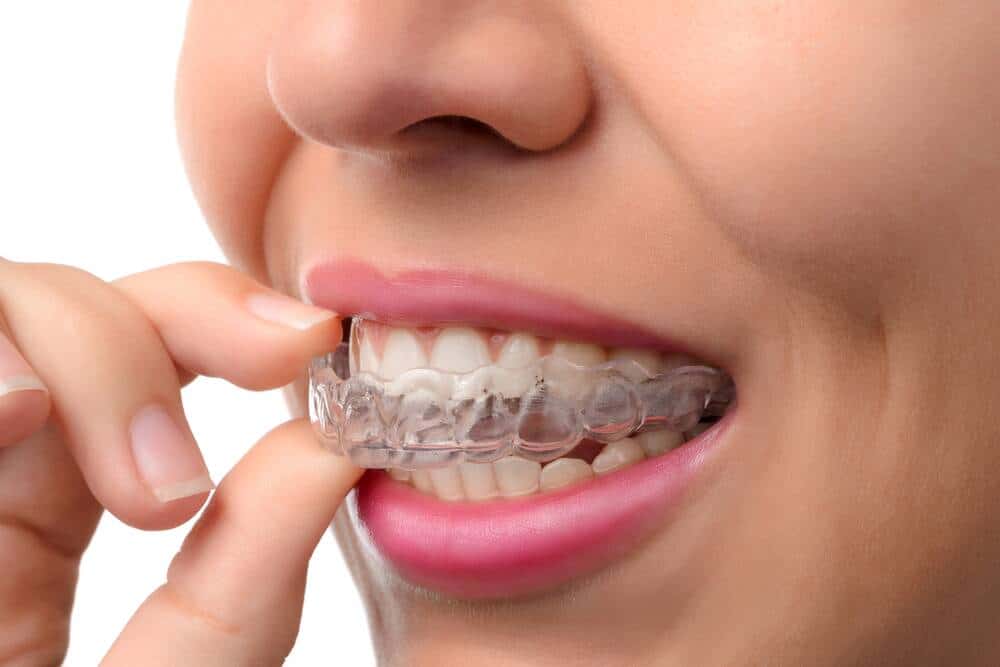
Invisalign is a system of custom-made, clear plastic aligners that are worn over the teeth and changed every one to two weeks as the teeth gradually shift into position. Each set of aligners moves the teeth a small amount — typically a fraction of a millimetre — before the next set takes over.
The aligners are made from a smooth, BPA-free plastic that sits snugly over both the upper and lower teeth. They are virtually invisible from a normal conversational distance, which is the feature most adult patients care about first.
What makes Invisalign services different from simply buying an over-the-counter aligner kit — which is not the same thing at all — is the clinical oversight. A trained dentist or orthodontist takes detailed scans of your teeth, maps out a precise digital treatment plan, and monitors your progress throughout. You are not guessing at your own treatment. You are following a plan built specifically for your bite, your spacing, and your end goal.
The aligners are removed for eating, drinking anything other than water, and for brushing and flossing. This is one of the most significant practical differences from braces — your oral hygiene routine stays almost entirely unchanged.
What Traditional Braces Involve — and Where They Still Have the Edge?
Traditional braces use metal brackets bonded to each tooth, connected by a wire that is periodically tightened to apply pressure and shift the teeth over time. They are fixed — meaning they stay in place for the duration of treatment, typically 18 months to 3 years depending on the complexity of the case.
Braces have been the clinical standard for orthodontic treatment for decades, and for good reason. They work consistently across a very wide range of cases — including complex bite issues, significant crowding, and rotations that require more force than clear aligners can reliably deliver.
For certain cases, braces are simply the more clinically appropriate choice. A dentist who recommends braces over Invisalign for a specific patient is not being old-fashioned — they are being accurate about what the case requires.
Invisalign Services vs Braces — A Direct Comparison
Here is how the two treatments stack up across the factors adults actually care about:
| Factor | Invisalign Services | Traditional Braces |
| Visibility | Nearly invisible | Clearly visible metal brackets |
| Removability | Removed for eating and cleaning | Fixed for full treatment duration |
| Comfort | Smooth plastic, no sharp edges | Wires and brackets can irritate gums |
| Oral hygiene | Normal brushing and flossing | Requires special tools around brackets |
| Diet restrictions | None — remove to eat anything | Avoid hard, sticky, crunchy foods |
| Treatment time | 6 to 18 months for most adult cases | 18 months to 3 years typically |
| Follow-up visits | Every 6 to 8 weeks | Every 4 to 6 weeks |
| Complex cases | Best for mild to moderate cases | Handles severe and complex cases |
| Cost | Comparable to braces in most cases | Varies — sometimes lower for complex cases |
| Compliance required | Must be worn 20 to 22 hours per day | No compliance required — always on |
The compliance point deserves a pause. Invisalign works when the aligners are worn consistently. Patients who remove them frequently, forget to put them back in, or wear them fewer than 20 hours a day will see slower results or no results at all. For motivated adults who want the aesthetic advantage, this is rarely a problem. For patients who are already unsure about their discipline, it is worth an honest conversation before starting.
Invisalign Services — Who Is Actually a Good Candidate
Invisalign works well for the majority of adult patients dealing with mild to moderate orthodontic concerns. The system has expanded significantly over the years and now handles cases that were previously considered outside its range.
Invisalign is typically a strong fit for adults with:
- Crowded teeth — mild to moderate
- Spacing and gaps between teeth
- Overbite — the upper teeth sit too far forward over the lower
- Underbite — the lower teeth extend beyond the upper
- Crossbite — upper and lower teeth do not meet correctly on one or both sides
- Open bite — the front teeth do not meet when the back teeth are closed
Cases where braces may be the better clinical recommendation:
- Severe crowding that requires significant tooth movement
- Significant rotations — particularly of round teeth like premolars
- Large vertical movements of teeth
- Skeletal issues involving the jaw rather than just the teeth
The only reliable way to know which category your case falls into is a proper clinical assessment — including digital scans and a conversation with a dentist who has experience with both treatments. At Dental & Implant Centers of Colorado, the Invisalign consultation is complimentary and includes a full smile assessment before any recommendation is made.
How Long Do Invisalign Services Take Compared to Braces?
This is one of the most common questions patients ask — and the answer is genuinely encouraging for most adults.
For mild cases, Invisalign treatment can be completed in as little as six months. Moderate cases typically fall in the 12 to 18 month range. Complex cases handled with Invisalign can run longer, though these are less common among adult patients whose primary concern is spacing or mild crowding.
Traditional braces for adult patients tend to run longer on average — 18 months to 3 years is the standard range, with complex cases pushing toward the upper end.
It is also worth noting that Invisalign check-in appointments are typically every six to eight weeks, compared to every four to six weeks for braces. For working adults with busy schedules, fewer appointments is a meaningful difference over an 18-month treatment period.
What Invisalign Services Cost — and How to Make It Work?
Cost is usually the second question after candidacy, and the honest answer is that Invisalign and traditional braces are more comparable in price than most people expect.
The total cost of Invisalign services depends on the complexity of the case, the number of aligners required, and the practice providing treatment. Simple cases handled with Invisalign Lite — a shorter series of aligners for mild concerns — tend to cost less than a full comprehensive case.
Most dental insurance plans that include orthodontic coverage apply the benefit equally to Invisalign and braces — so the out-of-pocket difference between the two is often smaller than patients anticipate.
Financing options make both treatments accessible without paying the full amount upfront. Dental & Implant Centers of Colorado offers 0% financing and flexible payment plans at all three locations, which brings the monthly cost to a figure most patients find manageable once they see the actual numbers.
If you have been putting Invisalign off because you assumed the cost was out of reach, a consultation is the only way to know for certain — because the number varies significantly by case and by what your coverage actually applies.
Invisalign Services and the Treatments That Sometimes Go Alongside Them
One thing that comes up regularly in consultations — particularly at a multi-specialty practice — is that patients who come in asking about Invisalign sometimes discover they have other concerns worth addressing at the same time.
Some patients have missing teeth they have been managing around for years. In those cases, dental implants in Denver become part of a broader conversation — because the position of surrounding teeth affects where an implant can be placed, and vice versa. Getting the sequencing right matters, and having a team that handles both Invisalign and implants under one roof means that planning happens in a coordinated way rather than pieced together between separate offices.
Other patients come in asking about Invisalign and also have questions about affordable services for dentures — particularly older adults who are dealing with both bite concerns and partial tooth loss at the same time. These are not separate conversations at a multi-specialty practice. A general dentist in Westminster, Boulder, or Cherry Creek at Dental & Implant Centers of Colorado addresses them as one cohesive plan — which almost always leads to a better outcome and a clearer cost picture from the start.
Teeth whitening is another treatment that pairs naturally with Invisalign. Getting your bite corrected and brightening your smile together — in sequence — is one of the most requested combinations at cosmetic dental practices.
Patients who are also managing tooth loss often find themselves discussing affordable services for dentures alongside Invisalign at the same consultation. This is more common than most people expect — particularly for adults who have been putting off multiple concerns at once. A general dentist in Westminster and across all DICC locations approaches these conversations as a single plan rather than separate problems, which makes both the treatment and the cost considerably easier to manage.
What Happens If You Have a Dental Emergency During Invisalign Treatment?
This is something patients rarely think about before it happens — but it is worth knowing in advance.
If you knock out or chip a tooth, experience a sudden severe toothache, or have any trauma to the mouth while you are mid-treatment with Invisalign, you need an emergency dentist near me who understands your ongoing treatment plan. A practice that handles both cosmetic and emergency dentistry under one roof means your aligner treatment does not get derailed by a dental emergency — the same team manages both.
Dental & Implant Centers of Colorado offers same-day emergency dental care across all three locations, which means patients’ mid-Invisalign treatment have continuity of care if something unexpected happens.
Invisalign Services and Medicaid — What Patients Should Know
Medicaid coverage for orthodontic treatment, including Invisalign, is generally limited for adults. Most adult Medicaid plans do not include orthodontic benefits beyond what is considered medically necessary.
For patients who need a Medicaid dentist near me and are also interested in Invisalign, the most practical path is to have a consultation, understand exactly what your plan covers for dental treatment broadly, and then explore financing for the Invisalign portion specifically. Some patients find that Medicaid covers other concurrent dental needs — cleanings, general dentistry, and in some cases affordable services for dentures for those managing missing teeth alongside their alignment concerns. When these treatments are addressed together at one practice, the overall cost burden becomes significantly more manageable.
Dental & Implant Centers of Colorado accepts Medicaid at all three locations and works through coverage details with patients before recommending any treatment. Patients who have been putting off care because they assumed their Medicaid plan would not help with anything are often surprised by what is actually available to them once someone sits down and checks properly.
Conclusion
Invisalign services have genuinely changed what is possible for adult patients who want straighter teeth without the visual and practical compromises that come with traditional braces. For most mild to moderate cases, the results are clinically comparable — and the day-to-day experience during treatment is significantly more comfortable and less disruptive.
That said, Invisalign is not the right call for every case. The honest answer is that some bite issues and alignment concerns still respond better to braces — and a provider who tells you that upfront is one worth trusting.
Frequently Asked Questions
Are Invisalign services as effective as traditional braces for adults?
For mild to moderate cases — crowding, spacing, overbite, underbite, and crossbite — Invisalign produces results that are clinically comparable to braces. For severe or complex cases involving significant rotations or jaw-level issues, braces may still be the more reliable choice. A proper clinical assessment is the only way to know which applies to your situation.
How long do I need to wear the aligners each day?
Invisalign aligners should be worn for 20 to 22 hours per day. They are removed only for eating, drinking anything other than water, and for brushing and flossing. Wearing them for fewer hours than recommended extends treatment time and can reduce the effectiveness of tooth movement.
Does Invisalign hurt?
There is typically some pressure and mild discomfort when a new set of aligners is first placed — this is the feeling of the teeth beginning to move. It usually settles within a day or two. Most patients describe it as noticeably more comfortable than the tightening appointments associated with traditional braces.
Can I get Invisalign if I have had braces before?
Yes. Many adults seek Invisalign because their teeth have shifted after years without wearing a retainer following previous orthodontic treatment. In most of these cases the movement required is mild and Invisalign is a strong fit.
Will Invisalign affect how I speak?
Some patients notice a slight adjustment in their speech during the first few days of wearing a new set of aligners. This typically resolves quickly as the tongue adjusts to the presence of the aligners. Most patients find the effect is minimal and short-lived.
Can Invisalign services be combined with dental implants in Denver?
Yes — but the sequencing matters. In most cases, Invisalign treatment is completed before implant placement because implants do not move with the aligners the way natural teeth do. At a multi-specialty practice, both treatments are planned together so the end result of the Invisalign treatment creates the ideal spacing for the implant.
What happens after Invisalign treatment ends?
A retainer is required to maintain the results. Without one, teeth will gradually shift back over time. Retainers are typically worn full-time immediately after treatment and then at night long-term. Your dentist will advise on the specific protocol based on your case.
Does Medicaid cover Invisalign services?
Standard adult Medicaid plans do not typically include orthodontic coverage for Invisalign. However, Medicaid may cover other dental needs being addressed at the same time — general dentistry, cleanings, and in some cases affordable services for dentures near me for patients managing tooth loss alongside alignment concerns. A Medicaid-accepting practice checks your specific coverage before your appointment and lays out exactly what applies to your situation.
How is Invisalign different from cheaper online aligner kits?
Online aligner kits are not supervised by a licensed dentist. There is no clinical examination, no imaging, no assessment of bite or bone health, and no monitoring during treatment. Invisalign services are delivered by a trained provider who scans your teeth, creates a clinical treatment plan, and checks your progress throughout. The difference in oversight — and in outcomes — is significant.
What should I do if I have a dental emergency while wearing Invisalign?
Remove the aligner and contact your dental practice immediately. An emergency dentist near me who is familiar with your Invisalign treatment can assess the situation without disrupting your plan. Dental & Implant Centers of Colorado accommodates emergency patients at all three locations and can manage urgent care in the context of ongoing Invisalign treatment.
