




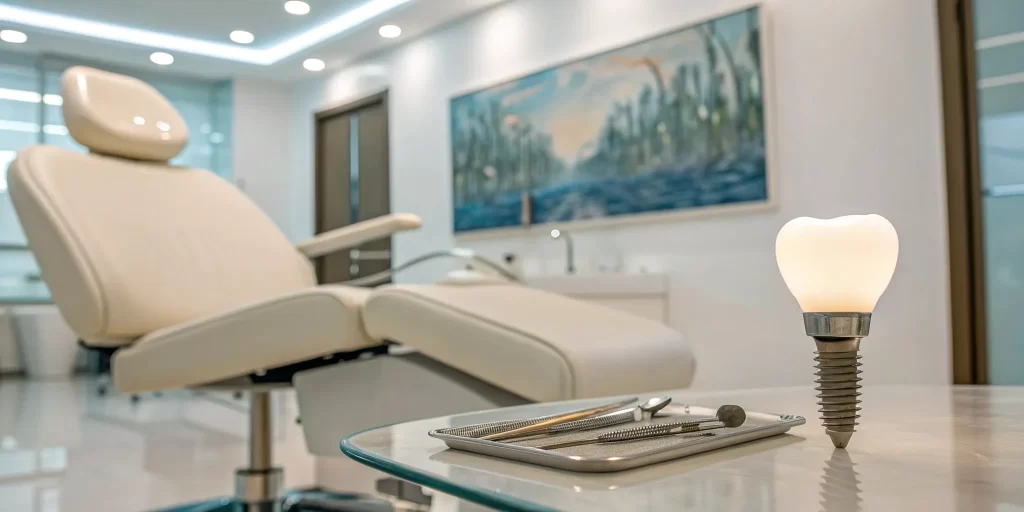
Trying to find a clear answer to “how much does a single dental implant cost?” can feel confusing. You might see a wide range of prices online, and it’s hard to know what’s included. The truth is, the cost is tailored to your unique needs. It reflects everything from your dentist’s expertise to any prep work required to ensure a successful, lasting result. Think of it less like buying a product and more like investing in a highly customized medical procedure. We believe in complete transparency, so we’re going to pull back the curtain and explain exactly what goes into the price tag, helping you understand the value behind each step of restoring your smile.
Key Takeaways
- The final price is a complete package: A single implant quote typically includes the titanium post, the connecting abutment, the custom-made crown, and all related appointments. Your unique needs, like requiring a bone graft, are the main factors that will influence your specific cost.
- Focus on lifetime value, not just upfront cost: While bridges or dentures seem cheaper initially, they often require replacements and can damage other teeth. Implants are a one-time investment designed to last for decades, protecting your jawbone and overall oral health.
- You have multiple ways to manage the cost: Don’t let the price stop you from exploring your options. You can make implants fit your budget by combining your insurance benefits with flexible payment plans, third-party financing, or tax-free funds from an HSA or FSA.
What Is a Single Dental Implant?
If you’re missing a tooth, you know it can affect everything from how you eat to how you feel about your smile. A single dental implant is a modern, permanent solution designed to fix that. Think of it as a man-made tooth root. It’s a small, screw-like post, typically made of titanium, that is surgically placed into your jawbone right where your missing tooth used to be. This post acts as a sturdy anchor for a brand-new, custom-made tooth.
Unlike other options that might sit on the gums or rely on neighboring teeth for support, dental implants fuse directly with your bone. This creates a strong and stable foundation that mimics the function of a natural root. The result is a replacement tooth that doesn’t just fill a gap—it becomes a seamless part of your mouth. It’s a standalone solution that preserves the health of your adjacent teeth and provides a durable, long-lasting fix for a missing tooth.
The Three Parts of a Dental Implant
It’s helpful to think of a single dental implant as a three-part structure working together to restore your smile. First is the implant itself—the titanium post that is placed in your jawbone and acts as the new root. Next is the abutment, which is a small connector piece. Once your jaw has healed around the implant, the abutment is attached to the top of it, sitting just above the gumline. Its job is to securely hold your new tooth in place. Finally, there’s the crown, which is the visible part of the restoration. This is the custom-designed, tooth-shaped cap that is attached to the abutment, giving you a complete and functional tooth.
How an Implant Becomes Part of Your Smile
The process of getting a dental implant is a journey that happens over a few months, but it’s well worth the wait. It starts with a procedure to place the implant post into your jawbone. After this, your body does something amazing: the bone naturally fuses with the titanium post in a process called osseointegration. This healing period is what makes the implant so incredibly strong. Once the implant is stable, your dentist will attach the abutment. The final step is creating and placing your custom crown, which is carefully crafted to match the color and shape of your surrounding teeth. The end result is a new tooth designed to look, feel, and function like natural teeth, allowing you to smile, speak, and eat with confidence.
How Much Does a Single Dental Implant Cost?
This is one of the first questions everyone asks, and for good reason. Investing in your smile is a big decision, and you deserve to have a clear picture of the costs involved. While the final price depends on your specific needs, we can walk through the typical costs to give you a solid starting point. The total investment covers not just the implant itself, but the entire expert procedure, the high-quality materials, and the personalized care you’ll receive from start to finish. Think of it less as a simple purchase and more as a long-term investment in your health, confidence, and quality of life. At Dental & Implant Centers of Colorado, we believe in complete transparency, so let’s break down what you can expect.
The National Average Price
Across the country, the average cost for a single dental implant generally falls somewhere between $3,000 and $6,000. This range typically covers all three main components: the titanium implant that acts as the root, the abutment that connects the implant to the new tooth, and the custom-made crown that looks and feels just like a natural tooth. It’s a comprehensive price for a complete tooth replacement solution. Of course, this is just a national benchmark. The final cost can shift based on several factors, including the complexity of your case and the specific materials used for your dental implant procedure.
Breaking Down the Price Tag
When you see a price for a dental implant, you’re looking at the cost of a multi-step, highly customized medical procedure. It’s not just one item but a full suite of expert dental services. The price tag includes the initial consultation and 3D imaging, the surgical placement of the implant post, the cost of the high-grade titanium implant itself, the abutment, and the final, custom-crafted crown. It also accounts for the skill and experience of the dental team performing the surgery and designing your new tooth. Each step is essential for ensuring your implant is secure, functional, and looks completely natural for years to come.
What to Expect in Colorado
Just as the cost of living varies from state to state, so does the cost of dental care. While you might see lower prices advertised in places with a lower cost of living, the rates in Colorado reflect our state’s economy and the high standard of dental expertise available here. Factors like clinic location, technology used, and the credentials of your dental surgeon all play a role. The most reliable way to understand your specific cost is to schedule a consultation. This allows us to create a personalized treatment plan and provide a precise, all-inclusive quote. We can also walk you through our financing and insurance options to make your new smile as affordable as possible.
What Factors Change the Cost of a Dental Implant?
There’s no universal price tag for a dental implant because every treatment plan is tailored to the individual. The final cost reflects a personalized approach to your specific oral health needs and smile goals. Several key factors influence the total investment, from the dentist you choose to the unique condition of your jawbone. Understanding these variables helps you see the complete picture and appreciate the value behind the care you receive.
Your Location
Just like the cost of housing, the price of dental services can vary depending on your city. Practices in larger metropolitan areas often have higher operating expenses for things like rent, equipment, and staffing, which can be reflected in their pricing. This doesn’t mean you’re just paying for the address; it often means you’re getting care in a state-of-the-art facility with a top-tier team. The goal is to find a local practice that provides exceptional value and expertise you can trust.
Your Dentist’s Expertise
The experience of your dental team is one of the most important factors. While a general dentist can place implants, specialists like prosthodontists and oral surgeons complete years of additional training focused on complex surgical and restorative cases. This advanced expertise often leads to more predictable and successful long-term results. When you choose a practice with a team of specialists, part of your investment is in their deep knowledge and skill, ensuring your dental implants are placed with the highest level of precision.
Your Unique Dental Needs
No two smiles are the same, and your personal oral health plays a huge role in your treatment plan. During your initial consultation, your dentist will perform a thorough evaluation of your gums, teeth, and jawbone. If you have underlying issues like gum disease or severe decay, those will need to be addressed before an implant can be safely placed. A straightforward implant procedure in a perfectly healthy mouth will naturally have a different cost than one for a patient who needs more foundational work to guarantee a successful outcome.
Any Extra Prep Work Required
Sometimes, your mouth needs a little preparation to become the perfect home for a new implant. For an implant to last a lifetime, it needs to fuse with a strong, dense jawbone. If a tooth has been missing for a while, the bone in that area may have started to deteriorate. In these situations, a procedure like a bone graft may be recommended to build the bone back up. Other preparatory treatments, such as a tooth extraction or a sinus lift, might also be necessary to create a stable foundation for your new tooth.
What Other Procedures Can Affect the Total Cost?
When you receive a quote for a dental implant, it’s important to understand what it covers. The implant itself is just one piece of the puzzle. For the implant to be successful and last a lifetime, you need a healthy and stable foundation. Sometimes, this requires a few preparatory steps to get your jaw ready for the procedure. Think of it like preparing the ground before planting a tree—you need to make sure the soil is just right.
These additional procedures are tailored to your specific dental health needs and will influence the final cost of your treatment. They aren’t add-ons, but rather essential steps to ensure your new tooth is secure, functional, and beautiful for years to come. Below, we’ll walk through the most common procedures that might be part of your personalized treatment plan.
Tooth Extractions and Bone Grafts
If the tooth you’re replacing is still in place but is damaged or decayed, the first step will be to have it extracted. This is a separate procedure from the implant surgery itself. After a tooth is lost, the jawbone in that area can begin to shrink over time. If you don’t have enough healthy bone to securely anchor the implant post, a bone graft may be necessary. This common procedure involves adding bone material to your jaw to build it back up, creating a solid and dense foundation for your new dental implants. This ensures your implant has the support it needs to integrate properly and last for decades.
Sinus Lifts
A sinus lift is a specific type of bone graft for the upper back jaw. Your maxillary sinuses are air-filled spaces located just above your back teeth. If you’ve lost teeth in this area, the sinuses can sometimes expand downward, leaving very little bone height for an implant. A sinus lift gently raises the sinus membrane and places a bone graft onto the sinus floor. This creates the adequate bone structure needed to place an implant securely. This procedure can add between $1,500 and $2,500 to your total treatment cost but is vital for a successful outcome in the upper jaw.
Advanced Imaging and Scans
Precision is key in implant dentistry. Before your surgery, we need a detailed blueprint of your jaw. This is where advanced imaging comes in. Dental X-rays and 3D Cone Beam Computed Tomography (CBCT) scans give us a crystal-clear view of your bone structure, nerve pathways, and surrounding teeth. These scans are not just pictures; they are essential planning tools that allow our expert team to map out the exact placement of your implant for optimal safety and success. If you don’t have insurance, these crucial diagnostic scans can range from $200 to $450.
What’s Included in the Quoted Price?
When you see the price for a dental implant, it’s important to understand that you’re not just paying for a product. You’re investing in a comprehensive, multi-stage medical procedure designed to permanently restore your smile. The final quote you receive is typically an all-inclusive price that covers the entire process, from the first conversation to the final check-up. Think of it as a complete package for a healthier, more confident you.
At Dental & Implant Centers of Colorado, we believe in total transparency. There should be no surprises when it comes to your care or your bill. A detailed quote helps you understand exactly where your money is going and gives you a clear picture of the value you’re receiving. This price reflects the expertise of the dental team, the quality of the materials, and the personalized care you’ll get at every step. We’ll walk you through all the financing and insurance options to make sure your plan fits your budget. Let’s break down what’s usually covered in that single number.
Your Consultation and Custom Plan
Your journey starts with a thorough consultation. This initial phase is crucial, and its cost is factored into your total price. During this appointment, your dentist will perform a complete examination of your oral health, which often includes advanced imaging like 3D scans or X-rays. This isn’t a one-size-fits-all process. The goal is to create a personalized treatment plan tailored to your specific needs and goals. Our expert team takes the time to understand your situation, answer all your questions, and map out the precise steps for a successful outcome.
The Implant Surgery and Materials
The core of the cost is the surgical procedure itself. This covers the placement of the titanium implant post directly into your jawbone by a skilled surgeon. The price includes the implant itself—a medical-grade titanium screw that acts as your new tooth root—and the abutment, which is the small connector piece that will eventually hold your new tooth. You are paying for the surgeon’s expertise, the use of a sterile surgical environment, and the highest quality materials available to ensure your dental implant is strong, safe, and built to last.
Your New, Custom-Made Tooth
After the implant has healed and integrated with your jawbone, it’s time for the final step: your new tooth. The quoted price includes a custom-crafted crown that is meticulously designed to match your natural teeth. This isn’t a generic tooth from a box; it’s a small piece of artistry. Our team takes great care to match the exact shade, shape, and size of your surrounding teeth so your implant blends in seamlessly. The result is a beautiful, functional tooth that looks and feels completely natural, as you can see in our before and after gallery.
All Follow-Up Care
Your care doesn’t end the moment you leave the chair. The quoted price also includes all necessary follow-up appointments to monitor your healing process. These check-ups are essential to ensure the implant is integrating properly with your jawbone and that your recovery is on track. It’s our commitment to your long-term success and health. We want to make sure you feel supported throughout your entire journey. Hearing from our past patients in their testimonials often highlights how reassuring this continued care can be.
Will My Insurance Cover Dental Implants?
Let’s talk about the big question on everyone’s mind: insurance. The short answer is, it depends entirely on your specific plan. Working through dental insurance can feel like a puzzle, but understanding your coverage is the first step toward making your treatment plan a reality. While some insurance companies still classify dental implants as a cosmetic or elective procedure, more and more plans are starting to recognize their long-term health benefits and offer some level of coverage.
Even if your plan doesn’t cover the full cost of the implant itself, it might help pay for other parts of the process. For example, some policies will cover the cost of the crown that attaches to the implant or contribute to the expense of a necessary tooth extraction. The key is to look closely at your policy details and understand what is and isn’t included. Our team is experienced in working with various insurance providers and can help you make sense of your benefits to ensure you get the most out of your plan.
Understanding Your Plan’s Limits
Many dental insurance plans have an annual maximum, which is the total amount they will pay for your dental care in a single year. This limit is often around $1,500 to $2,000. Because of this cap, your insurance may not cover the entire cost of an implant, but it can certainly reduce your out-of-pocket expense. It’s also common for plans to view the implant procedure as “elective,” meaning they won’t cover the surgical placement of the implant post. However, that same plan might help pay for the final restoration—the beautiful new crown that looks and functions like a natural tooth.
How to Get the Most from Your Benefits
To get a clear picture of your coverage, you’ll want to review your dental insurance policy. Look for details on deductibles (what you pay before your insurance kicks in), waiting periods for major procedures, and your annual maximum. It’s also important to know if your dentist is considered “in-network,” as this can affect your costs. The best course of action is to call your insurance provider directly and ask about their specific coverage for dental implants. Our team at Dental & Implant Centers of Colorado is always here to help you with the financing and insurance process and can submit a pre-treatment estimate on your behalf.
Figuring Out What Portion Is Covered
Once you have your treatment plan, our office can send a pre-determination of benefits to your insurance company. This document outlines the recommended procedures and asks the insurer exactly what they will cover. Typically, private dental insurance may cover a percentage of major procedures, sometimes up to 50%, until you reach your annual limit. As mentioned, some plans might cover the implant directly, while others may only contribute to related steps like the abutment and crown. This official estimate from your provider takes the guesswork out of the equation, giving you a clear and accurate breakdown of your expected costs.
What Are My Financing and Payment Options?
Thinking about the cost of a dental implant can feel overwhelming, but you don’t have to figure it all out on your own. The good news is that you have several options for managing the expense and fitting this important investment into your budget. A great dental practice will work with you to find a solution that makes you feel comfortable and confident moving forward. At Dental & Implant Centers of Colorado, we are committed to making top-tier dental care accessible, and that includes helping you understand all the financial pathways available.
Our team can walk you through the specifics of your treatment plan and associated costs, ensuring there are no surprises. We believe clear communication is key, and we’re here to help you find a payment approach that works for you. Let’s look at some of the most common and effective ways to pay for your dental implant.
In-House Payment Plans
Many dental practices offer in-house payment plans to help patients break down the total cost of their treatment into smaller, more manageable monthly payments. This is a straightforward way to finance your procedure directly with your provider, often without the complexities of a traditional loan. These plans are designed to be flexible and can make a significant difference in your ability to get the care you need without having to pay the full amount upfront. We encourage you to ask about our specific financing and insurance options during your consultation.
Third-Party Financing
Another popular route is using a third-party financing company that specializes in healthcare expenses. Services like CareCredit function like a credit card specifically for your health and wellness needs. They often offer promotional financing options, such as no-interest periods if you pay the balance within a certain timeframe. This can be an excellent way to cover costs that your dental insurance doesn’t, giving you the flexibility to pay for your implant over time. Many dental offices, including ours, accept these plans to help patients get their treatments promptly.
Using Your HSA or FSA
If you have a Health Savings Account (HSA) or Flexible Spending Account (FSA) through your employer, you can absolutely use those funds for dental implants. These accounts are a fantastic benefit because you contribute to them with pre-tax dollars, which means you’re paying for medical and dental expenses with tax-free money. This can significantly reduce your out-of-pocket cost. Be sure to check the balance and rules of your specific account, but in most cases, dental implants are a qualified medical expense. It’s a smart way to use the funds you’ve already set aside for your health.
How Do Implants Compare to Other Options?
When you’re missing a tooth, a dental implant isn’t your only choice, but it’s important to understand how it stacks up against other common solutions like bridges and dentures. Each option comes with its own set of pros, cons, and costs. Thinking about not just the upfront price but also the long-term value, comfort, and impact on your overall health will help you make the best decision for your smile. Let’s break down how they compare.
Upfront Cost vs. Long-Term Value
Let’s be honest: the initial price of a dental implant is higher than other options. A single implant can range from $3,000 to $6,000. It’s easy to see that number and immediately look for a cheaper alternative. But it’s crucial to think about this as a long-term investment. Dental implants are designed to last for decades, and with proper care, they can even last a lifetime. Other options, like dentures or bridges, often need to be replaced every 5 to 15 years. When you add up the costs of replacement and maintenance over time, implants often prove to be the more economical choice. We can help you explore financing and insurance options to make the initial investment more manageable.
Implants vs. Bridges and Dentures
Beyond cost, there are major differences in comfort and function. Dentures, while affordable, need to be removed daily for cleaning and can sometimes slip or feel uncomfortable. A dental bridge is another common alternative, but it requires grinding down the healthy teeth on either side of the gap to serve as anchors. This can compromise the long-term health of those teeth. Implants, on the other hand, stand alone. They don’t rely on neighboring teeth for support, and because they fuse with your jawbone, they look, feel, and function just like your natural teeth. You can eat, speak, and smile with complete confidence.
Calculating the Lifetime Cost
When you calculate the lifetime cost, the value of an implant becomes even clearer. The titanium post that acts as the root can last a lifetime. The crown, or the artificial tooth on top, is incredibly durable but may need to be replaced every 10 to 15 years due to normal wear. Compare that to replacing a full set of dentures every 5 to 7 years or a dental bridge every 5 to 15 years. With a success rate of around 97% over 10 years, implants are one of the most reliable and predictable services in modern dentistry. They prevent bone loss in your jaw and protect the alignment of your surrounding teeth, saving you from potential future dental work.
Why Are Dental Implants a Smart Investment?
When you look at the price of dental implants, it’s easy to focus on the initial number. But thinking of them as a one-time expense misses the bigger picture. A dental implant is an investment in your long-term health, confidence, and quality of life. Unlike other tooth replacement options that may need frequent repairs or replacements, dental implants are designed to be a permanent solution that protects your oral health for years to come. It’s a choice that offers value far beyond the initial cost.
Choosing an implant means you’re not just filling a gap in your smile; you’re restoring full function and preventing future dental problems that can be both painful and expensive. It’s a proactive step toward preserving your facial structure, protecting your remaining teeth, and getting back the freedom to eat, speak, and laugh without a second thought. When you consider the cumulative costs of replacements, adjustments, special cleaning solutions, and potential complications associated with other options over the years, the value of a durable, lifelong implant becomes clear. It’s a smart financial decision that pays dividends in comfort and peace of mind for decades, making it one of the best investments you can make in yourself.
They’re Built to Last a Lifetime
One of the most compelling reasons to choose dental implants is their incredible durability. While options like bridges and dentures often require replacement every 5 to 15 years, dental implants are designed to be a permanent part of your smile. The titanium post that fuses with your jawbone can last a lifetime with proper care. The crown, which is the visible part of the tooth, is also incredibly resilient and typically lasts for 10 to 15 years before it might need to be replaced due to normal wear and tear. This longevity makes them a cost-effective solution over the long run, saving you from the recurring costs and appointments associated with other treatments. You can see the lasting results for yourself in our patients’ before and after photos.
They Protect Your Jawbone and Oral Health
When you lose a tooth, you also lose its root, which plays a vital role in stimulating your jawbone. Without that stimulation, the bone begins to deteriorate, which can lead to a sunken facial appearance and problems with your other teeth. Dental implants are the only tooth replacement option that mimics a natural tooth root. By fusing with your jaw, the implant provides the necessary stimulation to keep your jawbone strong and healthy. This process, called osseointegration, helps preserve your natural facial structure. Plus, unlike a dental bridge, implants don’t require grinding down adjacent healthy teeth, which helps maintain the integrity of your overall smile and supports our holistic approach to all our dental services.
They Look and Feel Like Natural Teeth
Beyond the health benefits, dental implants offer an unmatched level of comfort and confidence because they are designed to look, feel, and function just like your natural teeth. Each implant crown is custom-crafted to match the color, size, and shape of your surrounding teeth, creating a seamless, beautiful smile. Because the implant is securely anchored in your jawbone, you won’t have to worry about it slipping or clicking when you talk or eat. You can enjoy all your favorite foods without hesitation. This stability and natural appearance can have a huge impact on your daily life, restoring not just your smile, but your self-assurance, as our patients often share in their testimonials.
How Can I Make Dental Implants More Affordable?
A dental implant is a significant investment in your long-term health and confidence, but the price tag can feel intimidating. The good news is you have more control over the cost than you might think. With a bit of planning and clear communication with your dental team, you can find a path to a restored smile that fits your budget. It’s not about cutting corners on quality care; it’s about being a savvy patient and exploring all the avenues available to you. Let’s walk through a few practical steps you can take to make your dental implant treatment more affordable.
Get a Second Opinion on Your Treatment Plan
Every mouth is unique, and so is every treatment plan. If you’ve received a quote for a dental implant, getting a second opinion is a smart move. This isn’t about price shopping for the cheapest dentist; it’s about ensuring the proposed plan is the absolute best fit for your specific needs. Another expert may suggest a different approach or timeline that could be more cost-effective without compromising the result. Speaking with our team of specialists can give you a comprehensive understanding of your options and the confidence that you’re making the right choice for your health and your wallet.
Plan the Timing of Your Treatment
The final cost of a dental implant can change if you need preparatory work first. For instance, if a tooth needs to be extracted or if a bone graft is required to strengthen your jaw, these procedures will add to the total investment. By discussing the full treatment timeline with your dentist from the start, you can plan for these costs. Sometimes, it’s possible to phase your treatment, allowing you to pay for one procedure at a time. This gives you time to budget and prepare for each step, turning one large expense into smaller, more manageable payments.
Ask About In-House Financing Options
You don’t have to pay for your entire treatment upfront. Most dental practices offer flexible ways to manage the cost because they want to make excellent care accessible. Don’t hesitate to ask the office staff about your options. Many clinics partner with third-party lenders or offer in-house payment plans that break the total cost into predictable monthly installments. At Dental & Implant Centers of Colorado, we provide a variety of financing and insurance solutions to help you move forward with treatment. You can also often use funds from a Health Savings Account (HSA) or Flexible Spending Account (FSA) to pay for your implant.
Related Articles
- Dental Implants Cost Westminster CO: A Full Breakdown
- Dental Implant Cost in Denver: A 2025 Guide
- The Process & Cost — Dental & Implant Centers of Colorado
- Dental Implants vs Bridges: Which Should You Choose?
Frequently Asked Questions
Is getting a dental implant painful? This is a completely valid question, and the thought of any dental surgery can be nerve-wracking. The great news is that the procedure itself is not painful. We use local anesthesia to make sure the entire area is completely numb, so you won’t feel anything during the placement. Afterward, it’s normal to experience some mild discomfort and swelling for a few days, but most people find it’s easily managed with over-the-counter pain medication and is less uncomfortable than a tooth extraction.
How long does the entire dental implant process take from start to finish? Patience is definitely part of the process, as a dental implant journey happens in stages over several months. After the initial surgery to place the implant post, your jaw needs time to heal and fuse with it, which can take anywhere from three to six months. This healing phase is what makes the implant so strong. Once that’s complete, it only takes a couple more appointments to place the connecting piece and your beautiful, custom-made crown.
Am I a good candidate for a dental implant? Most people who are healthy enough for a routine dental procedure, like an extraction, are good candidates for an implant. The main requirements are having healthy gums and enough jawbone to securely anchor the implant post. If you’ve been missing a tooth for a while, you may have experienced some bone loss, but procedures like a bone graft can often solve that. The only definitive way to know is to come in for a consultation where we can take a look with 3D imaging.
Why should I choose an implant over a dental bridge? While a bridge can be a good solution for some, it has one major drawback: it requires grinding down the healthy teeth on either side of the gap to act as supports. A dental implant is a standalone solution that doesn’t involve your other teeth at all. It also replaces the tooth root, which helps keep your jawbone strong and prevents the bone loss that naturally occurs when a tooth is missing. Think of it as a more conservative and long-lasting approach to protecting your overall oral health.
How do I care for my dental implant once it’s in? This is one of the best parts—caring for your implant is surprisingly simple. You treat it just like you would your natural teeth. That means consistent brushing, daily flossing, and keeping up with your regular dental cleanings and check-ups. There are no special adhesives or soaking solutions required. With simple, routine care, your implant can last for decades, and even a lifetime.
