




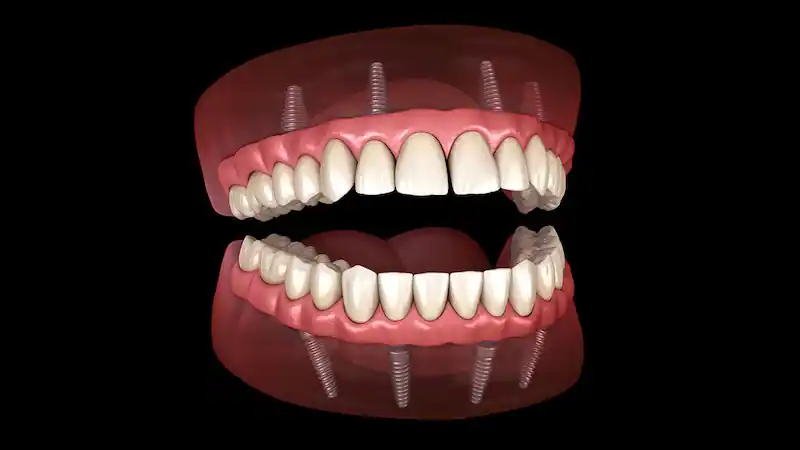
Thinking about All-on-4 dental implants is a bit like planning a custom home build. You have the hidden foundation and the visible structure, and both are critical for a successful result. In this case, the foundation is the four implant posts that secure your new smile, and the structure is the beautiful arch of teeth, or prosthesis, that everyone sees. The materials you choose for each part matter. We’ll explore the differences between the implant posts and the prosthesis, comparing options like time-tested titanium and the highly durable, natural-looking all on four zirconia bridge, so you can design your perfect smile.
Have you ever wondered about the materials that make up All-on-4 Dental Implants? Well, you’ve come to the right place! In this article, we’ll delve into the components and materials that comprise All-on-4 Implants, incorporating the insightful answers we’ve explored in our chat.
Why Consider All-on-4 Dental Implants?
All-on-4 dental implants are an excellent option for individuals who may not qualify for traditional implants due to certain dental conditions or limitations. Here are several reasons:
-
Reduced bone density
Traditional dental implants require a certain amount of bone density for successful placement. However, some individuals may have experienced significant bone loss in their jaws, making it challenging to support traditional implants. With All-on-4 implants, only four implants are strategically placed in areas of the jawbone with the highest bone density, allowing for optimal support even in cases of reduced bone density.
-
Fewer implants
All-on-4 implants provide a full set of teeth using only four implants per arch, as opposed to individual implants for each missing tooth. This means that even individuals with limited jawbone structure can receive a fixed denture or bridge, as the four implants distribute the load evenly and provide stable support for the prosthetic teeth.
-
Simpler procedure
All-on-4 implants offer a less invasive and more efficient treatment process. The procedure typically involves placing four implants per arch at specific angles to maximize stability and support. It often eliminates the need for additional treatments such as bone grafting, which is commonly required in cases of significant bone loss. The simplified approach of All-on-4 implants allows for quicker healing and faster completion of the dental restoration.
-
Immediate functionality
All-on-4 implants offer immediate functionality, meaning that patients can receive a temporary or permanent prosthesis attached to the implants on the same day of the surgery. This aspect is particularly advantageous for those who have lost most or all of their teeth, as they can leave the dental office with a full set of functional teeth after a single visit.
-
Improved quality of life
By opting for All-on-4 implants, individuals who do not qualify for traditional implants can significantly enhance their quality of life. The stability and functionality provided by All-on-4 implants allow for improved speech, eating, and chewing abilities, restoring confidence and enabling individuals to enjoy a wide range of foods and social interactions.
When faced with extensive tooth loss and compromised oral health, dentists often suggest All-on-4 implants as an alternative. This system utilizes screws to replace an entire arch of teeth, providing a comprehensive and efficient dental restoration option. The advantage of All-on-4 implants lies in their streamlined process, which requires less time and preparation and involves minimal invasiveness compared to traditional implants. 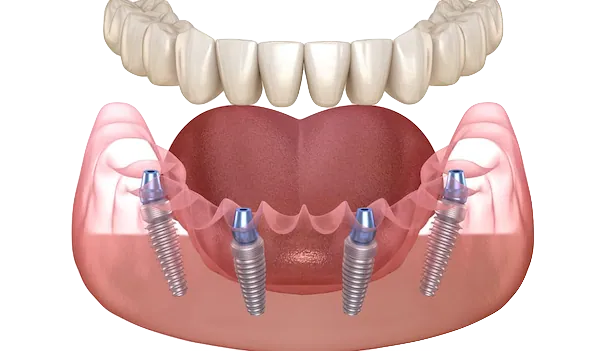
Breaking Down the All-on-4 Implant
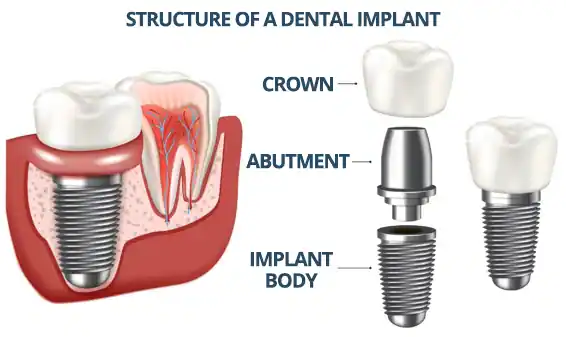
All-on-4 Dental Implants consist of several key components
-
Implant
This is a screw-like structure that is surgically attached to the jawbone. It serves as the anchor or root for the new set of teeth.
-
Abutment
The abutment is a connector piece that connects the implant to the prosthetic tooth. It provides stability and support to the crown.
-
Crown
The crown, also known as the prosthetic tooth, is the visible part of the dental implant that resembles a natural tooth. It can be made of zirconium or porcelain, providing aesthetics and functionality.
Your Material Options: Titanium vs. Zirconia
In terms of materials, All-on-4 Dental Implants can be made from two options:
-
Titanium Implants
Titanium implants have been in use since the 1960s and have a long history of successful outcomes. They are made of durable titanium and have high resistance to cracks and fractures. Titanium implants consist of two separate pieces, the base, and the tooth restoration, which allows for greater flexibility during placement. The abutment, being a separate piece, enables minor adjustments in tooth angle, resulting in a more natural bite alignment.
-
Zirconia Implants
Zirconia implants are an alternative to titanium implants and are made of ceramic. They emerged in the late 1980s and have gained popularity in holistic dentistry. Research suggests that zirconia implants exhibit better compatibility with soft tissue and have a higher biocompatibility compared to metal implants. As patients become more concerned about the presence of metal in their bodies, zirconia implants offer a non-metal option that could prove to be a reliable and effective alternative. Ongoing research aims to further establish their efficacy.
The choice of material for All-on-4 Dental Implants depends on the patient’s needs, preferences, and the recommendations of the dentist. Both titanium and zirconia implants have their advantages, and a thorough consultation with a dental professional can help determine the most suitable option for each individual.
Why Titanium is a Classic Choice
-
Greater component and design options
Titanium implants offer a wider range of components and design variations, providing dentists with more flexibility in creating customized solutions for each patient’s specific needs.
-
High long-term success rate
Titanium implants have a proven track record, with a long-term success rate of approximately 97%. This indicates their reliability and effectiveness in providing a durable and lasting dental restoration.
-
Resistance to fractures and cracks
Titanium implants are known for their exceptional strength and durability. They exhibit a high resistance to fractures and cracks, ensuring the stability and longevity of the implant-supported prosthetic teeth.
-
Ideal for full-mouth restorations
Titanium implants are particularly well-suited for full-mouth restorations, where multiple missing teeth need to be replaced. The strength and stability of titanium implants allow for the secure attachment of a full set of prosthetic teeth, providing a comprehensive solution for individuals with extensive tooth loss.
The Benefits of All-on-4 Zirconia Implants
-
Aesthetic appeal
Metal-free implants, such as zirconia implants, do not exhibit a dark coloring that can show through the gums. This helps maintain a natural and attractive appearance, enhancing the overall aesthetics of the dental restoration.
-
Elimination of metal allergy risks
Metal allergies are a concern for some individuals. By choosing metal-free implants, the risk of allergic reactions or complications related to metal allergies is significantly reduced, ensuring a safer and more comfortable dental implant experience.
-
Reduced plaque and infection risk
Metal-free implants have been shown to accumulate less plaque compared to metal implants. Additionally, they exhibit a higher resistance to bacterial attachment, reducing the risk of infections around the implant site. This can contribute to improved oral health and longevity of the dental restoration.
-
Corrosion resistance
Metal-free implants, such as zirconia implants, are highly resistant to corrosion. Unlike metal implants, they do not corrode over time, maintaining their structural integrity and minimizing the risk of implant deterioration or failure.
The Implant vs. The Prosthesis: What’s the Difference?
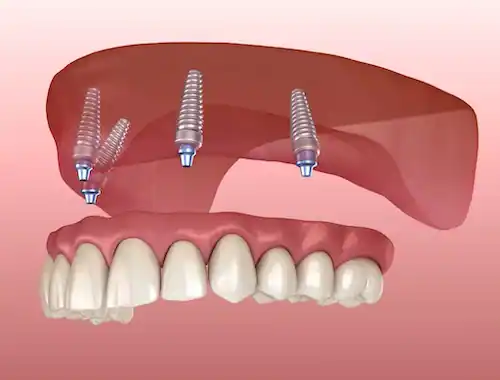
When we talk about All-on-4, it’s easy to think of it as one single thing. But it’s actually a system made of two main parts: the implants that go into your jaw and the prosthesis that you see when you smile. Think of it like building a house—you have the hidden foundation and the visible structure on top. Both are essential for a strong, beautiful, and functional result. Understanding the role of each part helps you appreciate how this technology works to completely restore your smile and confidence.
The Implant Screws: The Foundation
The foundation of your new smile is the set of four dental implants. These are small, screw-like posts made of biocompatible material that are surgically placed into your jawbone. They are designed to act just like natural tooth roots, fusing with the bone over time in a process called osseointegration. This creates an incredibly strong and stable base. As North Texas Dental Surgery notes, “All-on-4 implants utilize screws to replace an entire arch of teeth, providing a comprehensive and efficient dental restoration option.” This strategic placement is what allows a full set of teeth to be supported by just four implants.
The Full-Arch Prosthesis: Your New Teeth
The prosthesis is the part everyone will see—your beautiful new arch of teeth. This custom-made bridge is securely attached to the four implant screws. It’s designed to look, feel, and function just like natural teeth. The prosthesis, also called the crown or prosthetic tooth, “is the visible part of the dental implant that resembles a natural tooth.” It can be crafted from different high-quality materials, such as zirconia or acrylic, to give you the aesthetics and durability you need. This is where the artistry of dental implants truly shines, creating a smile that is uniquely yours.
Material Options for Your All-on-4 Prosthesis
Just as the implants themselves can be made from different materials, the prosthesis—the arch of teeth you see—also comes with options. The material you choose affects the look, feel, durability, and cost of your new smile. The two most common choices are zirconia and a PMMA acrylic hybrid. Each has its own set of benefits, and the right one for you depends on your lifestyle, budget, and your dentist’s recommendation. At Dental & Implant Centers of Colorado, we walk you through these choices to find the perfect fit for your long-term oral health and happiness.
Zirconia
Zirconia is a type of ceramic known for its incredible strength and lifelike appearance. It’s a premium material that is milled from a solid block of zirconia, making it exceptionally durable and resistant to chipping, staining, and wear. Because it’s a non-metal option, it’s also highly biocompatible. As one study points out, “Zirconia implants exhibit better compatibility with soft tissue and have a higher biocompatibility compared to metal implants.” This makes it an excellent choice for patients who are concerned about having metal in their bodies or who want the most natural-looking and long-lasting result possible.
Advantages of a Zirconia Prosthesis
One of the biggest draws of a zirconia prosthesis is its superior aesthetics. The material is translucent, mimicking the look of natural tooth enamel perfectly. Unlike options that have a metal base, zirconia is white all the way through, so you never have to worry about a dark line showing at the gum line. This helps “maintain a natural and attractive appearance.” Zirconia is also non-porous, which means it resists stains from coffee, tea, and wine, keeping your smile bright for years. Its strength also means it can withstand significant chewing forces without fracturing.
Potential Downsides of a Zirconia Prosthesis
While zirconia is incredibly strong, it isn’t indestructible. Its rigidity can be a double-edged sword. In some cases, “it can sometimes crack, especially in parts of the mouth that experience a lot of chewing pressure.” It’s also more difficult to repair than acrylic if damage does occur; often, the entire prosthesis needs to be replaced. The cost is also higher than other materials, which can be a consideration for some patients. Our team can help you weigh these factors and see some before and afters to help you decide.
PMMA Acrylic
PMMA (Polymethyl Methacrylate) is a type of durable, high-impact acrylic that is often used for the temporary prosthesis you receive on the day of your surgery. However, it can also be used for the final prosthesis, typically reinforced with a titanium frame. This option is lighter than solid zirconia and has a bit more flex, which some patients find more comfortable. It’s also more affordable, making it an accessible option for many. While not as durable as zirconia, a well-made acrylic hybrid prosthesis can still provide a beautiful and functional smile for many years.
Hybrid Prosthetics
Hybrid prosthetics offer a “best of both worlds” approach by combining different materials to maximize strength and aesthetics. The most common type is a titanium bar with acrylic teeth and pink acrylic gums attached to it. This design leverages the proven strength and biocompatibility of titanium for the underlying framework while using acrylic for the visible teeth. This combination creates a restoration that is both strong and beautiful, and it’s often easier to repair than a solid zirconia bridge since individual teeth can be replaced if they chip or break.
How Hybrid Designs Add Strength
The secret to the hybrid prosthetic’s durability is its internal metal framework. This framework, usually made of titanium, absorbs the main force of your bite and distributes it evenly across the four implants. The acrylic teeth are then bonded to this super-strong bar. This design “combine[s] the strength of titanium with the aesthetic appeal of acrylic, providing a durable and visually pleasing solution for full-arch restorations.” This structure makes the prosthesis incredibly resilient and less prone to the catastrophic fractures that can sometimes occur with other materials, ensuring a reliable and long-lasting smile.
Comparing Your Prosthesis Options
Choosing the right material for your prosthesis is a big decision, and it involves balancing aesthetics, durability, and cost. Zirconia offers unmatched beauty and strength but comes at a premium price and can be difficult to repair. A hybrid acrylic prosthesis is more affordable, lighter, and easier to repair, but it may not last as long or resist stains as well as zirconia. There’s no single “best” option—only the best option for you. We’ll discuss your personal habits, goals, and budget to help you make an informed choice you’ll be happy with for years to come.
Longevity and Success Rates
When you invest in a new smile, you want it to last. Zirconia is known for its exceptional durability, with “zirconia-based prosthetics…[lasting] 15 years or longer with proper care.” Hybrid acrylic prosthetics have a shorter lifespan, typically needing replacement every 5 to 10 years, though the underlying titanium bar can last a lifetime. It’s important to remember that these prosthetics are attached to titanium implants, which have a “long-term success rate of approximately 97%.” With proper care, the foundation of your smile is built to last a lifetime, regardless of the prosthesis material you choose.
Cost Considerations
The cost of All-on-4 implants is a significant factor for most people. Generally, a full-arch zirconia prosthesis is the most expensive option due to the material cost and complex milling process. A hybrid prosthesis with a titanium bar and acrylic teeth is a more budget-friendly choice. While the initial investment for All-on-4 might seem high, it “can be more affordable than traditional implants for a full arch because it uses fewer implants.” At Dental & Implant Centers of Colorado, we believe everyone deserves a healthy smile, which is why we offer a range of financing and insurance options to make treatment accessible.
The All-on-4 Treatment Process and Aftercare
The journey to a new smile with All-on-4 is a well-planned process designed for efficiency and comfort. It starts with a detailed consultation, including 3D imaging, to map out your procedure. From there, the process involves the surgical placement of the implants and the attachment of your new teeth, often in a single day. After the procedure, proper care and regular check-ups are key to ensuring your implants last a lifetime. Our team is here to support you every step of the way, from your first appointment to your final follow-up.
What to Expect During the Procedure
The All-on-4 procedure is a streamlined surgical process. On the day of your surgery, any remaining failing teeth will be removed, and the four dental implants will be placed in your jaw. The procedure “typically involves placing four implants per arch at specific angles to maximize stability and support” by engaging the densest areas of your bone. This strategic placement is what makes the All-on-4 concept so effective, often eliminating the need for bone grafting. The entire surgery is performed with sedation to ensure you are completely comfortable and relaxed.
Your Temporary and Final Prosthesis
One of the most exciting parts of the All-on-4 treatment is its immediacy. Most “patients can receive a temporary or permanent prosthesis attached to the implants on the same day of the surgery.” This means you walk out of our office with a beautiful, functional set of teeth. This temporary set is made of a lightweight acrylic and is worn for several months while your jaw heals and the implants fully integrate with the bone. Once healing is complete, we’ll design and attach your final, permanent prosthesis made from your chosen material, like zirconia or a hybrid acrylic.
Caring for Your New Implants for Long-Term Success
Your new smile is an investment in your health and happiness, and protecting it is crucial. “Proper care and maintenance of your implants can significantly enhance their longevity and effectiveness.” This involves daily cleaning with special tools like a water flosser and soft-bristled brush to keep the area around the implants free of plaque and bacteria. Regular check-ups and professional cleanings with our team are also essential. We will monitor your implants, check the fit of your prosthesis, and ensure your gums stay healthy, helping you enjoy your beautiful new smile for decades.
Frequently Asked Questions
Are the implant screws and my new teeth made of the same material? That’s a great question because it gets to the heart of how this system works. The implant screws, which act as your new tooth roots, are typically made from titanium because of its proven strength and ability to fuse with your jawbone. Your new arch of teeth, called the prosthesis, is a separate piece made from a different material chosen for its appearance and durability, like zirconia or a hybrid acrylic. Think of it as having a strong, hidden foundation supporting a beautiful, custom-designed structure.
How do I choose between a zirconia or hybrid acrylic prosthesis? The best choice really comes down to your personal priorities, lifestyle, and budget. Zirconia is a premium ceramic that offers incredible durability and the most natural, lifelike appearance, but it comes at a higher cost. A hybrid prosthesis, which often combines an acrylic arch with a titanium frame, is a more affordable and lightweight option that is also easier to repair. We’ll talk through your daily habits and long-term goals to help you select the material that makes the most sense for you.
Will I really leave with a full set of teeth on the day of my surgery? Yes, you will. One of the best parts of the All-on-4 process is its immediacy. On the day of your procedure, you’ll be fitted with a beautiful, functional temporary prosthesis. This isn’t a flimsy stand-in; it allows you to eat, speak, and smile confidently while your jaw heals and the implants integrate. After a few months, once everything is fully healed, we’ll replace the temporary set with your final, permanent prosthesis.
What is the recovery process like for All-on-4 implants? Most people are pleasantly surprised by the recovery. While it is a surgical procedure, the All-on-4 technique is designed to be minimally invasive. You can expect some swelling, bruising, and discomfort for a few days, which is manageable with pain medication and rest. We’ll ask you to stick to a soft food diet for a period to protect the implants as they heal. Our team will give you detailed aftercare instructions to ensure your recovery is as smooth and quick as possible.
How do I care for my All-on-4 implants to make them last? Caring for your new smile is straightforward and essential for its longevity. You’ll treat your implants much like natural teeth, but with a few special tools. Daily cleaning with a soft-bristled toothbrush and a water flosser is crucial to keep the area around the implants and under the prosthesis clean. Just as important are your regular professional cleanings and check-ups with us. These visits allow us to ensure your implants and gums remain healthy for years to come.
Key Takeaways
- Your New Smile Has Two Key Parts: Think of All-on-4 as a foundation and a structure. Four titanium implants act as the permanent, hidden foundation in your jaw, while the visible prosthesis—your new arch of teeth—is the beautiful structure built on top.
- Prosthesis Materials Affect Looks and Longevity: The material for your visible teeth is a major decision, typically between zirconia and a hybrid acrylic. Zirconia provides maximum strength and a natural look, while hybrid options offer a more affordable and easily repairable alternative.
- Long-Term Success Depends on Your Care Routine: While the implants are built to last a lifetime, their success is a partnership. Committing to daily cleaning with specific tools and attending regular dental check-ups is essential to protect your investment and keep your smile healthy for years.
