





The most unique thing about a dental emergency is the fact that it can happen at any time and mostly happens at odd hours. Whether it is about a sudden toothache or a chipped tooth, knowing the right way to handle this emergency situation is critical. Here, searching for a Same day 24/7 emergency dentist near me is often the first step.
This article will aim to guide you through what constitutes a dental emergency, the right steps to take care of it, what a qualified dentist offers, and when to seek an immediate professional’s care.
What is Considered a Dental Emergency?
Dental emergencies can be of many kinds like toothache, cavity, or a cracked tooth. While some issues may not require urgent care, most cases do. The immediate attention is required to prevent complications or permanent damage. Some common dental emergencies include:
- Severe or persistent toothache
- Knocked-out tooth
- Broken, cracked or a chipped tooth
- Excessive bleeding from gums or mouth
- Swelling in face and jaw
- Lost fillings or crown that cause pain
- Abscess or infection
Now if you are experiencing severe pain, infection, or any kind of visible damage signs – it is best to show a 24/7 emergency dentist near me.
Why Should You Choose a 24/7 Emergency Dentist Near Me?
The logic for urgent care in dental issues is to prevent any damages or severe infections from spreading. While waiting for an appointment can cause the pain and infection to worsen, a same day dental treatment can:
- Relieve pain immediately
- Offer quick diagnosis and treatment
- Prevent further damage and infection
- Offer peace of mind during stressful situations
The emergency dentists and clinics are equipped to handle the urgent dental problems immediately, irrespective of the time of the day.
What to do in Case of Dental Emergencies?
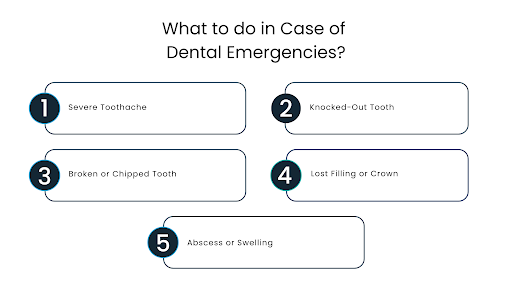
Severe Toothache
Rinse the affected area with warm salt water to decrease swelling and clear away debris. You may use a cold compress on the exterior part of your cheek for pain relief. Aspirin should be kept from the gums because it may irritate them.
Knocked-Out Tooth
It is extremely important how fast you will act in this case. You have to hold the tooth by the crown and rinse if necessary. After that, place it back into the socket, if possible. Otherwise, keep it in milk or saliva and visit an emergency dentist in 30–60 minutes.
Broken or Chipped Tooth
If you have broken or chipped your tooth, rinse the affected area with warm water, and preserve all fragments if possible. Place a piece of gauze in your mouth if there is any bleeding. Try using a cold compress to soothe the swelling.
Lost Filling or Crown
The filling or crown fell out? Keep the area clean and do not chew on that side. In case of urgent need, apply some temporary filling (which is sold in pharmacies).
Abscess or Swelling
Abscess is a painful and dangerous condition which should be dealt with urgently. Rinse your mouth with salt water and seek the help of a dentist.
Finding the Right Emergency Dentist Near You
Here is what to look for when you search for a 24/7 emergency dentist near me:
- Availability: Make sure they provide round-the-clock services or same-day services
- Reputation: They have good customer feedback
- Services Provided: See if they are able to deal with various dental emergencies
- Proximity: Find one that can be reached easily during an emergency
- Transparency in Pricing: Emergency services need to be affordable and transparent
A good emergency dentist does not just solve your problem at hand, but provides long-term solutions.
What Should Be Expected at an Emergency Dentist Appointment?
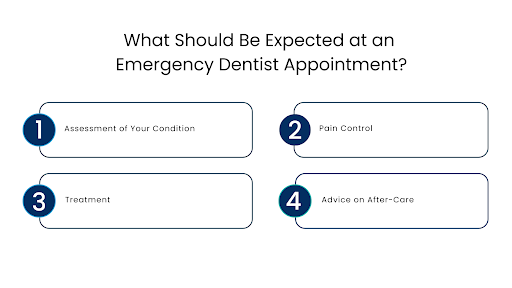
At a same-day emergency dentist appointment, you should expect:
- Assessment of Your Condition: The dentist will assess your situation and might even perform X-rays
- Pain Control: Measures are undertaken immediately to control pain
- Treatment: Depending on your problem, treatment might involve fillings, root canal, extraction, or provisional treatment
- Advice on After-Care: You will be given directions on what to do afterward
The aim is to get your situation under control and prevent more damage.
Steps to Avoid Dental Emergencies
Although you cannot always prevent a dental emergency, you can lower the risk of experiencing one by:
- Practicing proper dental hygiene (brushing and flossing regularly)
- Going for regular visits to the dentist
- Using a mouth guard when playing sports
- Staying away from biting hard items such as ice and pencils
- Taking care of small problems before they escalate
Preventive care will certainly save you from having a dental emergency.
Conclusion
Emergency situations involving your teeth might prove difficult, but knowing how to deal with such situations can save your teeth from any harm. The sooner you act, the better because you should try to help yourself by giving your situation some first aid, after which it will be time to visit your local same-day or 24/7 emergency dentist.
When next you find yourself asking questions like where to find the same day & 24/7 emergency dentist near me?, please remember that timing is crucial.
FAQs
What constitutes a dental emergency?
Dental emergencies include problems such as toothaches, lost teeth, cracked or damaged teeth, bleeding gums, facial swelling, missing fillings or crowns that cause pain, and abscesses.
When should I see a 24/7 emergency dentist?
You need to see an emergency dentist when you have a dental problem requiring immediate attention to avoid it from becoming worse.
What are some reasons to choose a same-day emergency dentist?
Dental emergencies can be of many kinds like toothache, cavity, or a cracked tooth. While some issues may not require urgent care, most cases do. The immediate attention is required to prevent complications or permanent damage.
What goes on during an emergency dental visit?
An emergency dental visit involves an evaluation of the problem, administering medication for pain, performing treatment, and providing guidance for follow-up care.
How do I avoid dental emergencies?
Some ways to avoid dental emergencies are practicing proper dental hygiene, regular visits to the dentist, using a mouthguard when playing sports, avoiding hard items, and addressing minor dental issues.
