




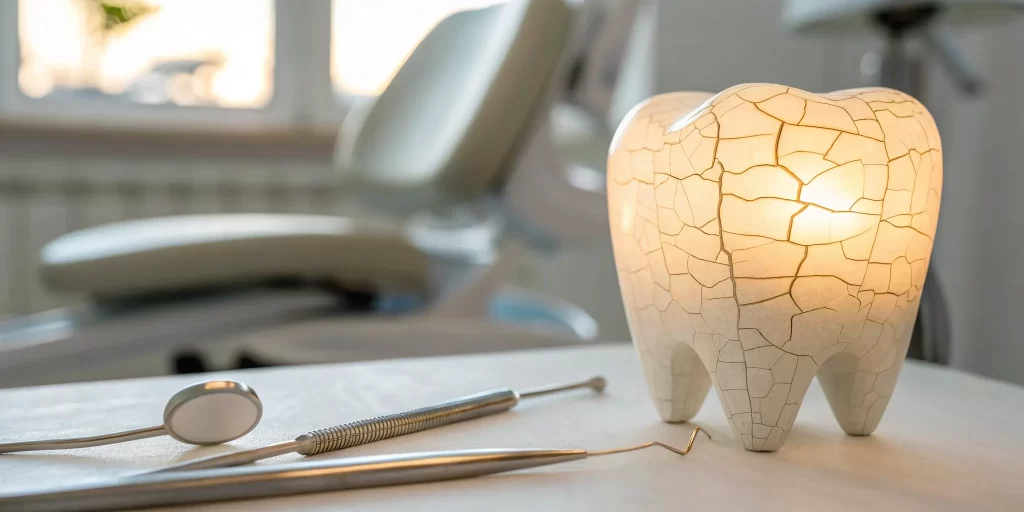
Think of a healthy tooth like a living tree branch—it’s nourished from the inside and has some flex. A root canal, while necessary, removes that inner pulp. This leaves the tooth more like a dry, brittle twig that can snap under pressure. This is why a cracked tooth root canal is a real concern. The tooth is simply more fragile after the procedure. If a fracture happens, the most important question is: can it be saved? The answer depends on a few key things. This guide will walk you through exactly what to look for and the steps you need to take.
Key Takeaways
- A Crown is a Crucial Final Step: A root canal saves your tooth but leaves it more brittle. Following through with a dental crown isn’t an optional upgrade; it’s the most effective way to shield the tooth from daily chewing forces and prevent future fractures.
- Listen to Your Body’s Warning Signs: Don’t dismiss inconsistent pain when biting, new sensitivity, or gum swelling. A cracked tooth requires immediate attention, and acting quickly gives your dentist the best chance to save it and prevent a more serious infection.
- Not All Cracks Are a Lost Cause: The ability to save a cracked tooth depends heavily on its location and depth, especially whether it extends below the gum line. A prompt professional evaluation is the only way to understand the damage and determine the right treatment plan.
Why Do Teeth Crack After a Root Canal?
It can feel incredibly frustrating when a tooth you’ve already had fixed starts causing problems again. You went through a root canal to save your tooth, so finding a crack afterward can be disheartening. But it’s important to know that this can happen, and it doesn’t mean the initial procedure was a failure. A root canal is a fantastic tool for saving a natural tooth from extraction, but the process does change the tooth’s internal structure, leaving it more vulnerable than its neighbors.
Think of the tooth before a root canal as a living structure, nourished by nerves and blood vessels. The procedure cleans out the infected or damaged pulp inside, which is essential for stopping pain and infection. However, this also cuts off the tooth’s internal hydration and nutrition source. Over time, this can make the tooth more brittle and susceptible to fractures under the daily pressures of chewing. Understanding why this happens is the first step toward protecting your tooth for the long haul.
How a Root Canal Affects Tooth Strength
After a root canal, a tooth essentially becomes non-vital. It no longer has a living pulp inside providing it with a blood supply. This is a bit like the difference between a fresh, green tree branch and a dry, dead one. The green branch is flexible and can bend under pressure, while the dry one is brittle and snaps easily. Without its blood supply, your tooth loses its natural moisture and flexibility, making it more prone to cracking.
Additionally, the process of performing a root canal requires your dentist to create an opening in the tooth to access and clean the inner canals. While this is a necessary step to save it, it does remove some of the tooth’s structure. This, combined with the new brittleness, is why a dental crown is almost always recommended as the final step in our restorative services. A crown acts like a protective helmet, absorbing chewing forces and holding the tooth together.
Daily Habits That Can Damage Your Tooth
Even with the best care, a root-canal-treated tooth faces risks from everyday activities. The most common cause of a crack is simply biting down on something unexpectedly hard. We’ve all done it—accidentally chomping on an unpopped popcorn kernel, a piece of ice, or a hard candy. For a brittle tooth, that one moment of intense pressure can be enough to cause a fracture.
Another major risk factor is teeth grinding or clenching, a condition known as bruxism. Many people do this unconsciously, especially while sleeping, placing incredible force on their teeth. This repeated stress can easily crack a weakened tooth. Sometimes, a crack may have already been present before the root canal—a tiny, hairline fracture that went unnoticed. The procedure or just normal wear and tear can cause this existing crack to deepen and become a bigger problem over time.
The Role of Aging and Large Fillings
As we get older, our teeth show the effects of years of hard work. Decades of chewing and daily wear can make tooth enamel more brittle and susceptible to damage. This is a natural part of the aging process. A tooth that was perfectly strong in your twenties might be more vulnerable to cracking under the same amount of pressure in your forties or fifties. This risk is even greater for teeth that have large fillings. A filling is meant to repair a cavity, but when it’s particularly large, it means a significant portion of the original, healthy tooth structure had to be removed, leaving the remaining walls of the tooth weaker.
A large filling can compromise a tooth’s integrity, creating weak points that are prone to fracture. The tooth essentially has to work just as hard but with less of its original structure to support it. This is a common scenario for teeth that eventually need a root canal—they often have a history of deep decay or large, failing fillings. The combination of being structurally compromised by a filling and then made more brittle by a root canal creates a high-risk situation. That’s why consistent monitoring through our general dentistry services is so important; it allows us to keep an eye on these vulnerable teeth and intervene before a small crack becomes a major issue.
Simple Steps to Prevent a Cracked Tooth
The good news is that you can take simple, effective steps to protect your treated tooth. The single most important thing you can do is follow through with getting a dental crown placed after your root canal. This isn’t just an optional add-on; it’s a crucial part of the treatment plan that shields the tooth from the forces that cause cracks. Think of it as an insurance policy for your tooth.
Beyond that, be mindful of your chewing habits. Try to avoid chewing on hard objects like ice, pens, or hard nuts, especially with the treated tooth. If you suspect you might be grinding your teeth at night (a sore jaw in the morning is a big clue), talk to us. One of the experts on our team can fit you with a custom nightguard to protect your teeth from the pressure. Regular dental check-ups are also key, as they allow us to spot and address any potential issues before they lead to a crack.
Using Mouthguards and Avoiding Bad Habits
If you clench or grind your teeth, a custom mouthguard is one of the best investments you can make for your dental health. Unlike boil-and-bite options from the drugstore, a professionally fitted nightguard is designed to absorb the intense pressure of bruxism, protecting not just your treated tooth but all your teeth from wear and fractures. If you wake up with a sore jaw, it’s a sign you might be grinding, and it’s worth discussing your options for protective dental services with our team. Beyond nighttime protection, a little daytime mindfulness goes a long way. Try to break habits like chewing on ice, pen caps, or hard candies, as these can create sudden pressure points that a brittle tooth can’t handle. These small adjustments can make a significant difference in keeping your restored tooth safe for years.
Signs of a Cracked Tooth After a Root Canal
A cracked tooth can be tricky to identify, especially after a root canal when you might not expect to feel pain. The signs aren’t always obvious, but your body will give you clues. Paying attention to new or unusual sensations is the first step in catching a problem before it gets worse. Here’s what you should look out for.
Pain and Sensitivity: What to Watch For
The most common sign of a cracked tooth is pain, but it’s often inconsistent. You might feel a sharp pain when you bite down on something, which then disappears just as quickly. This pain can come and go, making it tough to pinpoint exactly which tooth is the culprit. You may also notice a new sensitivity to hot or cold temperatures. That morning coffee or scoop of ice cream might trigger a sudden ache that wasn’t there before. This erratic pain is a classic signal that something is wrong with the tooth’s structure, and it’s worth investigating with one of our dental experts.
Visual and Physical Clues of a Crack
Beyond pain, there are other physical symptoms to watch for. Take a look at the area in a mirror. Do you see any swelling in the gum around the tooth? Sometimes, a small, persistent pimple-like bump (called a fistula) can appear on the gum, which is a sign of infection. While some cracks are too small to see with the naked eye, you might be able to feel a rough edge with your tongue. If you experience any of these symptoms—sharp pain when biting, temperature sensitivity, or localized swelling—it’s time to schedule an appointment. The sooner you have it checked, the better our chances are of saving the tooth.
Unusual Sensations and Discoloration
Sharp pain isn’t the only sign of a cracked tooth; sometimes, the clues are much more subtle. You might notice the tooth itself starting to look different. If a tooth darkens to a grayish or brownish color long after a root canal, it can signal an internal problem. This discoloration often happens when a tiny crack allows bacteria to seep in and cause an infection. You might also notice other sensory changes, like a persistent bad taste or breath that doesn’t improve with brushing. These are classic indicators of a low-grade infection from the crack. While not as dramatic as sudden pain, these symptoms are your body’s way of telling you it’s time for a professional evaluation to see what’s really going on.
Urgent Symptoms You Shouldn’t Ignore
Some symptoms signal a more serious problem that requires immediate attention. If a crack has allowed bacteria to get inside, an infection can develop. Signs of infection include a persistent toothache, fever, bad breath that won’t go away, and swollen glands in your neck. This is a dental emergency. An untreated infection can spread and affect your overall health. In these cases, waiting is not an option. A deep crack that extends below the gumline can compromise the entire tooth, sometimes making an extraction necessary. If that happens, we can discuss excellent replacement options like dental implants.
Understanding the Different Types of Tooth Cracks
When you hear the word “crack,” it’s easy to imagine the worst-case scenario. But in dentistry, not all cracks are created equal. The severity and treatment options depend entirely on where the crack is, how deep it goes, and the direction it runs. Some are minor cosmetic issues, while others can threaten the entire tooth. Understanding the different types can help you make sense of what’s happening and what to expect when you come in for an evaluation. Think of it as a roadmap to your tooth’s recovery—knowing the type of crack helps us determine the best path forward to restore your smile and comfort.
Craze Lines
If you look closely at your teeth in the mirror, you might notice tiny, vertical lines in the enamel. These are called craze lines, and they are incredibly common in adult teeth. These are superficial cracks that only affect the outermost layer of the tooth and don’t extend any deeper. They are purely a cosmetic issue and don’t cause any pain or require treatment. Think of them like the fine lines you might see in a ceramic glaze—they are part of the material’s history but don’t compromise its structure. So, if you spot these, you can breathe a sigh of relief.
Fractured Cusp
A fractured cusp is when a piece of the tooth’s chewing surface breaks off, often around a filling. This can happen when you bite down on something hard, and a weakened part of the tooth gives way. While it might feel alarming, this type of fracture usually doesn’t affect the pulp (the inner part of the tooth) and often isn’t very painful. The solution is typically straightforward. Depending on the size of the fracture, we can often repair the tooth with a new filling or protect it with a custom-made crown, which is one of the core restorative services we provide to ensure long-term strength.
Split Tooth
A split tooth is a more serious situation that often results from an untreated cracked tooth. The crack has traveled all the way through the tooth, effectively splitting it into two separate, movable pieces. At this stage, the entire tooth cannot be saved as a whole. However, depending on the location and extent of the split, we can sometimes save a portion of the tooth. If the tooth cannot be saved, it’s important to know you have excellent options for replacement. A dental implant can provide a permanent, stable solution that looks and functions just like a natural tooth.
Vertical Root Fracture
Vertical root fractures are among the most challenging cracks to identify. These cracks begin in the root of the tooth and extend upward toward the chewing surface. They often show minimal signs and may go unnoticed for a long time. Typically, they are discovered only when the surrounding bone and gum become infected, leading to swelling or a pimple-like bump on the gum. Because they start below the gumline, they are often diagnosed through a combination of symptoms and advanced imaging. Unfortunately, teeth with vertical root fractures usually need to be extracted.
First Aid for a Cracked Tooth: What to Do at Home
That moment you feel or hear a crack in your tooth can be startling. Your first instinct might be to panic, but taking a few simple, immediate steps can help manage the situation and protect your tooth until you can get professional care. These at-home measures are designed to reduce pain, prevent further damage, and keep the area clean. Remember, these are temporary solutions, and it’s essential to see a dentist as soon as possible to get a proper diagnosis and treatment plan. Acting quickly can make a significant difference in the outcome for your tooth.
Immediate Steps to Take Before Your Appointment
First, rinse your mouth with warm salt water to clean the area and help prevent infection. If you’re experiencing swelling, apply a cold compress to the outside of your cheek for 15-minute intervals. For pain, you can take an over-the-counter pain reliever like ibuprofen, but never apply aspirin or pain-killing gels directly to the gums or tooth, as this can burn the tissue. If the crack has created a sharp edge that is irritating your tongue or cheek, you can cover it with a piece of sugarless gum or wax paraffin as a temporary buffer. These steps will help you stay more comfortable until you can see us.
How We Diagnose a Cracked Tooth
Finding a crack in a tooth can sometimes feel like a bit of detective work, especially since many cracks are too small to be seen on a standard X-ray. A successful diagnosis relies on a combination of your reported symptoms, a thorough clinical exam, and the use of specialized tools. Our team is trained to look for the subtle clues that point to a fracture. We listen carefully to your experience—like pain that comes and goes when you bite—and use that information to guide our examination. This careful, methodical approach ensures we identify the exact source of the problem.
Specialized Diagnostic Tools
To pinpoint the location and extent of a crack, we use more than just our eyes. A dental explorer, a tool with a fine point, can be used to gently feel for cracks on the tooth’s surface. We might also use a special dye that can seep into a fracture and make it visible. A fiber-optic light can be shined through the tooth; if a crack is present, it will block the light from passing through, revealing its location. In some cases, we may ask you to bite down on a small tool called a Tooth Slooth, which helps isolate pressure on specific parts of the tooth to identify which area is causing the pain.
The Role of a Specialist (Endodontist)
Sometimes, a crack is so fine or located in such a difficult spot that it requires the expertise of a specialist. An endodontist is a dentist who has completed additional years of training focused specifically on diagnosing tooth pain and performing root canals. They are the experts in saving teeth. Our multi-specialty practice means our team has access to advanced tools, like surgical microscopes, that can magnify a tooth and make even the tiniest fracture visible. This specialized knowledge is invaluable when it comes to creating a treatment plan with the highest chance of success.
Challenges with Molars (Back Teeth)
Molars present a unique challenge when it comes to diagnosing cracks. These large, back teeth are our primary chewing workhorses, so they endure immense pressure every day. They also have multiple roots, which can make it much harder to locate a crack, especially if it’s a vertical root fracture. A crack can hide along one of the several roots, making it invisible on a standard X-ray and difficult to detect during an exam. This is why symptoms like inconsistent pain when chewing are so important—they often provide the best clue that a crack exists in one of these powerful back teeth.
Can We Save a Cracked Tooth After a Root Canal?
Hearing a crunch or feeling a new pain in a tooth you thought was fixed can be alarming. But take a deep breath—a crack after a root canal doesn’t automatically mean the tooth is lost. In many cases, we absolutely can save it. The right solution depends entirely on the type, location, and severity of the crack. Our first step is always a thorough evaluation to see exactly what we’re working with. From there, we can explore several effective options, ranging from a simple repair to placing a protective crown. The key is to act quickly. Let’s walk through the most common ways we can address a cracked tooth and get your smile back to feeling strong and healthy.
How a Dental Crown Can Save Your Tooth
Think of a dental crown as a custom-fit helmet for your tooth. After a root canal, a tooth loses its live pulp and blood supply, which can make it more brittle over time. A crown covers the entire visible portion of the tooth, restoring its strength and protecting it from the pressures of chewing. As one expert puts it, “A crown acts like a protective helmet, covering the tooth to restore its strength and allow it to work properly again.” This is why we almost always recommend a crown as the final step in the root canal process. It’s one of the best ways to prevent cracks from happening in the first place and is often the primary solution for repairing a tooth that has already cracked.
Why You Might Need a Root Canal Retreatment
Sometimes, a crack can create a tiny pathway for bacteria to get back inside the tooth, leading to a new infection long after the original root canal. If this happens, don’t worry—we have a plan for that, too. A root canal retreatment might be necessary to solve the problem. As dental professionals explain, “If germs got in through the crack and caused a new infection, the dentist might need to redo the root canal to clean it out and seal it again.” This procedure involves carefully reopening the tooth, cleaning out the canals, and placing a new, secure seal to keep bacteria out for good. It’s a way to give your tooth a second chance at a healthy, pain-free life.
Dental Bonding for Minor Tooth Cracks
If the crack is small and superficial, we may be able to fix it with a simpler procedure called dental bonding. This is a great option for minor cosmetic flaws or cracks that don’t compromise the tooth’s core structure. The process involves “utilizing a resin material to repair minor cracks, restoring both function and aesthetics.” We apply a tooth-colored composite resin directly to the crack and then harden it with a special light. The material bonds with your natural tooth, effectively sealing the crack and making it virtually invisible. It’s a quick, effective, and minimally invasive way to restore your tooth’s appearance and protect it from further damage.
When is Tooth Extraction the Only Option?
While our goal is always to save your natural tooth, there are times when an extraction is the healthiest option. This is usually the case when a crack is severe and extends deep below the gum line. As endodontic specialists note, “If the crack goes below the gum line, the tooth usually can’t be saved and needs to be pulled out.” A crack this deep makes it impossible to clean and seal the tooth properly, leaving it vulnerable to persistent infection that can harm your jawbone and neighboring teeth. If an extraction is needed, it’s not the end of your smile. We can replace the tooth with a durable, natural-looking dental implant that functions just like your original tooth.
Root Canal vs. Extraction: Making the Right Choice
When a cracked tooth becomes a problem, you’re faced with a big decision: try to save it or remove it? There’s no single right answer for everyone. The best path forward depends on the extent of the damage, your overall oral health, and your long-term goals. It’s a choice we’ll make together, weighing the benefits and drawbacks of each option. Our priority is to find the solution that ensures your mouth is healthy and your smile is functional for years to come. Let’s look at what each choice entails.
The Case for a Root Canal Retreatment
Opting for a root canal retreatment is a vote of confidence in your natural tooth. The goal here is preservation. If a crack has allowed a new infection to set in, this procedure gives us a second chance to fix it. A dentist will carefully reopen the tooth, thoroughly clean out the canals again to remove any bacteria, and then apply a new, secure seal. It’s a detailed process that aims to eliminate the infection at its source while keeping your own tooth right where it belongs. This approach is often the first choice when the tooth’s structure is still fundamentally sound.
Pros and Cons of Saving the Tooth
The biggest advantage of saving your tooth is that nothing functions quite like the real thing. Keeping your natural tooth helps maintain your normal bite, preserves the jawbone, and prevents neighboring teeth from shifting out of place. A root canal retreatment can successfully clear an infection and stop the pain. However, the downside is that the tooth will always be non-vital and more brittle than a healthy tooth. It will require a protective crown to withstand chewing forces and will need diligent care to ensure it lasts for the long haul.
The Case for Tooth Extraction
Sometimes, saving the tooth isn’t the best or even a possible option. While our primary goal is always to preserve your natural teeth, an extraction becomes the healthiest choice when a crack is too severe, especially if it runs vertically or extends far below the gum line. In these situations, the tooth can’t be properly sealed from bacteria, creating a constant risk of infection that could damage your jawbone and affect your overall health. Removing the tooth eliminates this risk completely, providing a definitive solution to the problem.
Pros and Cons of Removing the Tooth
The main benefit of an extraction is that it removes a source of chronic pain and infection, protecting your other teeth and your health. It’s a clean slate. The obvious drawback, however, is the gap it leaves behind. An empty space can cause adjacent teeth to drift and can lead to bone loss in the jaw over time. Fortunately, this is no longer a permanent problem. We can replace the missing tooth with a modern dental implant that looks, feels, and functions just like a natural tooth, preserving your smile and your jaw’s integrity. You can see the incredible results for yourself in our patient testimonials.
The Dangers of Ignoring a Cracked Tooth
When you notice a crack in a tooth that’s had a root canal, it’s easy to think, “I’ll just keep an eye on it.” But this is one of those times when waiting is the worst thing you can do. A cracked tooth is more than just a cosmetic issue; it’s a serious dental problem that requires immediate attention. Acting quickly can mean the difference between a simple fix and a much more complex, costly procedure. Let’s talk about why you can’t afford to delay treatment.
Preventing Infection from Spreading
Think of a crack in your tooth as an open door for bacteria. Once germs get inside, they can cause a serious infection known as a tooth abscess. This isn’t just a toothache; it’s a pocket of pus that can cause intense pain, swelling, and fever. If left untreated, the infection won’t stay put. It can spread to your jawbone, surrounding tissues, and even other parts of your body, leading to significant health complications. Protecting your overall health starts with addressing dental issues right away, which is a core part of our holistic approach to your care.
How Prompt Treatment Can Save Your Tooth
The biggest risk of waiting to treat a cracked tooth is losing it for good. The outcome often depends on where the crack is. If the fracture extends below your gum line, the tooth usually can’t be saved. An extraction is often the only option to prevent ongoing infection and pain. This is because a crack below the gums is impossible to properly seal and keep clean, creating a constant pathway for bacteria. Getting an evaluation as soon as you suspect a problem gives our team the best chance to save your natural tooth. If an extraction becomes necessary, we can guide you through replacement options like dental implants to restore your smile.
Why You Need a Dentist’s Opinion, Fast
Even if your cracked tooth doesn’t hurt much at first, you should see a dentist as soon as possible. Pain isn’t always a good indicator of how serious the problem is. A small crack can easily get worse with normal chewing, allowing bacteria to cause the infection or tooth loss we’ve just discussed. Early treatment is your best defense against bigger problems. A prompt evaluation allows our expert dental team to assess the damage and recommend the best course of action to protect your tooth. Don’t wait for the pain to get worse—call us right away to get it checked out.
What Factors Decide if Your Tooth Can Be Saved?
When you come into our office with a cracked tooth, our first goal is always to see if we can save it. But whether that’s possible depends on a few key factors that we need to carefully evaluate. Think of our job as being part dental detective, part problem-solver. Our expert team will gather all the clues to figure out the best path forward for your smile. This isn’t a one-size-fits-all situation; the right solution is completely unique to you and your tooth.
Our evaluation process is thorough. We’ll start by listening to you—when did the pain start? What does it feel like? Then, we’ll perform a detailed visual exam, sometimes using a special dye to make the crack easier to see. We might also use a dental explorer to feel for the crack’s edges or ask you to bite down on something to pinpoint the source of the pain. Often, we’ll take digital X-rays to see if the crack has reached the pulp or the root. Each of these steps gives us a piece of the puzzle, helping us understand the full extent of the damage. Based on what we find, we can create a treatment plan that gives your tooth the best possible chance at a long and healthy life.
Crack Location: Above or Below the Gum Line?
Where the crack is located is one of the most critical factors we assess. A crack that stays entirely above the gum line is often manageable. We can typically treat these with a crown or bonding to restore the tooth’s strength and function, sealing it off from bacteria. However, if the crack extends below the gum line, the situation becomes much more complex. According to the Endodontic Associates Dental Group, a crack that travels below the gum line often means the tooth cannot be saved and will likely need to be extracted. This is because it’s nearly impossible to properly seal and protect a tooth from bacteria once the fracture goes that deep into the root structure.
How Deep is the Crack? Severity is Key
Not all cracks are created equal. Some are tiny, superficial lines on the enamel that are purely cosmetic and don’t pose a threat. Others, however, can be much more serious. The deeper a crack goes, the more it threatens the tooth’s integrity. If a fracture reaches the pulp—the soft tissue at the center of your tooth—it can lead to infection and pain, often requiring a root canal retreatment and a crown. If the crack goes deep into the root or splits the tooth vertically, an extraction might be the only viable option to protect your overall oral health. In these cases, we can discuss excellent replacement options like dental implants.
Your Health and How Quickly You Act
When it comes to a cracked tooth, time is not on your side. A crack is an open door for bacteria, and the longer you wait, the higher the risk of a serious infection that could spread to your jaw and surrounding tissues. A cracked tooth will not heal on its own; it requires professional intervention to prevent further damage. As the Cleveland Clinic notes, prompt treatment is essential to save the tooth. Your overall health also plays a part. Conditions that affect your immune system or healing ability can influence treatment outcomes. That’s why it’s so important to see us right away so we can assess the damage and get you on the path to recovery.
Considering the Cost and Financial Options
Let’s be honest, the cost of dental work is a big factor for almost everyone. When you’re dealing with a painful or cracked tooth, the last thing you want is financial stress piled on top. We believe that understanding the costs and your payment options is a crucial part of making a confident decision about your health. It’s not just about fixing a tooth; it’s about investing in your long-term well-being and peace of mind. That’s why we’re always upfront about treatment costs and dedicated to helping you find a solution that fits your budget.
Comparing the Costs of Different Treatments
When it comes to saving a tooth, the cost can vary. A root canal procedure itself typically ranges from about $900 to $1,500, depending on which tooth needs treatment and the complexity of the case. It’s important to remember that this price usually doesn’t include the final restoration. Because a root-canal-treated tooth is more brittle, a dental crown is almost always needed to protect it, which is a separate cost. While an extraction might seem like a cheaper alternative upfront, it’s crucial to consider the long-term expense of replacing that missing tooth with a bridge or a dental implant to prevent other teeth from shifting and protect your jawbone health.
Insurance and Financing for Dental Care
This is where your dental insurance can be a huge help. Most insurance plans classify root canals and crowns as major restorative procedures, and they often cover between 50% and 80% of the cost after you’ve met your deductible. We know that insurance policies can feel like they’re written in another language, and figuring out what’s covered can be overwhelming. Our team is here to help you make sense of your benefits so you know exactly what to expect. We work with a wide range of providers and are committed to helping you maximize your coverage.
Beyond insurance, we want to ensure that cost doesn’t stand in the way of you getting the care you need. We offer a variety of financing and insurance options to make your treatment plan manageable. This includes flexible payment plans and partnerships with third-party financing companies that can break down the cost into affordable monthly payments. Your health should never have to wait. We encourage you to talk with us about your financial concerns so we can create a plan that works for you, allowing you to focus on what really matters—getting your smile healthy and strong again.
Protecting Your Tooth After Treatment
After a root canal, your tooth is saved from infection, but the journey isn’t over. The procedure can leave a tooth more brittle and prone to fracture. Think of it like a treasured vase that’s been carefully repaired—it’s whole again, but you’ll want to handle it with a bit more care. Protecting your treated tooth is the key to making sure it lasts a lifetime. With a solid plan and a few simple habits, you can keep your smile strong and healthy for years to come.
What to Do Right After Your Procedure
The single most important step you can take after a root canal is to have a dental crown placed over the tooth. A crown acts like a custom-fitted helmet, absorbing the pressure from chewing and shielding the tooth from potential fractures. Without this protective layer, the tooth is vulnerable to cracking under normal daily function. If you notice a crack, it’s a dental emergency. A fracture can quickly let bacteria in, leading to a new infection or even tooth loss. Don’t wait for pain to tell you something is wrong; being proactive with a crown is the best defense for your investment in your oral health.
Lifestyle Tweaks to Prevent Future Cracks
You can also protect your treated tooth by making a few small adjustments to your daily habits. Start by being mindful of what you chew. Hard foods like ice, jawbreakers, and unpopped popcorn kernels can put too much stress on a weakened tooth. It’s also a good idea to break habits like chewing on pens, pencils, or your fingernails. If you clench or grind your teeth, especially at night, talk to one of our dentists. A custom nightguard can make a world of difference by creating a protective cushion between your teeth while you sleep. These simple changes significantly reduce the risk of a fracture and help preserve your dental work.
Keeping Your Treated Tooth Healthy for Years
Great long-term care comes down to consistency. A solid oral hygiene routine of brushing twice a day and flossing daily is your first line of defense. It keeps the tooth and surrounding gums healthy, which is crucial for the success of your root canal. Just as important are your regular dental check-ups. During these visits, we can spot tiny cracks or other potential issues you might not see or feel. Think of your dentist as your partner in oral health. Keeping up with your appointments and communicating openly about any concerns ensures your treated tooth stays healthy for the long haul. If it’s time for a check-up, we make it easy for new patients to get started.
Related Articles
- How to Fix a Cracked Tooth: 4 Dentist-Approved Ways
- Cracked Tooth – What Do I Need To Know In Denver?
- How to Save a Tooth That Is Dying: A Guide
Frequently Asked Questions
I got a crown right after my root canal. Can my tooth still crack? Getting a crown is the absolute best thing you can do to protect a tooth after a root canal, but it’s not a guarantee against all damage. While the crown shields the tooth from most chewing forces, extreme pressure from biting down on something very hard or chronic teeth grinding can still cause a fracture in the underlying tooth root. Think of it this way: a helmet protects your head, but a severe enough impact can still cause injury. If you have a crown and experience new pain or sensitivity, it’s always best to have it checked out.
My cracked tooth doesn’t hurt. Do I still need to see a dentist right away? Yes, absolutely. After a root canal, the nerve inside the tooth is gone, which means you might not feel the typical pain signals of a crack. However, the crack itself is like an open door, allowing bacteria to seep deep into your tooth and the surrounding bone. Waiting until it hurts often means an infection has already set in, making the problem more complex to treat. A painless crack should be treated with the same urgency as a painful one to prevent infection and give us the best chance of saving your tooth.
Is a cracked tooth after a root canal considered a dental emergency? It certainly should be treated as one. While it might not feel as dramatic as a knocked-out tooth, the potential consequences of waiting are serious. A crack can worsen with every bite you take, and the risk of infection spreading is very real. Treating it as an emergency and calling us right away allows us to assess the damage and intervene before a small problem becomes a major one that could lead to losing the tooth entirely.
What’s the difference between redoing a root canal and just getting a crown? These two procedures solve different problems. A dental crown is a protective cap placed over a tooth to restore its strength and prevent it from cracking. We use it to fix or protect the tooth’s structure. A root canal retreatment, on the other hand, is done when the inside of the tooth has become infected again. This involves reopening the tooth to clean and disinfect the internal canals. Often, the two go together; we might perform a retreatment to clear an infection and then place a new crown to protect the newly cleaned tooth.
If my tooth can’t be saved, am I just stuck with a gap in my smile? Not at all. While our primary goal is always to save your natural tooth, sometimes an extraction is the healthiest choice. If that happens, you have excellent options for replacing the tooth that look and feel completely natural. A dental implant is often the ideal solution because it replaces the tooth root and crown, preserving your jawbone and preventing other teeth from shifting. We can walk you through the entire process to restore your smile so it’s strong, functional, and complete.
