




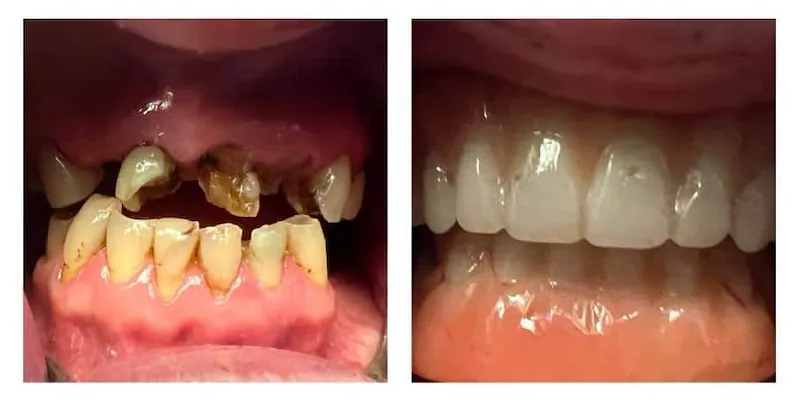
Your oral health is a window into your overall well-being, a connection that is too often overlooked. An infection in your mouth or the stress of missing teeth doesn’t just stay in your mouth—it can have serious effects on your entire body, from your heart to your mental health. This guide is about more than just fixing teeth; it’s about restoring your health. We will explore a comprehensive dental procedures list through the lens of total wellness, explaining how each treatment contributes to a healthier you. Understanding your options, especially advanced solutions like dental implants that eliminate infection and prevent bone loss, is the first step toward taking control of your future.
Choosing a dental procedure without considering all the relevant information is a risky move. While price is an important factor, it is only one piece of the puzzle when it comes to making an informed decision about treatment options and providers. It is essential to attend a personalized consultation to determine whether you are a candidate for the procedure and to receive specific information about the financial implications for you. This guide provides general information, but only a consultation with a professional can provide you with a comprehensive evaluation of your dental health and personalized treatment options. 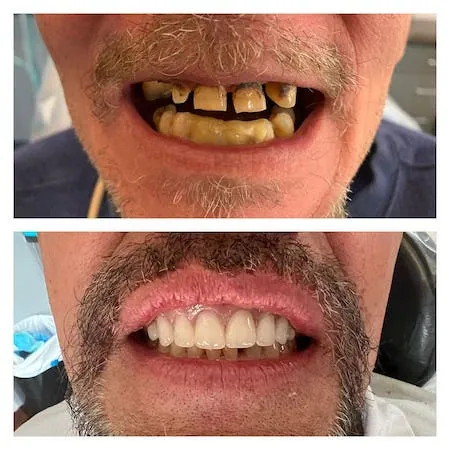 It is unfortunate that many dental implant providers are not transparent with their pricing and fees, making it difficult for patients to make informed decisions. However, we believe in providing our patients with all the information they need to make the best decision for their dental health. Contact us to schedule a consultation and learn more about our transparent pricing and commitment to patient care. Our aim is to provide complete transparency regarding the national average costs, how insurance coverage affects the treatment, and the eligibility criteria for an affordable monthly payment plan. We believe that this information will help you make an informed decision and choose us as your dental implant provider. But what sets us apart from others is that you can have your permanent set of teeth in less time. You won’t have to deal with temporary dentures. If you’re unsure about what this means, don’t worry, we’ll explain it in more detail in this article. So whether you’re missing one tooth, three teeth, or need a complete set of adult teeth, you’ve come to the right place.
Key Takeaways
-
Dental implants are a long-term investment in your health and confidence – They restore function, prevent bone loss, and improve overall quality of life.
-
Delaying treatment can be costly – Missing teeth or oral infections can lead to bone loss, health complications, and reduced quality of life.
-
Personalized consultation is essential – Costs, treatment options, and candidacy vary; a professional evaluation ensures the right plan for your needs in Colorado.
Get Your Smile Back with Dental Implants in Colorado
In this guide, you will discover that dental costs can be quite expensive. According to a study from Spear Education, the average person who lives to be 85 will spend over $95,000 on dental expenses over their lifetime. This can seem like a massive burden, but it’s essential to view dental costs as an investment in yourself rather than a financial hardship. Ignoring dental issues can lead to constant pain, difficulty eating, and other problems that can negatively impact your life. By investing in your dental health, you can improve your overall well-being and potentially even open new doors and opportunities for yourself. For instance, one of our patients at Dental & Implant Centers Of Colorado had a full upper and lower set of teeth replaced with dental implants, which transformed her smile and gave her the confidence to pursue a new career. This investment in herself propelled her towards new opportunities that she previously may not have considered. While teeth alone may not lead to a career change, the investment in your dental health can have a ripple effect on your life. We will share more stories of patients like her later, but the takeaway is that dental implants can make a significant difference in a person’s life. Let’s explore this topic in more detail.
Foundational Dental Care for a Healthy Smile
Before we talk about transformative procedures like dental implants, it’s crucial to cover the basics. A healthy smile is built on a strong foundation of consistent, preventative care. Think of it like building a house—you wouldn’t put up the walls without first laying a solid foundation. The same principle applies to your oral health. Regular checkups, professional cleanings, and good at-home habits are your first line of defense against common issues like tooth decay and gum disease. These simple steps not only keep your smile bright but also prevent minor problems from becoming major, more expensive ones down the road. Establishing this routine is the single best thing you can do for the long-term health and appearance of your teeth.
The Importance of Routine Checkups and Cleanings
Seeing your dentist regularly is about so much more than just getting your teeth polished. These visits are essential for preventing problems before they start. During a checkup, your dental team can spot early signs of cavities, gum disease, or other issues that you might not notice on your own. Catching these things early makes treatment simpler and more effective. It’s a proactive approach that keeps your smile looking its best and helps you avoid discomfort and complex procedures later. At Dental & Implant Centers of Colorado, we emphasize a holistic approach, which starts with understanding your unique oral health through regular, thorough examinations at one of our convenient locations in Cherry Creek, Boulder, or Broomfield/Westminster.
Professional Cleanings
Even if you’re a brushing and flossing superstar, you can’t remove everything on your own. Plaque, a sticky film of bacteria, can harden into tartar, which can only be removed by a dental professional. During a professional cleaning, your hygienist will use special tools to thoroughly clean your teeth, removing built-up plaque and tartar from places your toothbrush can’t reach. This process is vital for preventing cavities and gum disease. It also gives your dentist a clear view to check for any hidden problems, ensuring your mouth stays healthy from top to bottom. We offer affordable dental cleanings to make this essential service accessible for everyone.
At-Home Oral Hygiene
What you do every day between dental visits is just as important as the professional care you receive. Your at-home routine is the cornerstone of good oral health. The American Dental Association recommends brushing your teeth at least twice a day with a fluoride toothpaste to remove food particles and plaque. Don’t forget to floss at least once a day to clean between your teeth and under the gumline, where your toothbrush can’t reach. This simple, consistent habit is your best defense against tooth decay and helps maintain the results of your professional cleanings, keeping your smile healthy and strong for life.
Preventative Treatments to Protect Your Teeth
Sometimes, your teeth need a little extra help to stay strong and cavity-free. That’s where preventative treatments come in. These are simple, non-invasive procedures designed to give your teeth an added layer of defense against decay. Think of them as an insurance policy for your smile. They are particularly effective for children and teenagers whose teeth are still developing, but adults can benefit from them as well. These treatments are quick, painless, and can save you from needing more extensive restorative work in the future by stopping decay before it even has a chance to start.
Fluoride Treatments and Sealants
Fluoride is a natural mineral that strengthens tooth enamel, making it more resistant to acid attacks from plaque and sugars. A professional fluoride treatment is a quick and easy way to help prevent cavities. It involves applying a concentrated fluoride gel, foam, or varnish directly to your teeth. Dental sealants offer another layer of protection. A sealant is a thin, plastic coating painted onto the chewing surfaces of your back teeth (molars and premolars) to “seal out” food and plaque. This is especially helpful for preventing decay in the deep grooves and depressions that are hard to clean with a toothbrush.
The Role of Dental X-Rays in Diagnosis
While a visual exam tells your dentist a lot, it doesn’t show the whole picture. Dental X-rays are a critical diagnostic tool that allows your dental team to see what’s happening beneath the surface. They can reveal issues that are completely invisible to the naked eye, such as decay between teeth, problems below the gumline, impacted teeth, and bone loss in the jaw. By providing a comprehensive view of your teeth and surrounding bone structure, X-rays help your dentist make an accurate diagnosis and develop the most effective treatment plan for your specific needs, ensuring no problem goes unnoticed.
Protecting Your Teeth from Injury and Grinding
Your teeth are incredibly strong, but they aren’t indestructible. They can be damaged by physical impact during sports or by the constant pressure of grinding, a condition known as bruxism. Protecting your teeth from these forces is a key part of preventative care. Whether you’re an athlete on the field or someone who clenches their jaw at night, custom-fitted guards can provide the protection you need. These devices act as a cushion, absorbing impact and preventing chips, fractures, and excessive wear, preserving the integrity of your smile for years to come.
Mouthguards and Nightguards
A mouthguard is a protective device worn over your teeth to shield them from blows to the face and head. It’s an essential piece of equipment for anyone participating in sports that involve falls, body contact, or flying equipment. A nightguard, on the other hand, is designed for people who grind their teeth while they sleep. This custom-made guard fits over your upper or lower teeth and prevents the surfaces from grinding against each other. This not only protects your teeth from wear and damage but can also help alleviate jaw pain and headaches associated with bruxism.
Common Restorative Dental Procedures
Even with the best preventative care, sometimes teeth need to be repaired. Restorative dentistry focuses on fixing damage caused by decay, disease, or injury to bring your teeth back to their full function and appearance. These procedures are designed to save your natural teeth whenever possible, stop problems from getting worse, and restore your ability to chew and speak comfortably. From simple fillings to more complex treatments, the goal is always the same: to return your smile to a state of health and strength. The expert team at DICC is experienced in a wide range of restorative services to address your unique needs.
Fillings: Repairing Tooth Decay
A filling is one of the most common dental procedures and is used to repair a tooth damaged by decay. The process is straightforward: your dentist removes the decayed portion of the tooth and then “fills” the area with a special material. This stops the decay from spreading further and restores the tooth’s normal shape and function. Fillings can be made from various materials, including tooth-colored composite resins that blend in seamlessly with your natural teeth. It’s a simple and effective way to treat cavities and keep your smile healthy.
Dental Crowns: Restoring a Damaged Tooth
When a tooth has a large filling, is weakened by a root canal, or is severely cracked or worn down, a simple filling may not be enough. In these cases, a dental crown can provide the necessary support. A crown is a custom-made “cap” that fits over the entire tooth, restoring its original shape, size, strength, and appearance. It acts like a helmet, protecting the weakened tooth underneath. Crowns are also the final, visible part of a dental implant, providing a beautiful and functional replacement for a missing tooth.
Root Canal Therapy: Saving an Infected Tooth
The phrase “root canal” might sound intimidating, but this treatment is designed to relieve pain, not cause it. A root canal is necessary when the soft tissue inside your tooth, called the pulp, becomes infected or inflamed. During the procedure, the dentist removes the infected pulp, cleans and disinfects the inside of the tooth, and then fills and seals it. This process saves a tooth that would otherwise need to be extracted, allowing you to keep your natural smile and preventing the need for more complex replacement options.
Tooth Extractions: When Removal is Necessary
While dentists always aim to save natural teeth, sometimes an extraction is the best option for your overall oral health. A tooth may need to be removed if it’s too severely damaged from trauma or decay to be repaired, or if there is advanced gum disease. Extractions are also common when a baby tooth doesn’t fall out on its own or to make space for orthodontic treatment. The procedure is performed with care to ensure you are as comfortable as possible, and your dentist will discuss replacement options, like dental implants, to restore your smile afterward.
Wisdom Teeth Removal
Wisdom teeth, or third molars, are the last teeth to emerge, usually in your late teens or early twenties. For many people, there isn’t enough room in the jaw for them to come in properly. This can cause them to become impacted (stuck), leading to pain, swelling, infection, or damage to adjacent teeth. To prevent these complications, dentists often recommend removing wisdom teeth. This common procedure can protect your long-term oral health and prevent future problems from developing.
Enhancing Your Smile with Cosmetic Dentistry
Once your smile is healthy, you might want to improve its appearance. That’s where cosmetic dentistry comes in. These procedures focus on enhancing the aesthetics of your teeth, including their color, shape, size, and alignment. A beautiful smile can have a huge impact on your confidence and how you present yourself to the world. Whether you’re looking for a subtle tweak or a complete smile makeover, there are a variety of treatments available to help you achieve the smile you’ve always wanted. You can see the incredible transformations for yourself in our before and after gallery.
Teeth Whitening for a Brighter Smile
Teeth whitening is one of the most popular and straightforward cosmetic dental procedures. Over time, teeth can become stained or discolored from coffee, tea, red wine, or smoking. Professional teeth whitening can effectively and safely lighten the shade of your teeth, making your smile appear brighter and more youthful. The procedure is non-invasive and can be done in the dental office or with custom take-home trays, providing noticeable results with minimal discomfort. It’s a quick and easy way to give your confidence a significant lift.
Porcelain Veneers: A Total Smile Makeover
For a more dramatic transformation, porcelain veneers are an excellent option. Veneers are very thin, custom-made shells of tooth-colored porcelain that are bonded to the front surface of your teeth. They can be used to correct a wide range of cosmetic issues, including chips, cracks, gaps, discoloration, and minor misalignment. Because they cover the front of the tooth, they can completely change its appearance, giving you a flawless, uniform, and natural-looking smile. Veneers are a durable and long-lasting solution for achieving a true smile makeover.
Dental Bonding: A Quick Fix for Minor Flaws
Dental bonding is a simple, fast, and cost-effective way to repair minor cosmetic imperfections. The procedure uses a tooth-colored composite resin—the same material used for fillings—which is applied to the tooth and sculpted into the desired shape. It’s perfect for fixing small chips, closing minor gaps, or covering up discoloration on a single tooth. The resin is hardened with a special light and then polished to match the surrounding teeth. Bonding can often be completed in a single visit and provides a beautiful, natural-looking result.
Straightening Teeth with Braces and Invisalign
Straight teeth aren’t just about aesthetics; they’re also easier to clean and contribute to better overall oral health. Orthodontic treatments like traditional braces and Invisalign are used to correct crooked teeth, gaps, and bite issues. Braces use brackets and wires to gradually move teeth into their proper position. Invisalign offers a more discreet alternative, using a series of clear, removable aligners to achieve the same result. Straightening your teeth is an investment in both the beauty and the long-term health of your smile.
Why Putting Off Dental Work Costs More Than You Think
Ignoring the issue is not an option, and here’s why: neglecting missing teeth and active infections can lead to irreversible damage to the body, making it imperative to address these issues promptly.
The Surprising Health Risks of Missing Teeth
A study has found that there is a direct correlation between the number of missing teeth and a person’s lifespan. The study clearly concluded that individuals with more missing teeth tend to live shorter lives. On average, those missing five or more teeth may have their lifespan reduced by up to six years. It’s important to note that this information is presented solely for informational purposes and does not imply that the same will happen to everyone. 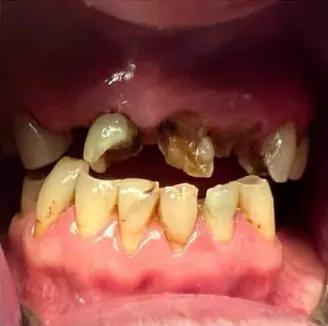 According to the study, tooth loss is a common occurrence as people age, and it reduces their ability to chew and select food, leading to poor nutritional status and overall health. Additionally, there is increasing evidence that oral infections may contribute to the development of systemic diseases, particularly among the elderly.
How Oral Infections Affect Your Overall Health
Patients with heart disease are often referred to us by cardiologists for comprehensive oral care, as there is a well-established link between infection in the mouth and its impact on overall health, as demonstrated by numerous studies. In fact, individuals with periodontitis are 34% more likely to develop heart disease, which is the leading cause of death for both men and women from various backgrounds, according to the CDC. It’s crucial to understand the significance of these risks, regardless of whether you choose to undergo dental implant treatment or not. A CT scan can reveal signs of infection, such as dark areas where bone should be and areas where bone has been lost due to tooth extraction. The image below illustrates a severe case of infection in which the upper jaw was no longer a viable candidate for dental implant treatment, and the patient was limited to a denture.
Why Missing Teeth Lead to Jawbone Loss
It’s important to discuss your CT scan results with your spouse as it can be difficult for them to fully grasp the potential risks and impacts on your health without being present at the consultation. 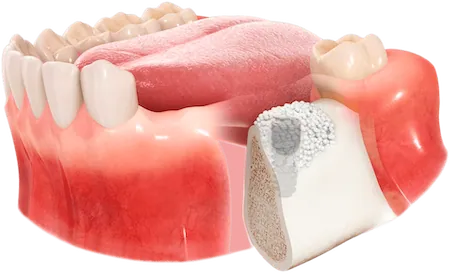 The good news is that there is a solution to both missing teeth and jawbone deterioration. Our dental implant procedure involves removing all infected teeth and bone, and replacing them with dental implants that act like natural tooth roots and help prevent further bone loss. With the source of infection removed, there’s no need to worry about harmful effects on the body. However, it’s important to note that there are various types of full mouth dental implant procedures to consider.
What an Infection Does to Your Jawbone
The infection in the jawbone leads to bone deterioration, making it soft and weak, much like a piece of wood that has been exposed to rain for too long. Over time, the bone becomes so weakened that it cannot be used for any purpose, similar to unusable wood. The CT scan image below provides a clear illustration of the significant bone loss that can occur from missing just one or two teeth in a particular part of the mouth. Notice the upper right side of the image where there is a larger curve upward indicating that a considerable amount of bone has vanished because of the absence of a tooth or dental implant to stimulate the bone. On the bottom left side, there is a large downward curve due to the absence of back molars for a long time. If these issues are not addressed promptly, the corrective measures become more dangerous and expensive.
The Connection Between Your Smile and Mental Health
Numerous research studies have investigated the correlation between missing teeth and serious mental health conditions, such as depression, anxiety, social isolation, and low self-esteem. The results were alarming: even if only one tooth was missing, regardless of its position in the mouth, it was directly linked to the mental health issues mentioned above. If you’re interested, you can read the abstract and conclusion here. So, why is this information in this full mouth guide and what does it imply for you? First and foremost, it’s to let you know that if you’re experiencing negative emotions due to the state of your teeth, you’re not alone. It’s okay to desire a solution and want to address the problem. Many patients we’ve treated have expressed feeling selfish for wanting to undergo dental implant treatment. However, it’s not a selfish decision – it’s something that affects your daily life and could lead to real issues with your mental health. Therefore, we hope that you recognize the hidden cost of doing nothing and are inspired to explore potential solutions, such as the options below, to improve your oral health and overall well-being.
What Are Your Dental Implant Options?
Replacing a Single Tooth with a Dental Implant
Many patients require a Full Mouth Dental Implant or Full Mouth Reconstruction, which means replacing all of their teeth on both their upper and lower jaw. This is also referred to as All-on-4 Dental Implants. It’s important to note that here at Dental & Implant Centers Of Colorado we perform procedures that involve the entire upper, lower, or both jaws, and we are always ready to provide information about other types of dental implant treatments as well. 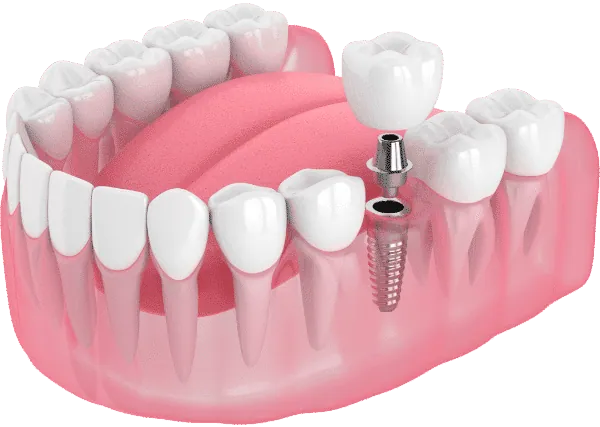 For those who only need to replace a single missing tooth, single tooth implants are available. The typical cost for a single tooth implant ranges from around $1,999 to $5,000, depending on various factors, which will be discussed in a separate section.
Need to Replace Several Teeth? Consider an Implant Bridge
Dental implant bridges are typically used to replace three or more missing teeth, particularly at the back of the mouth. The implants are placed with at least one tooth gap in between them. The cost of a dental implant bridge can vary depending on the number of implants required, but you can generally expect to pay between $8,000 and $11,000 for a three-implant bridge, which includes the cost of the crowns in between the implants. 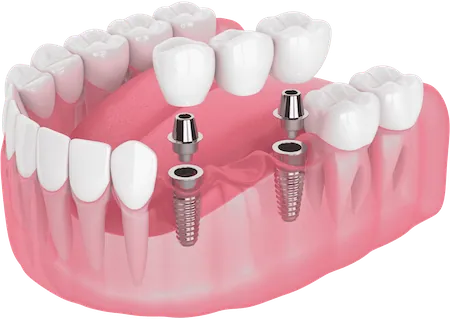 Some may question whether it’s worth spending that much on just a few teeth when they could replace the entire set instead. While there are advantages to keeping your natural teeth, it may not be the most cost-effective option. However, many providers will try to help you save your natural teeth whenever possible.
Are Traditional Dentures the Right Choice for You?
Moving on to Full Arch Solutions, or replacing an entire upper or lower set of teeth. While this guide is primarily focused on dental implants, traditional dentures remain an option. However, they are the cheapest and least satisfying option for most patients due to their poor quality and stability. At our practice, we see many patients who are looking for anything more stable and comfortable than dentures. The cost of dentures ranges from $500 to $8,000 per arch. Our experience shows that the cons of dentures, including poor fit and discomfort, can far outweigh the pros in many cases. If you’re considering dentures, you can refer to our ultimate guide to Full Mouth Dental Implants to see a detailed comparison of the pros and cons. For our patients, the only benefits of dentures are their low cost and the fact that they allow for basic functions such as chewing and smiling. 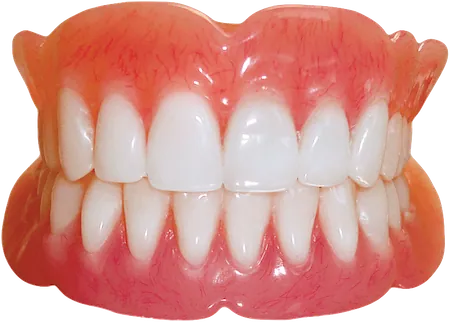
Understanding Snap-On Dentures: A Removable Option
If you’re open to a removable dental solution, Snap-On Dentures may be an option for you. While we primarily focus on fixed dental implant solutions, we’ll still cover Snap-On Dentures. Snap-On Dentures are typically secured onto two or four implants, and you can find more information on them in our Ultimate Guide to Full Mouth Dental Implants. They are a step up from traditional dentures because they eliminate the need for adhesive. 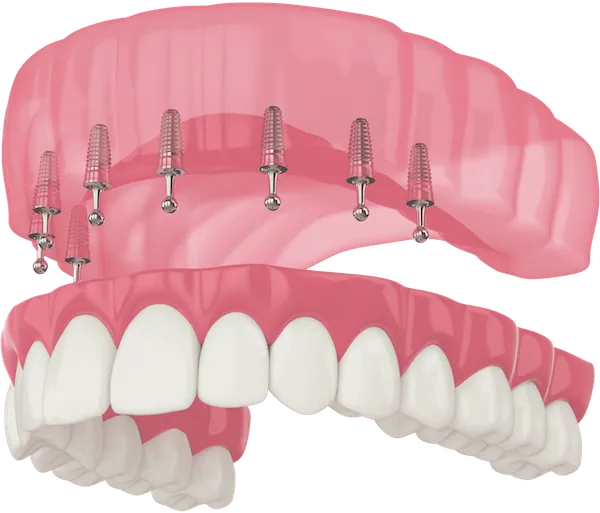 However, based on our experience, many patients still encounter issues with them, which is why we no longer offer them at our locations. They may require frequent adjustments or even complete replacements, and the connecting parts that hold the teeth to the implants can wear out over time. The cost of Snap-On Dentures can vary depending on the number of implants needed and other factors. Our research indicates an average cost of around $30,000 for a reputable provider to create a full upper and lower set. While Snap-On Dentures may be an option for some, it’s important to keep in mind the potential drawbacks and consider other permanent solutions such as fixed dental implants.
All-On-4®: A Permanent Solution for a Full Set of Teeth
Approximately 41 million people are estimated to be using dentures, meaning they have lost all their teeth in either their upper or lower jaw. That’s a significant number of individuals, which means if you’re one of them or may become one in the future and reading this, you’re not alone. Additionally, if you’ve read this far, it’s highly probable that you’re seeking a solution for all of your teeth. All-on-4 dental implants are a type of full-arch dental implant solution. They’re used to replace all of the teeth in one or both arches of your mouth (the upper or lower jaw). The idea behind all-on-4 implants is to give you a brand new set of teeth that are fixed permanently in your mouth, just like natural teeth. The name “all-on-4” refers to the fact that this type of implant procedure typically involves four implants that are placed in the jawbone. The implants are strategically positioned in a way that allows them to support a full arch of replacement teeth. The idea is to distribute the pressure of your bite evenly across all of the implants, so that your new teeth feel stable and comfortable. One of the advantages of all-on-4 implants is that they can often be placed in a single day, which means you can leave the dental office with a brand new set of teeth in just one visit. This is possible because the implants are designed to fuse with your jawbone over time, providing a stable foundation for your replacement teeth. All-on-4 implants are typically more affordable than traditional implant solutions because they use fewer implants and require less overall treatment time. They can also be a good option if you have limited bone density in your jaw, as the implants are placed in areas of the jaw that tend to have more bone. 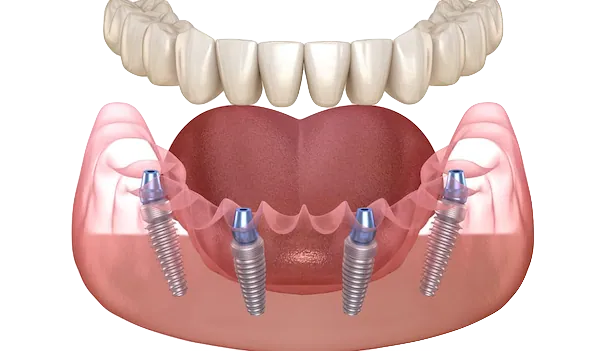 A full set of teeth anchored to dental implants offers the most natural function available today, second only to your natural teeth. With this type of solution, you won’t have to remove your teeth, providing a permanent and fixed solution. Only the professionals who installed them can remove them. Have you ever gone a decade without being able to enjoy the foods you love or eat healthily? Perhaps you already have. It’s no surprise that many patients express wishing they had pursued treatment sooner. Regret is a difficult thing to quantify, and it’s a mindset that has enabled these patients to make progress with their treatment and transform their lives. Regardless of what you choose, you will have to invest in your teeth throughout your lifetime. The unique advantage of dental implants is that you receive financing upfront and make monthly payments. The additional benefit is that you don’t have to deal with ongoing issues associated with traditional dentistry.
What Determines the Price of Dental Implants?
-
The weekend course doctor
Did you know that any dentist can take a weekend course on dental implants and start performing the procedure right after? However, it’s important to consider the experience level of your dental implant provider, especially for a full mouth restoration. You might want to ask your provider how many full mouth restorations and implants they have done or usually do each year, and if they perform these procedures regularly. While some dentists may offer lower prices to attract new patients, it may be worth paying more for a provider with more experience to ensure the procedure goes smoothly and is done right. At Dental & Implant Centers Of Colorado, our surgeons and restorative doctors specialize in full arch restorations and perform these procedures day in and day out, so you can trust that you’re in good hands.
-
Zygomatic implants, bone grafting or other complexities
If your jaw bone has experienced severe loss, you may need additional surgical procedures that increase the total cost of treatment. The following video provides a more detailed explanation of these types of procedures:Dental implant solutions for those with significant bone loss: bone grafting, zygomatic implants, and more.
-
Impact of geographical location
The cost of dental implant treatment may vary depending on where you live. Areas with higher costs of living or major metropolitan cities may lead to higher charges from providers. However, this is not always the case and it’s important to research and compare pricing from different providers in your area.
-
Anesthesia
We often receive the question, “will I be asleep for the procedure?” At Dental & Implant Centers Of Colorado, the answer can be yes. When needed, we include general anesthesia in our fees so you won’t be surprised with an additional cost later on.Other providers may advertise lower costs, but they might not include the anesthesia fee. Be sure to ask who will be providing the anesthesia as well. At Dental & Implant Centers Of Colorado, we believe it’s important for the surgeon to focus solely on the surgery rather than juggling both the anesthesia and surgery. Keep in mind that these are not the only factors that can affect the cost of the procedure, so it’s essential to do your own research and ask the right questions.
Your Dental Implants Price List: What to Expect
Here is an image of a chart from Care Credit’s website that outlines the costs of various dental procedures, including dental implants. 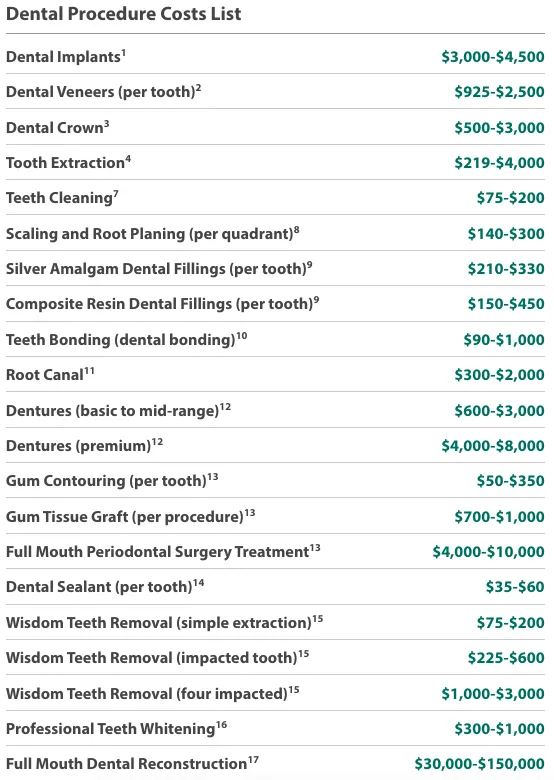
How to Afford Your New Smile: Payment Plans Explained
Given that health insurance does not cover the cost and dental insurance may only provide a small fraction of financial assistance, let’s explore how almost 92% of our patients can afford full mouth dental implants with affordable monthly payment plans. We collaborate with several third-party funding companies to offer the best payment plans feasible. 
 To obtain financing, you should be aware of a few critical points. First and foremost, you need a credit score of at least 675, or you must know someone who does. The monthly payments for a single arch can be around $250-$450, while the cost for full mouth dental implants could be around $450-$900 per month.
How Dental Insurance Classifies Procedures
To figure out what your dental insurance will actually cover, it helps to understand how they categorize different treatments. Most insurance providers group dental procedures into three main tiers: preventive, basic, and major. Preventive care, which includes things like routine cleanings, exams, and yearly X-rays, usually gets the highest coverage—often between 80% to 100%. Insurance companies want to encourage you to stay on top of your oral health to avoid more complex issues down the road. This is why services like an affordable dental cleaning are so well-covered. The next tier, basic services, typically covers procedures like fillings and simple tooth extractions, with insurance paying a smaller percentage.
The final category, major services, is where things get more complicated and coverage drops significantly, often to 50% or less. This group includes treatments like crowns, bridges, and root canals. So, where do dental implants fit in? Most insurance plans classify dental implants as a major procedure, and some may even consider them cosmetic, offering very limited or no coverage at all. This is why it’s so important to review your specific policy and talk with a financial coordinator. Understanding these classifications helps you anticipate your out-of-pocket costs and explore other options, like the payment plans we discussed, to make your treatment manageable. Our team can help you make sense of your benefits and review all your financing and insurance options.
Ready for a Consultation? Here’s What to Ask
You have been provided with some general information about dental implants, but there are two critical pieces of information that are specific to your situation that you still need to know. First, you must find out if you are a candidate for dental implants. It is crucial because some patients may have lost too much bone to be eligible for the procedure. When a tooth is extracted, the bone in that area starts to shrink, and if too much bone is lost, dental implants may not be an option. So, the number one thing you need to determine is if you are a suitable candidate for the procedure. The second crucial piece of information is the cost for your specific situation. It’s vital to understand if there are any additional factors like bone grafting or zygomatic implants, which may impact the total cost. If you’re not a suitable candidate for dental implants, then it doesn’t make sense to know the cost. Once you have established if you’re a candidate and know what factors may impact the cost, then you can determine your financial situation and the payment plan that will work best for you. While you may have a general idea of the costs associated with dental implants, it’s essential to obtain specific information tailored to your unique situation. Schedule your free Colorado consultation now.
Handling Dental Emergencies and Common Oral Conditions
Knowing how to respond to a dental emergency can be the difference between saving and losing a tooth. While some issues can wait for a scheduled appointment, others require immediate attention. A minor chip, for example, isn’t usually an emergency. However, a severely cracked tooth, intense pain, or a tooth that has been completely knocked out means you need to act fast. The key is to stay calm and take the right steps to protect your tooth until you can see a professional. Prompt and correct action can significantly improve the outcome, preventing further damage and more complex procedures down the road.
What to Do if a Tooth is Knocked Out
If an adult tooth is knocked out, time is critical. First, find the tooth and handle it by the crown (the chewing surface), not the root. If it’s dirty, gently rinse it with water, but don’t scrub it or use any soap. The best course of action is to try and place the tooth back into its socket immediately. Hold it in place by gently biting down on a piece of gauze. If you can’t get it back in, don’t force it. Instead, keep the tooth moist by putting it in a small container of milk or your own saliva. Avoid storing it in plain water. Then, call a dentist right away. Getting professional care within the hour gives you the best chance of saving the tooth.
Other Common Oral Health Issues
Beyond a knocked-out tooth, other conditions also demand prompt attention. A cracked or broken tooth should be looked at by a dentist as soon as possible to prevent infection or further damage. Sometimes, an injury or deep decay can infect the sensitive pulp inside the tooth, requiring a root canal to save it. It’s tempting to ignore these problems, especially if the pain isn’t constant, but putting off dental work is never a good idea. Neglecting missing teeth or active infections can lead to irreversible bone loss and other health complications. Addressing these issues early with the right dental solutions not only protects your oral health but your overall well-being, too.
Frequently Asked Questions
Why are dental implants often recommended over traditional dentures? Think of dental implants as a permanent foundation for your new teeth. They are surgically placed into your jawbone, where they function just like natural tooth roots. This is a crucial difference because they stimulate the jawbone, preventing the bone loss that naturally occurs when teeth are missing. Traditional dentures, on the other hand, simply rest on top of your gums and can actually accelerate bone deterioration over time, leading to a poor fit and discomfort. Implants provide a stable, fixed solution that allows you to eat, speak, and smile with complete confidence, without worrying about anything slipping or needing adhesives.
What are the main factors that influence the final cost of my dental implant procedure? The final price tag for dental implants isn’t one-size-fits-all because every patient’s situation is unique. A few key things will determine your specific cost. The first is the complexity of your case; if you’ve experienced significant bone loss, you might need a preliminary procedure like a bone graft, which adds to the total. The experience of your surgeon also plays a role, as does the type of anesthesia you choose for your comfort during the procedure. This is why a personalized consultation, including a CT scan, is so important—it’s the only way to get a precise quote tailored to your health needs and treatment plan.
I’ve been missing teeth for a long time. Is it too late for me to be a candidate for dental implants? This is a common concern, but in most cases, it’s not too late. While it’s true that the jawbone begins to shrink after teeth are lost, modern dentistry offers incredible solutions. Procedures like bone grafting can rebuild the bone, creating a strong and stable foundation necessary for implants. Even in cases of severe bone loss, advanced techniques are available. The best way to know for sure is to have a thorough evaluation with a CT scan, which will show us exactly what we’re working with and allow us to create a plan to restore your smile.
My dental insurance doesn’t offer much coverage for implants. How do people typically pay for this treatment? You’re not alone in this; most dental insurance plans offer limited coverage for major procedures like implants. The reality is that the vast majority of patients use third-party financing to make their new smile a reality. We work with several reputable companies that offer payment plans specifically for healthcare. These plans allow you to break up the total cost of your treatment into manageable monthly payments that fit your budget, so you don’t have to pay for everything at once. Our team can walk you through the application process to find the best option for you.
The idea of getting a full set of new teeth in one day sounds amazing. How does that process work? It truly is a life-changing procedure. The “teeth-in-a-day” concept, often associated with the All-on-4 treatment, means you walk out of our office with a beautiful, functional smile on the same day as your surgery. On the day of your procedure, any remaining failing teeth are removed, the dental implants are strategically placed, and a custom-made, temporary set of fixed teeth is attached to them. You leave with a brand-new smile that you can use right away. This temporary set looks and feels great while your implants fully integrate with your jawbone over the next few months, after which we’ll create your final, permanent set of teeth.
