




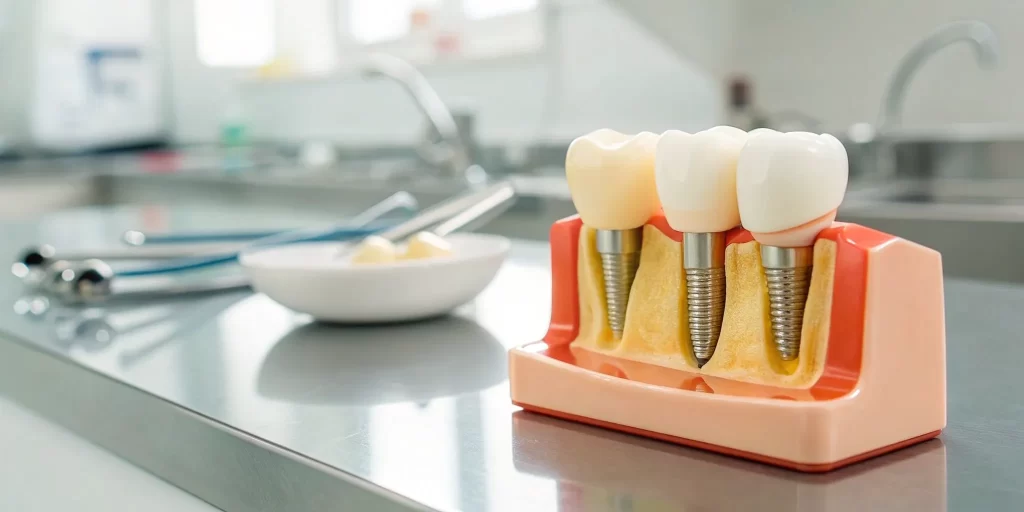
When it comes to the cost of dental implants, there’s a lot of confusing information out there. You might hear that they’re impossibly expensive or see ads for deals that seem too good to be true. The reality is usually somewhere in the middle. A dental implant is a long-term investment in your health, and understanding the value behind the price is key. We’re here to cut through the noise and give you a straightforward breakdown. This guide will debunk common myths and explain the real variables that determine your total investment, covering the various types of dental implants and cost considerations you need to make an informed decision for your smile.
Key Takeaways
- Understand What Shapes Your Final Cost: The price of a dental implant is tailored to your specific situation. Factors like your jawbone health, the type of implant needed, and any preparatory work like a bone graft all contribute to the total investment in your smile.
- The Right Implant is a Custom Fit: There isn’t a single solution for everyone. From individual implants to full-arch restorations like All-on-4®, the best option is determined by your unique oral health and goals, ensuring a stable and long-lasting result.
- A New Smile is More Attainable Than You Think: You can make your treatment affordable by using a combination of dental insurance, third-party financing options like CareCredit, and pre-tax funds from an HSA or FSA.
What Exactly Are Dental Implants?
If you’re missing one or more teeth, you’ve probably heard about dental implants. But what are they, really? Think of a dental implant as a permanent, artificial tooth root. It’s a small, screw-like post, typically made of titanium, that is surgically placed into your jawbone. This post acts as a sturdy anchor for a replacement tooth. Once the implant is in place, a custom-made crown, bridge, or denture can be attached to it, giving you a complete, natural-looking tooth.
The real beauty of dental implants is that they are designed to look, feel, and function just like your natural teeth. Because they fuse directly with your jawbone, they provide incredible stability—meaning you can eat, speak, and smile with confidence, without worrying about anything slipping or shifting. They are a popular and effective way to restore your smile, offering a strong, long-lasting solution that helps maintain your overall oral health. It’s not just about filling a gap; it’s about rebuilding your tooth from the root up for a result that truly lasts.
How Do Dental Implants Work?
The process of getting a dental implant is a journey that happens over a few months, but the result is a permanent new tooth. It starts with a consultation where we map out a personalized plan. The next step is a minor surgical procedure to place the titanium implant post into your jawbone. Over the next several months, a remarkable process called osseointegration occurs—the implant naturally fuses with your bone, creating an incredibly strong foundation. This healing period is crucial for the long-term success of your implant. Once healed, we attach your beautiful, custom-made crown, and you can see the results for yourself.
Why Choose Implants Over Other Smile Solutions?
When it comes to replacing missing teeth, you have a few choices. While dentures and bridges can fill the space, dental implants offer unique, long-term advantages. Unlike a bridge, an implant doesn’t require altering the healthy teeth next to the gap. It stands on its own, preserving your natural tooth structure. More importantly, implants stimulate your jawbone just like a natural tooth root, which helps prevent the bone loss that often occurs with missing teeth. While other restorative options might seem less expensive upfront, the durability and low maintenance of implants often make them a more cost-effective solution over a lifetime. They are an investment in your smile and your overall oral health.
What Are the Different Types of Dental Implants?
When you hear the term “dental implant,” you might picture a single, standard solution. But the world of implant dentistry is much more nuanced. Think of it less like a one-size-fits-all product and more like a custom-tailored suit—the right fit depends entirely on your unique situation. The best type of dental implant for you is determined by factors like the health of your jawbone, the number of teeth you need to replace, and your overall oral health goals.
Understanding the different options is the first step toward making an informed decision about your smile. From the most common types that integrate directly with your jawbone to specialized solutions for those with significant bone loss, each implant is designed to solve a specific set of challenges. Our team at Dental & Implant Centers of Colorado is here to walk you through these choices, ensuring you find the perfect match to restore your confidence and function. Let’s look at the main types of implants available.
Endosteal Implants
This is the most common type of dental implant, and likely the one you’re most familiar with. Endosteal implants are small, screw-like posts, typically made of biocompatible titanium, that are placed directly into your jawbone. Over a few months, a process called osseointegration occurs, where your bone fuses with the implant, creating an incredibly strong and stable foundation. Once healed, this artificial root is ready to support a crown, bridge, or denture. They are the gold standard for patients who have a healthy, sufficient amount of jawbone to work with.
Subperiosteal Implants
What if you don’t have enough healthy jawbone to support an endosteal implant? That’s where subperiosteal implants come in. Instead of being placed in the jawbone, this type of implant rests on top of the bone but underneath the gum tissue. It consists of a metal framework that is custom-fitted to the contours of your jawbone. Posts attached to the frame protrude through the gums to hold the replacement teeth. While less common today due to the high success rates of bone grafting procedures, they remain a viable option for certain patients.
Zygomatic Implants
For those with significant bone loss in the upper jaw, traditional implants often aren’t an option without extensive bone grafting. Zygomatic implants offer a clever and effective alternative. These are much longer than standard implants and are anchored in the cheekbone (the zygoma) rather than the jawbone. This provides a secure foundation for replacement teeth, even when the upper jaw has atrophied. This is a complex and specialized procedure, but for the right candidate, it can be a life-changing solution that avoids the need for a major bone graft.
Mini Dental Implants
As the name suggests, mini dental implants are smaller in diameter than their traditional counterparts. Their smaller size makes the placement procedure less invasive, often requiring less healing time. They are frequently used to stabilize a lower denture, providing a secure fit that eliminates slipping and the need for messy adhesives. Mini implants can also be a solution for replacing small teeth or for patients who don’t have enough bone mass for full-sized implants and want to avoid a grafting procedure. They offer a solid, functional option in specific situations.
All-on-4® Implants
If you’re facing the loss of all your upper or lower teeth, the idea of replacing each one with an individual implant can seem overwhelming. The All-on-4® treatment concept provides a streamlined and effective solution. This technique uses just four strategically placed implants to support a full, permanent arch of teeth. Two implants are placed vertically in the front, while two are placed at an angle in the back to maximize contact with available bone. This approach often eliminates the need for bone grafting and allows you to receive a full set of beautiful, functional teeth in a shorter timeframe, making it a popular choice for full mouth restoration.
What Do Dental Implants Really Cost?
Let’s talk about the number one question on everyone’s mind: what’s the price tag on a new smile? Thinking about the cost of dental implants can feel overwhelming, but it’s helpful to see it as a long-term investment in your health, confidence, and quality of life. The final price varies quite a bit from person to person because every smile is unique. Your specific needs, the type of implant you choose, and your overall oral health all play a role. To give you a clearer picture, let’s break down the typical costs for some of the most common implant solutions.
The Price of a Single Implant
If you’re missing just one tooth, a single dental implant is a fantastic, permanent solution. The cost for one implant typically includes three parts: the titanium post that acts as the root, the abutment that connects the post to the new tooth, and the custom-made crown. National average costs for a single implant can range from around $1,600 to over $4,100. This price covers the entire three-part structure, giving you a complete and functional replacement tooth that blends in seamlessly with the rest of your smile.
The Cost of a Full Arch of Implants
For those needing to replace all of their upper or lower teeth, a full arch of implants offers a stable and beautiful restoration. Instead of replacing every single tooth with an individual implant, this procedure uses a few strategically placed implants to support a full bridge of new teeth. This approach is not only more efficient but also provides incredible stability. The cost for a full arch restoration, often using a technique like All-on-4®, generally falls between $15,000 and $30,000 per arch. While it’s a significant investment, it completely restores your ability to eat, speak, and smile with confidence.
Comparing Mini vs. Traditional Implant Costs
You might have also heard about mini dental implants. These are smaller in diameter than traditional implants and are often used to stabilize loose dentures. Because they are less invasive to place, their cost is also lower, typically ranging from $500 to $1,500 per implant. In contrast, traditional endosteal implants are larger, fuse directly with the jawbone, and act as a permanent root for a new tooth. Their cost is higher, usually between $3,000 and $5,000, because they offer a more durable and long-lasting foundation for tooth replacement. The best option depends entirely on your specific dental needs and goals.
A Look at All-on-4® Pricing
The All-on-4® treatment concept is a specific, highly effective method for full arch restoration. It uses four precisely angled implants in the upper or lower jaw to support a full, permanent bridge. This technique is renowned for providing a strong, stable, and natural-looking smile, often in a shorter timeframe than other methods. The price for an All-on-4® procedure reflects its advanced nature, typically ranging from $15,000 to $30,000 for one arch. This cost covers the comprehensive planning, surgical placement, and the beautiful, custom-crafted set of teeth that will transform your smile.
What Factors Influence the Final Price?
When you start looking into dental implants, you’ll quickly realize there isn’t a single, fixed price tag. Think of it less like buying a product off the shelf and more like commissioning a custom piece of art for your smile. The final cost is a reflection of your unique dental needs and the specific plan required to achieve a lasting, healthy result. Several key factors come together to determine your total investment, from the current state of your oral health to the expertise of the team you choose. Understanding these elements will help you see exactly what goes into rebuilding your smile.
The Health of Your Jawbone
The success of a dental implant hinges on having a strong, healthy jawbone to support it. Your jawbone acts as the foundation, and just like a house, it needs to be solid. If a tooth has been missing for a while, the bone in that area can start to shrink. During your initial consultation, we use 3D imaging to get a clear picture of your bone density. If your jawbone isn’t substantial enough to securely hold an implant, a bone graft may be necessary. This procedure adds volume and strength back to the bone, creating the ideal environment for your implant to integrate and last a lifetime.
Any Necessary Preparatory Procedures
Sometimes, we need to do a little prep work before we can place an implant. Your mouth needs to be a healthy and stable environment to ensure the best possible outcome. This might involve removing a damaged or failing tooth that can’t be saved. In other cases, you might need a specialized procedure like a bone graft or a sinus lift. A sinus lift is a specific type of bone graft for the upper back jaw, ensuring there’s enough bone height between your jaw and sinuses. While these extra steps add to the overall cost, they are absolutely essential for creating a strong foundation and ensuring your implant is a long-term success.
The Quality of the Implant Materials
Not all dental implants are made the same. The materials and the specific implant system used can play a significant role in both the cost and the long-term outcome. Most implants are made from biocompatible titanium, but the quality, design, and manufacturing precision can vary between brands. At Dental & Implant Centers of Colorado, we use materials from trusted, industry-leading manufacturers known for their extensive research and high success rates. While premium systems may have a higher initial cost, they offer superior durability and reliability. Investing in high-quality materials is an investment in a smile that looks, feels, and functions beautifully for years to come.
The Experience of Your Dental Team
When you choose to get a dental implant, you’re not just paying for the implant itself—you’re investing in the skill, training, and artistry of the dental professional placing it. The experience of your surgeon is one of the most critical factors in the success of your procedure. An expert who has placed thousands of implants has the refined skill to handle both straightforward and complex cases with precision, minimizing risks and ensuring optimal results. Our dedicated team has extensive experience in implant dentistry, and that expertise is reflected in the quality of our care and the beautiful, lasting smiles of our patients.
Beyond the Implant: What Other Costs Should You Expect?
When you’re considering dental implants, it’s helpful to think of the final price as a complete package rather than just the cost of the implant itself. The number you see on a price list is often just a starting point. Several other factors and procedures contribute to the total investment in your new smile. From the initial planning stages to long-term care, each step is crucial for a successful and lasting result. A great dental team will walk you through a detailed treatment plan, ensuring there are no surprises. They should be upfront about every potential cost so you can make an informed decision about your health and budget.
Your Initial Consultation and 3D Imaging
Your journey begins with a thorough consultation. This first appointment is more than just a chat; it’s a critical diagnostic step where your dental team assesses your oral health, discusses your goals, and determines if you’re a good candidate for implants. To get a complete picture of your jawbone density and structure, we use advanced 3D imaging, like a Cone Beam Computed Tomography (CBCT) scan. This detailed view allows us to plan the precise placement of your implant. During this visit, we’ll develop your specific treatment plan and provide an exact price, explaining all the costs involved before you commit to anything.
Preparatory Work like Bone Grafts
Not everyone’s jaw is immediately ready for an implant. If you’ve had a missing tooth for a while, the bone in that area may have started to shrink. To ensure the implant has a solid foundation for success, you might need a preparatory procedure like a bone graft. This common treatment involves adding bone material to your jaw to build it up. In other cases, a damaged tooth may need to be extracted before an implant can be placed. The cost of your dental implant procedure can change based on whether you need these additional treatments to prepare your mouth for a successful outcome.
Sedation Options and Temporary Teeth
Your comfort during the procedure is a top priority. We offer various sedation options to help you relax, from local anesthesia to deeper levels of sedation. The type you choose will affect the overall cost. Additionally, after the implant post is placed, there’s a healing period before your final crown is attached. During this time, you won’t have to live with a gap in your smile. We can create a temporary tooth for you to wear. Some clinics charge extra for these temporary solutions, so it’s an important detail to discuss when reviewing your treatment plan and costs.
Follow-Up Visits and Long-Term Care
Your relationship with your dental team doesn’t end after surgery. You’ll have several follow-up visits to monitor your healing and ensure the implant is integrating properly with your jawbone. Once your final crown is in place, long-term care is key to protecting your investment. Just like natural teeth, implants require regular professional cleanings and excellent at-home hygiene to stay healthy. Factoring in the cost of routine check-ups and cleanings is essential for maintaining your new smile for years to come. Hearing from other patients can also give you a good idea of the long-term experience and successful outcomes.
How to Pay for Your New Smile
Investing in your smile with dental implants is a big decision, and it’s completely normal to think about the financial side of things. The good news is that a healthy, confident smile is more attainable than you might think. While the final cost depends on your specific needs, there are several straightforward ways to manage the expense without putting your life on hold. Think of it less as a single, overwhelming cost and more as a flexible investment in your long-term health and happiness.
At Dental & Implant Centers of Colorado, we believe that financial concerns shouldn’t stand between you and the care you deserve. Our team is here to walk you through every option, helping you find a path that fits your budget comfortably. From making the most of your insurance benefits to exploring flexible payment plans, we’ll help you put together a financial strategy that works for you. You can learn more about our approach on our financing and insurance page. Let’s look at some of the most common ways to pay for your new smile.
Using Your Dental Insurance Coverage
The first place most people look is their dental insurance plan, and it’s a great place to start. It’s important to know that coverage for dental implants can vary quite a bit. Some plans view implants as a cosmetic procedure and may not cover the full cost. However, many plans will contribute to certain parts of the process, like covering the cost of the crown that attaches to the implant post. The best first step is to let our team review your policy. We can help you understand your specific benefits and submit all the necessary paperwork to ensure you get the maximum coverage you’re entitled to.
Exploring Third-Party Financing Plans
If you prefer to pay for your treatment over time, third-party financing is an excellent and popular option. Companies like CareCredit function like a credit card specifically for healthcare expenses, allowing you to break down the total cost into manageable monthly payments. These plans often come with flexible terms, including interest-free periods, which can make a significant difference. This approach allows you to move forward with your treatment right away without having to pay the entire amount upfront. Our team can help you with the application process, which is often quick and straightforward, with most patients receiving an immediate decision.
Putting Your HSA or FSA to Work
Do you have a Health Savings Account (HSA) or Flexible Spending Arrangement (FSA) through your employer? If so, you can use these pre-tax dollars to pay for your dental implants. This is a fantastic way to save money, since you’re using funds that haven’t been taxed. Dental implants are generally considered a qualified medical expense, making them an ideal use for your HSA or FSA funds. Be sure to check the specifics of your account, but this is a smart financial tool that can make your treatment significantly more affordable. It’s your money, saved specifically for your health—why not use it for a smile that will last a lifetime?
Understanding Your Payment Plan Options
The most important step you can take is to have an open conversation about your budget and financial options. When you come in for a consultation, we’ll provide a clear and detailed breakdown of all the costs associated with your personalized treatment plan—no surprises or hidden fees. From there, we can explore all the avenues available to you. Our goal is to find a solution that makes you feel comfortable and confident. The incredible team at our clinics is committed to providing expert care that fits your life, and that includes the financial aspect of your treatment.
Debunking Common Myths About Implant Costs
When it comes to dental implants, the conversation often turns to cost. It’s a significant investment in your health and confidence, so it’s completely understandable to have questions about the price tag. Unfortunately, there’s a lot of confusing information out there that can make it hard to know what to expect. Let’s clear up some of the most common myths so you can approach your decision with clarity and confidence. Understanding the real factors behind the cost is the first step toward getting a smile you’ll love for a lifetime.
Myth #1: “My insurance will cover everything.”
This is one of the most frequent misconceptions I hear. While dental insurance is a fantastic tool for managing healthcare costs, it often has limitations, especially with advanced procedures like implants. Many plans categorize dental implants as a cosmetic or “extra” procedure, meaning they may not cover the full amount. Some policies might contribute toward the cost of the crown (the visible tooth part) but not the implant post itself. The best first step is to review your specific benefits. Our team is also here to help you understand your coverage and maximize what your plan offers. We work with you to figure out the details so there are no surprises.
Myth #2: “A cheaper implant is just as good.”
It’s tempting to look for a bargain, but when it comes to your health, quality is paramount. A dental implant is a medical device that becomes a permanent part of your body, so the materials used and the skill of the surgeon are incredibly important. A lower price tag can sometimes indicate less experienced practitioners or lower-grade materials, which can lead to complications, implant failure, and more costly repairs down the road. Think of it as a long-term investment in your well-being. Choosing an experienced dental team ensures your procedure is done right the first time, giving you a durable and beautiful result that lasts for decades.
Myth #3: “The price you’re quoted is a one-time fee.”
An initial price quote for a dental implant can sometimes be misleading if it isn’t broken down properly. Often, the number you first see might only be for the titanium implant post itself—the part that acts as the tooth root. This price may not include the abutment (the connector piece) or the final, custom-made crown. Furthermore, if you need preparatory procedures like a tooth extraction or a bone graft to ensure the implant has a stable foundation, those will be separate costs. We believe in full transparency, which is why we provide a detailed treatment plan that outlines every step and associated cost from your consultation to your final follow-up.
Myth #4: “All dental implants cost about the same.”
This is simply not the case. The cost of dental implants varies widely because every patient’s situation is unique. The final price depends on several key factors: the number of implants you need, the type of implant used (e.g., single, All-on-4®), the complexity of your surgery, and whether you require additional treatments. For example, replacing a single missing tooth will have a very different cost than a full mouth restoration. The only way to get an accurate estimate is through a personal consultation where we can assess your oral health and discuss your specific goals. This allows us to create a customized treatment plan tailored just for you.
Finding Your Perfect Fit: Which Implant Is Right for You?
Choosing to get a dental implant is a big step toward reclaiming your smile, but it’s not a one-size-fits-all solution. The right implant for you depends on your specific dental health, the condition of your jawbone, and your personal goals. Think of it like a custom-tailored suit—it needs to be designed just for you. This is why a thorough consultation is so important. It allows a dental expert to assess your unique situation and map out a plan that will give you the best, most lasting results. Let’s walk through the key factors that will help you and your dentist decide on the perfect fit for your new smile.
Matching an Implant to Your Unique Needs
The world of dental implants has several options, each designed for different situations. The most common type is the endosteal implant, which is placed directly into your jawbone. If your jawbone isn’t healthy enough for that, a subperiosteal implant, which rests on top of the bone but under the gum, might be a better choice. For more complex cases, zygomatic implants are anchored in the cheekbone instead of the jawbone. Each type comes at a different price point, but the best choice isn’t about cost—it’s about what will be safest and most effective for your mouth’s structure. Your dentist will help you understand which option makes the most sense for you.
Considering Your Overall Oral Health
Before an implant can be placed, we need to make sure your mouth is a healthy environment for it to thrive. A successful implant needs to fuse with your jawbone, and that process works best when your gums and surrounding teeth are in great shape. This might mean taking care of a few things first. For some, it could involve a thorough cleaning to clear away plaque and tartar. For others, it might mean removing a damaged tooth that can’t be saved. Creating a healthy foundation is a critical first step that ensures your new implant has the strongest possible start for a long and successful life.
Understanding the Timeline and Recovery Process
Patience is part of the process when it comes to dental implants. From your first consultation to the final placement of your new tooth, the entire journey typically takes between three and nine months. This timeline allows for the most important step: osseointegration, which is when your jawbone grows around and fuses with the implant, creating a super-strong base. After the implant is placed, your body needs time to heal before the permanent crown is attached. While it might seem like a long wait, this careful, multi-step process is what makes implants such a durable and permanent solution, giving you results that can last a lifetime.
Related Articles
- Dental Implants for Elderly: What You Need to Know
- Dental Implants Cost Westminster CO: A Full Breakdown
- Dental Implant Cost in Denver: A 2025 Guide
- The Process & Cost — Dental & Implant Centers of Colorado
Frequently Asked Questions
Does the dental implant procedure hurt? This is probably the number one concern I hear, and it’s a completely valid question. The short answer is no, the procedure itself is not painful. We make sure the area is completely numb with local anesthesia before we begin. For anyone feeling anxious, we also offer sedation options to help you feel calm and relaxed. You can expect some mild soreness and discomfort for a few days afterward, similar to other dental procedures, but this is easily managed with over-the-counter pain relievers.
How long do dental implants actually last? Think of a dental implant as a permanent solution. With proper care, they are designed to last a lifetime. The titanium post fuses with your jawbone, creating an incredibly strong and durable foundation that doesn’t decay. While the crown attached to the implant may eventually need to be replaced due to normal wear and tear (just like a natural tooth’s crown might), the implant post itself is a long-term investment in your oral health.
How do I care for my new dental implants? One of the best things about dental implants is that you care for them just like you would your natural teeth. There are no special adhesives or soaking solutions required. A simple routine of twice-daily brushing, daily flossing, and regular dental check-ups and cleanings is all you need to keep your implant and the surrounding gums healthy. This straightforward care is key to ensuring your implant lasts for decades to come.
What happens if I don’t have enough jawbone for a traditional implant? It’s a common issue for people who have had a missing tooth for a long time to experience some bone loss in that area. But this doesn’t automatically disqualify you from getting an implant. We have several advanced solutions to address this, such as a bone graft procedure that rebuilds the foundation of your jaw. In some cases, we can use specialized implants that are designed specifically for situations with significant bone loss. A detailed 3D scan during your consultation will tell us exactly what’s needed to build a strong base for your new smile.
How do I know if I’m a good candidate for dental implants? The best candidates for dental implants are individuals with good overall health and healthy gums. However, almost anyone who is missing one or more teeth can be a candidate. Factors like your jawbone density and your specific oral health needs will determine the best course of action. The only true way to know for sure is to come in for a personal consultation. This allows us to take a close look at your situation and create a treatment plan that is perfectly tailored to you.
