




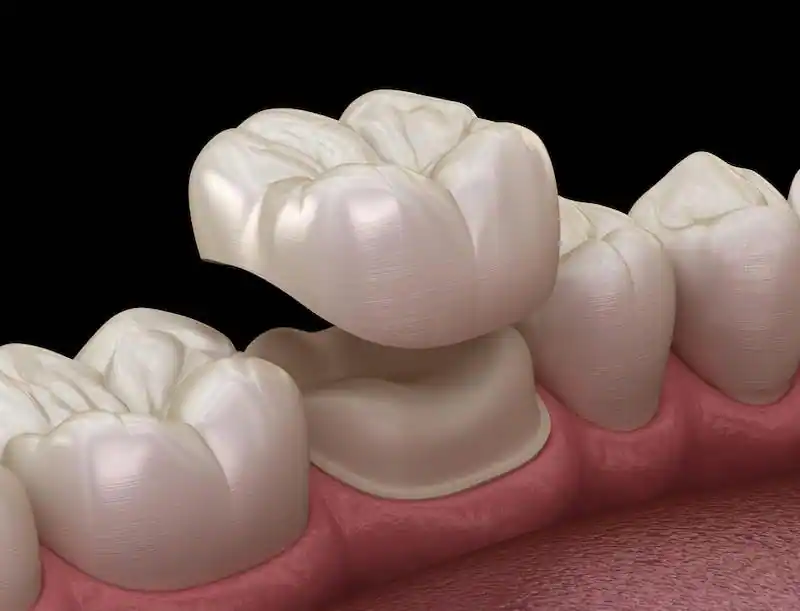
It’s possible to have “good teeth”—no major cavities, no widespread decay—and still feel like your smile isn’t serving you well. Perhaps your teeth have become shorter over the years from grinding, or maybe your bite feels misaligned, causing strain on your jaw. These are structural problems, not just surface-level issues. For situations like these, a full mouth restoration is a transformative solution. By using full mouth crowns to rebuild the architecture of your smile, we can correct your bite, restore the proper shape and size of your teeth, and ensure your oral health is stable for the long term.
A full mouth restoration, also known as full mouth reconstruction, is a dental procedure designed to restore the function, aesthetics, and health of the entire mouth. While it is commonly associated with extensive tooth damage or tooth loss, full mouth restoration can also be performed on individuals with good teeth who seek to improve their smile and overall oral health. This article aims to provide a comprehensive guide to full mouth restoration with crowns for those individuals with good teeth who desire a complete dental makeover.
What Is a Full Mouth Crown Restoration?
Full mouth restoration involves a combination of dental treatments that aim to address multiple oral health concerns simultaneously. It is a highly personalized and comprehensive approach to achieve optimal oral function, comfort, and aesthetics. The process typically involves the use of dental crowns, which are tooth-shaped caps placed over existing teeth to enhance their appearance, strength, and alignment.
When is Crowning Every Tooth Necessary?
The idea of placing a crown on every single tooth might sound intense, but it’s often the most effective solution for complex dental issues. This comprehensive approach is typically recommended when there are severe bite problems that affect your entire mouth. Conditions like chronic teeth grinding (bruxism) or temporomandibular joint (TMJ) disorders can cause widespread wear and tear, chipping, and misalignment. Over time, this can lead to pain, difficulty chewing, and an unbalanced smile. A full mouth crown restoration addresses these problems holistically, rebuilding your bite to restore proper function, protect your teeth from further damage, and create a beautiful, harmonious smile.
Who Needs a Full Mouth Crown Restoration?
You might be wondering if a full mouth crown restoration is the right path for you, especially if you feel your teeth are generally in good shape. This procedure isn’t just for addressing widespread decay or damage; it’s also a powerful solution for people dealing with functional problems that compromise their oral health over the long term. It’s for individuals whose bite has been significantly altered by years of grinding, those with jaw joint pain that stems from misalignment, or even people who have had multiple root canals that have weakened their teeth. The goal is to create a stable, comfortable, and functional foundation for your smile.
At Dental & Implant Centers of Colorado, we see this as more than a cosmetic makeover. It’s a way to correct underlying issues that, if left untreated, could lead to more severe problems down the road. By evaluating your entire oral system—teeth, gums, and jaw—we can determine if a comprehensive approach is needed to achieve lasting health and confidence. Understanding the specific conditions that call for this type of restoration can help you see why it might be the best investment in your long-term well-being and one of the most transformative services we offer.
Addressing Severe Oral Health Issues
Even if your teeth appear healthy at a glance, several underlying conditions can create the need for a full mouth crown restoration. These issues often develop slowly, causing gradual damage that eventually impacts your entire bite and overall oral health. Think of it like a car with a misaligned frame—even with new tires, you’ll still have problems until you fix the underlying structure. Addressing these severe oral health issues with a comprehensive treatment plan is key to preventing future complications, alleviating discomfort, and ensuring your smile is not only beautiful but also built to last for years to come.
Severe Tooth Wear from Grinding (Bruxism)
If you wake up with a sore jaw or a dull headache, you might be one of the millions of people who grind their teeth at night. This condition, known as bruxism, exerts incredible force on your teeth, wearing down the enamel over time. This can lead to flattened, chipped, or fractured teeth, as well as increased sensitivity and pain. A full mouth crown restoration can rebuild the tooth structure that has been lost to grinding. By placing custom-made crowns over the affected teeth, we can restore their original shape and size, creating a protective barrier against future grinding and re-establishing a proper, comfortable bite.
Damage from Advanced Gum Disease
Advanced gum disease, or periodontitis, doesn’t just affect your gums; it can severely damage the bone that supports your teeth. As the bone deteriorates, teeth can become loose, shift out of position, or even fall out. After the gum disease itself has been treated, a full mouth crown restoration can be an essential step in stabilizing your smile. Crowns can be used to splint loose teeth together, providing strength and support. They also improve the overall function and appearance of your mouth, giving you a healthier, more secure smile after battling gum disease.
Jaw Joint Problems (TMJ)
Pain in your jaw, clicking or popping sounds when you chew, and chronic headaches can all be signs of a temporomandibular joint (TMJ) disorder. These issues often arise from a misaligned bite that puts excess strain on your jaw joints. A full mouth crown restoration is one of the most effective ways to treat TMJ disorders related to your bite. By carefully designing crowns for every tooth, we can completely rebuild your bite to an ideal position that allows your jaw to function without pain or stress. This not only alleviates TMJ symptoms but also prevents the uneven tooth wear that often accompanies the condition.
Protecting Teeth After Root Canals
A root canal is a fantastic procedure for saving a tooth that has become infected or deeply decayed, but it does leave the tooth more brittle and prone to fracture. That’s why a dental crown is almost always placed over a tooth after a root canal. Now, imagine you’ve had several root canals on various teeth over the years. A full mouth crown restoration can ensure that all these weakened teeth are properly protected and integrated into a stable, functional bite. This comprehensive approach prevents individual teeth from breaking and ensures your entire smile remains strong and reliable.
Considering Your Overall Health
A full mouth crown restoration is a significant undertaking, and your overall health plays a crucial role in the success of the treatment. Before beginning the process, it’s important to have a thorough consultation to discuss your complete medical history. Conditions like diabetes or autoimmune disorders can affect your body’s ability to heal, which is an important consideration. Likewise, your lifestyle habits, such as smoking or your daily oral hygiene routine, will impact the longevity of your new crowns. Our expert team takes a holistic view, ensuring you are a good candidate for the procedure and creating a personalized plan that sets you up for a successful, lasting outcome.
Your Consultation: Assessment and Treatment Planning
Before commencing a full mouth restoration, a thorough examination is conducted by a skilled dentist or prosthodontist. This assessment includes a review of the patient’s oral health history, a comprehensive dental examination, X-rays, and potentially advanced imaging techniques like digital scans or cone beam computed tomography (CBCT). The dentist will evaluate the condition of the teeth, gums, jaw joints, and bite alignment to develop an individualized treatment plan.
Previewing Your New Smile with 3D Imaging
One of the most exciting parts of the planning process involves advanced imaging technology. Using tools like 3D imaging and cone beam computed tomography (CBCT), your dental team gets a detailed, three-dimensional view of your entire oral structure—teeth, gums, and jawbone included. This isn’t just about getting a clearer picture; it’s about precision. This detailed map allows your dentist to design a highly personalized treatment plan, ensuring each crown is perfectly shaped and placed for optimal function and aesthetics. For you, the patient, this technology offers a unique opportunity to preview your new smile. You can see a digital model of the final results before the treatment even begins, which helps you feel confident and excited about the outcome. A skilled team that uses these advanced tools is essential for ensuring every detail of your new smile is meticulously planned.
How Full Mouth Dental Crowns Transform Your Smile
Dental crowns play a vital role in full mouth restoration for individuals with good teeth. They are custom-made restorations designed to completely cover the visible portion of a tooth, providing both functional and aesthetic improvements. Dental crowns can address various concerns, including tooth decay, structural damage, misalignment, discoloration, and wear. They are typically fabricated from materials such as porcelain, ceramic, or zirconia, which offer durability and natural-looking results. Let’s explore the various aspects of dental crowns in the context of full mouth restoration:
Strengthening and Protecting Your Teeth
Dental crowns are primarily used to strengthen and protect damaged or weakened teeth. Even if your natural teeth are in relatively good condition, they may have minor cracks, chips, or wear. Placing crowns over these teeth helps reinforce their structure, preventing further damage and potential tooth loss. By acting as a protective barrier, crowns can enhance the longevity of your natural teeth.
Restoring Your Teeth’s Natural Shape and Function
Dental crowns are customized to mimic the shape, size, and contour of your natural teeth. They are carefully crafted to ensure a seamless blend with your existing dentition, creating a harmonious and aesthetically pleasing smile. Crowns restore the functionality of damaged teeth, allowing you to bite, chew, and speak with ease.
Perfecting Your Smile’s Appearance
In addition to their functional benefits, dental crowns contribute significantly to the aesthetic improvement of your smile. They can address tooth discoloration, irregularities, and misalignment, providing a uniform and radiant appearance. Dental crowns can be color-matched to your surrounding teeth, ensuring a natural blend that is virtually indistinguishable from your natural dentition.
Choosing the Right Crown Material for You
Dental crowns are available in a variety of materials, each with its unique advantages:
i. Porcelain or Ceramic Crowns
These crowns offer excellent aesthetics, as they can closely resemble the natural color and translucency of teeth. They are an ideal choice for front teeth or highly visible areas.
ii. Porcelain-Fused-to-Metal (PFM) Crowns
PFM crowns combine the strength of a metal substructure with a porcelain outer layer. They provide durability and natural-looking results. However, in some cases, the metal substructure may cause a slight grayish hue at the gumline.
iii. Zirconia Crowns
Zirconia crowns are known for their exceptional strength and durability. They are highly resistant to chipping and cracking, making them suitable for posterior teeth that require more chewing force.
iv. Metal Crowns
Metal alloys, often containing gold, platinum, or base-metal alloys, create some of the strongest crowns available. They are incredibly durable, can withstand heavy biting and chewing forces, and rarely chip or break. Because of their unmatched strength, they are an excellent choice for molars in the back of your mouth. The main consideration is their metallic color, which stands out against natural teeth. For this reason, they are typically reserved for out-of-sight restorations where function and longevity are the top priorities over aesthetics. They provide a reliable, long-lasting solution for teeth that do the most work.
v. All-Resin Crowns
All-resin crowns are made from a tooth-colored composite resin material, similar to what is used for dental fillings. They are generally the most affordable crown option, which can be an appealing factor. However, this lower cost comes with a trade-off in durability. Resin crowns are more fragile than porcelain or metal crowns and can wear down or fracture over time with normal use. Because of this, dentists most often use them as a temporary crown to protect a tooth while a permanent one is being crafted in a dental lab, rather than as a long-term, permanent solution for your smile.
vi. Stainless Steel Crowns
You might associate stainless steel crowns with pediatric dentistry, and for good reason—they are commonly used to protect badly damaged baby teeth until they fall out naturally. These pre-made crowns are durable and cost-effective for temporary situations. For adults, their role is almost always temporary as well. A dentist might place a stainless steel crown to protect a tooth or a prepared site after a procedure like a root canal. This ensures the tooth remains safe and functional while a permanent, custom-fit crown is being fabricated, serving as a placeholder to maintain your oral health.
How Your Dentist Selects the Best Material
With so many options, you might wonder how you’ll ever choose the right one. The good news is, you don’t have to make this decision alone. Selecting the best crown material is a collaborative process between you and your dentist. A skilled dental professional will consider several key factors to recommend the ideal material for your specific needs. They’ll look at the tooth’s location and its function—a back molar used for heavy chewing requires more strength than a front tooth. The health of your surrounding gum tissue, your personal preferences, and how much the tooth shows when you smile are also crucial parts of the conversation. The goal is to find the perfect balance of strength, durability, and aesthetics for each tooth, ensuring your new smile is both beautiful and built to last. The expert team at Dental & Implant Centers of Colorado takes a holistic approach, working with you to create a treatment plan that aligns with your health and cosmetic goals.
Tailored for You: Customization and Precision
Dental crowns in full mouth restoration are meticulously customized to meet your specific needs and desired outcome. Modern dental technology, such as digital impressions and computer-aided design and manufacturing (CAD/CAM), enables dentists to create precise, well-fitting crowns. The dentist will consider factors such as bite alignment, occlusion, and aesthetics when designing and fabricating the crowns to ensure optimal function and appearance.
How Long Do Crowns Last and How to Care for Them?
With proper care and maintenance, dental crowns can last for many years. It is essential to follow good oral hygiene practices, including regular brushing, flossing, and rinsing with an antibacterial mouthwash. Additionally, it is recommended to visit your dentist for routine check-ups and professional cleanings to detect any potential issues early on.
Understanding the Lifespan and Potential Risks of Crowns
Investing in a full mouth restoration is a significant step toward reclaiming your smile’s health and appearance. Naturally, you want to know what to expect long-term. While dental crowns are a durable and reliable solution, it’s helpful to understand their lifespan and be aware of a few potential considerations. A successful outcome depends on both expert installation and your commitment to ongoing care. Knowing the full picture helps you partner with your dental team to ensure your new smile lasts for years to come.
How Long Do Dental Crowns Last?
Dental crowns are built to last, but they aren’t permanent. With excellent care, a crown can last for many years, often between 10 and 15, and sometimes even longer. The key to maximizing their lifespan is consistent and thorough oral hygiene. Just like with your natural teeth, this means diligent daily brushing, flossing, and using an antibacterial mouthwash to keep the underlying tooth and surrounding gums healthy. Regular check-ups and professional cleanings are also crucial, as they allow your dentist to monitor the condition of your crowns and address any minor issues before they become bigger problems. Your daily habits are the single most important factor in protecting your investment.
Potential Disadvantages to Consider
While the benefits of crowns are transformative, it’s important to go into the process with a clear understanding of the entire procedure. To place a crown, a portion of your natural tooth enamel must be removed to make space for the restoration. This process is irreversible, which is why it’s a decision made in careful consultation with your dentist. Our goal is always to preserve as much healthy tooth structure as possible while achieving a result that is strong, functional, and beautiful. Being aware of the potential downsides ensures you can make a fully informed choice about your dental health.
Temporary Tooth Sensitivity
After your crown procedure, it’s common to experience some temporary sensitivity in the treated tooth. You might notice a reaction to hot or cold foods and drinks for a few days or even a couple of weeks. This is a normal part of the healing process as the tooth and surrounding nerves adjust to the new restoration. The sensitivity is usually mild and can be easily managed with over-the-counter pain relievers if needed. If you experience severe or prolonged sensitivity, it’s important to contact your dentist, but for most people, this discomfort fades quickly on its own.
Risk of Chipping, Cracking, or Loosening
Modern crowns, especially those made from zirconia, are incredibly strong, but they aren’t indestructible. Just like natural teeth, they can chip or crack over time, particularly if you grind your teeth or bite down on very hard objects like ice or nut shells. A crown can also become loose if the dental cement washes out from underneath it. This is why a precise fit is so critical from the start. An experienced dental team ensures your crown is seated perfectly, minimizing the risk of it loosening or creating spaces where problems can develop.
Potential for Decay Under a Poorly-Fitted Crown
One of the most important considerations is the fit of the crown. If a crown doesn’t fit perfectly against the tooth, it can leave a tiny gap along the margin. This gap can become a trap for bacteria, which can lead to decay in the natural tooth structure underneath the crown. Because you can’t see or brush this area, the decay can progress without you realizing it. This highlights the importance of choosing a skilled prosthodontist who uses precise techniques and technology to create a seamless seal, protecting the underlying tooth and ensuring the long-term success of your restoration. You can see examples of our precise work in our before and after gallery.
Your Full Mouth Crown Restoration: A Step-by-Step Guide
The process of full mouth restoration with crowns typically involves the following steps:
Understanding the Treatment Timeline
A full mouth restoration is a journey, not a single appointment. The timeline is unique to you and depends entirely on your specific oral health needs and aesthetic goals. The overall process can span several weeks to several months, especially if it involves multiple procedures like gum treatments or dental implants. During your initial consultation, we map out a clear, step-by-step treatment plan so you know exactly what to expect. This plan outlines each phase, from initial preparations to the final placement of your beautiful new crowns. We believe in transparency and partnership, ensuring you feel informed and comfortable every step of the way as we work together to rebuild your smile.
Crown Creation and Temporary Fittings
The first major step in the crowning process involves preparing your natural teeth. To ensure a perfect fit for the crowns, a small amount of enamel is gently reshaped from the tooth’s surface. After this, we take highly precise digital impressions of your teeth, which are sent to a specialized dental laboratory. While the lab artisans craft your permanent, custom crowns, you won’t leave with an incomplete smile. We’ll fit you with temporary crowns that look natural and protect your prepared teeth. This phase typically takes a few weeks, during which the lab meticulously creates restorations that will transform your smile’s function and appearance. You can see the incredible results of this detailed work in our before and after gallery.
Healing Time for Dental Implants
If your full mouth restoration plan includes replacing missing teeth, dental implants offer the most durable and natural-feeling solution. Placing an implant requires a healing period for a process called osseointegration to occur. This is where the implant post, typically made of titanium, fuses directly with your jawbone, creating an incredibly strong foundation for your new crown. This crucial healing phase can take anywhere from three to six months. While it requires patience, this step is what makes dental implants so successful and long-lasting. During this time, we ensure you are comfortable and may provide a temporary tooth replacement so you can continue to smile with confidence while your body does its amazing work.
Step 1: Preparing Your Teeth
To accommodate the dental crowns, a minimal amount of enamel is removed from the tooth surface. This step ensures a precise fit for the crowns and allows for a seamless integration with adjacent teeth.
Step 2: Taking Impressions for a Perfect Fit
After tooth preparation, impressions of the teeth are taken to create precise molds. These impressions serve as a blueprint for the fabrication of the custom crowns, ensuring a proper fit and alignment.
Step 3: Wearing Temporary Crowns
While the permanent crowns are being fabricated, temporary crowns are placed over the prepared teeth to protect them and maintain aesthetics and function.
Step 4: Placing Your Permanent Crowns
Once the custom crowns are ready, the temporary crowns are removed, and the permanent crowns are cemented onto the prepared teeth. The dentist ensures proper fit, alignment, and color matching to achieve a natural-looking smile. 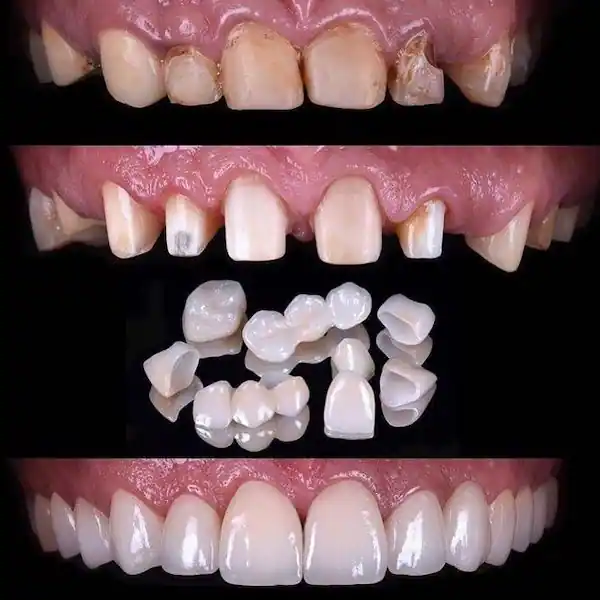
Pairing Crowns with Other Dental Procedures
Depending on individual needs, full mouth restoration with crowns may be combined with other dental procedures to achieve optimal results. Some common complementary treatments include:
a. Dental Implants
If tooth loss is present, dental implants may be recommended to replace missing teeth. Implants provide stability and support for the crowns, enhancing functionality and aesthetics.
b. Periodontal Treatment
In cases where gum disease is present, periodontal therapy may be required to treat and stabilize the gums before initiating the restoration process.
c. Orthodontics
Orthodontic treatment, such as braces or clear aligners, may be incorporated to correct misalignment or malocclusion, ensuring proper bite alignment and enhancing the longevity of the restoration.
d. Teeth Whitening
For individuals seeking a brighter smile, teeth whitening procedures can be performed before crown placement to achieve consistent color throughout the mouth.
e. Dental Bridges
If you have a gap from one or more missing teeth, a dental bridge is an excellent way to complete your smile during a full mouth restoration. A bridge is essentially a false tooth (or teeth) held securely in place by the teeth on either side of the gap. To provide the necessary strength and support, your dentist will often place crowns on these neighboring teeth, which act as anchors. This not only restores the complete look of your smile but also improves your ability to chew and speak clearly. While dental implants are a leading solution for missing teeth, bridges offer a reliable and long-lasting alternative that integrates seamlessly with your new crowns, creating a uniform and functional result.
How to Maintain Your Full Mouth of Crowns
After full mouth restoration with crowns, maintaining good oral hygiene practices is crucial for long-term success. Regular dental visits, professional cleanings, and proper oral care at home are essential to ensure the health and longevity of the restorations. Avoiding habits such as smoking, teeth grinding, and chewing on hard objects can also contribute to the durability of the crowns.
What to Expect Immediately After the Procedure
Once your permanent crowns are in place, it’s normal to feel some sensitivity or discomfort. You can expect some inflammation and irritation in the gums around your new crowns, but don’t worry, this is a typical part of the healing process. Any initial pain should begin to fade within a few days as your mouth adjusts. Your dentist will provide specific aftercare instructions to help you manage any discomfort and ensure a smooth recovery. Following these guidelines closely is the best way to support the healing process and get back to enjoying your beautiful new smile as quickly as possible.
Specific Maintenance for Long-Lasting Crowns
Your new crowns are an investment in your oral health, and with the right care, they can last for many years. Think of their maintenance as being very similar to caring for your natural teeth. It’s essential to maintain excellent oral hygiene, which includes brushing at least twice a day, flossing daily, and using an antibacterial mouthwash. These habits prevent plaque buildup around the crown and keep your gums healthy. Regular check-ups and professional cleanings are also key, as they allow your dental team to monitor the condition of your crowns and address any potential issues before they become bigger problems.
Foods to Avoid
While modern crowns are incredibly durable, they aren’t indestructible. To prevent damage, it’s best to avoid chewing on extremely hard or sticky items. This includes things like ice, hard nuts, and un-popped popcorn kernels, which can cause a crown to chip or crack. Super sticky foods like taffy or caramel can also be problematic, as they have the potential to loosen or even pull a crown off. Being mindful of what you eat is a simple way to protect your restoration and keep it secure for years to come.
Protecting Crowns from Grinding
If you have a habit of grinding or clenching your teeth (a condition known as bruxism), especially at night, it’s important to protect your crowns from the extra pressure. The constant force from grinding can wear down or damage both natural teeth and dental restorations. Your dentist will likely recommend a custom-fitted nightguard. This simple oral appliance creates a protective barrier between your upper and lower teeth, absorbing the pressure and safeguarding your crowns while you sleep.
Preventing Stains
Most crown materials, like porcelain and zirconia, are highly resistant to staining. However, the dental cement used to bond them can sometimes discolor over time, creating a dark line at the gumline. To keep your entire smile bright and uniform, it’s a good idea to limit foods and drinks known for staining, such as coffee, red wine, tea, and berries. If you do enjoy them, rinsing your mouth with water afterward can help minimize their effects.
Cost and Financial Considerations for Full Mouth Crowns
A full mouth restoration is a significant investment in your health, function, and confidence. Because the treatment is completely customized to your unique situation, the final cost can vary widely. Factors that influence the price include the number of crowns needed, the materials used, and whether any additional procedures like dental implants or gum treatments are required. During your consultation, our team will provide a detailed breakdown of all associated costs so you have a clear understanding of the investment. We believe in full transparency and are here to help you explore all your options for making your dream smile a reality.
How Much Does a Full Mouth Restoration Cost?
Since every treatment plan is tailored to the individual, there isn’t a single set price for a full mouth restoration. After a comprehensive examination and consultation, you’ll receive a precise quote based on your specific needs. However, to give you a general idea, a single porcelain crown typically costs between $1,500 and $1,650. If dental implants are part of your treatment plan to replace missing teeth, those can range from $3,000 to $5,000 per tooth, not including the surgical placement. Your final cost will depend on the complexity of your case and the combination of treatments needed to achieve your goals.
Using Insurance and Financing Options
Many patients are pleased to learn that dental insurance often covers a portion of the cost of crowns, as they are considered a necessary restorative treatment for your health. Our team at Dental & Implant Centers of Colorado is experienced in working with insurance providers to maximize your benefits. For any remaining costs, we offer flexible financing and insurance options, including plans through third-party providers like CareCredit. We are committed to making this transformative procedure accessible and can help you find a payment solution that fits your budget.
Are There Alternatives to Full Mouth Crowns?
While full mouth crowns are an excellent solution for many, they aren’t the only option available. The best treatment for you depends entirely on your specific dental health and aesthetic goals. During your consultation, we will discuss all viable alternatives. For instance, if your concerns are purely cosmetic and your teeth are structurally sound, veneers might be a better fit. For teeth with damage that is too extensive for a filling but not severe enough for a full crown, inlays or onlays could be the perfect solution. In cases of a severely damaged tooth, extraction followed by a dental implant might be the most effective long-term option. Our goal is to find the right path from our available services for your unique smile.
Inlays and Onlays
Think of inlays and onlays as a middle ground between a filling and a full crown. These restorations are ideal for teeth that have decay or damage within the chewing surface but don’t require complete coverage. An inlay fits within the cusps (bumps) of the tooth, while an onlay is larger and extends over one or more cusps. They are custom-made in a lab from durable materials like porcelain or composite resin to perfectly fit the prepared area of your tooth, providing a strong, long-lasting, and natural-looking repair.
Is a Full Mouth Restoration Right for You?
Full mouth restoration with crowns is a comprehensive dental procedure that can transform the smiles of individuals with good teeth, enhancing both their oral health and aesthetics. By addressing various concerns and combining different dental treatments, individuals can achieve a functional, comfortable, and natural-looking smile. If you are considering a full mouth restoration, consult with a qualified dental professional to determine the most suitable treatment plan based on your specific needs and goals.
Frequently Asked Questions
Is a full mouth crown restoration just a cosmetic procedure? While a full mouth restoration creates a beautiful, brand-new smile, its main purpose is actually functional. Think of it as rebuilding the foundation of your mouth. The primary goal is to correct structural issues like a misaligned bite, severe tooth wear from grinding, or jaw joint pain. The stunning aesthetic result is a wonderful benefit of creating a smile that is healthy, stable, and comfortable for the long haul.
How is this different from getting full mouth veneers? This is a great question because the two are often confused. Veneers are very thin shells of porcelain that are bonded only to the front surface of your teeth to change their appearance. They are a fantastic cosmetic solution. A full mouth crown restoration, however, involves placing a cap over the entire tooth. This is done to rebuild the tooth’s structure, restore its proper height and shape, and completely realign your bite. It’s a much more comprehensive approach for addressing functional problems, not just cosmetic ones.
Will my new crowns look and feel like natural teeth? Absolutely. The goal is for your new smile to be so natural that no one would guess it isn’t the one you were born with. Using advanced materials like porcelain and zirconia, each crown is custom-designed to match the color, translucency, and shape of a healthy, natural tooth. A skilled dental team ensures the fit is so precise that once they are permanently in place, they should feel completely normal when you bite, chew, and speak.
How do I know if I’m a candidate, especially if I don’t have a lot of cavities? You don’t need widespread decay to be a candidate for this procedure. Many people who benefit from a full mouth restoration have otherwise “good” teeth. The key indicators are often functional symptoms. You might be a candidate if you experience chronic jaw pain or headaches, if you notice your teeth look shorter or flatter than they used to, or if your bite just feels off and uncomfortable. The best way to know for sure is to schedule a consultation to have your entire oral system evaluated.
What is the recovery like after the final crowns are placed? Once your permanent crowns are cemented, it’s normal to experience some temporary sensitivity to hot and cold, and your gums might feel a little tender for a few days. This is a normal part of your mouth adjusting to the new restorations. The discomfort is usually mild and fades quickly on its own. Your dental team will give you specific aftercare instructions to ensure you have a smooth and comfortable transition to enjoying your new smile.
Key Takeaways
- Solve the Root Problem: A full mouth restoration is a functional solution, not just a cosmetic one. It’s designed to correct underlying structural issues like a misaligned bite from grinding or jaw pain, preventing more serious damage in the future.
- Your Treatment Plan is Completely Custom: From using 3D imaging to map out your results to selecting the ideal crown material for each tooth, the entire process is tailored to your specific health needs and aesthetic goals for a predictable, lasting outcome.
- Daily Habits Protect Your Investment: The longevity of your new crowns depends on your care routine. Consistent brushing and flossing, wearing a nightguard if you grind, and avoiding extremely hard foods are essential for making your smile last for years.
