




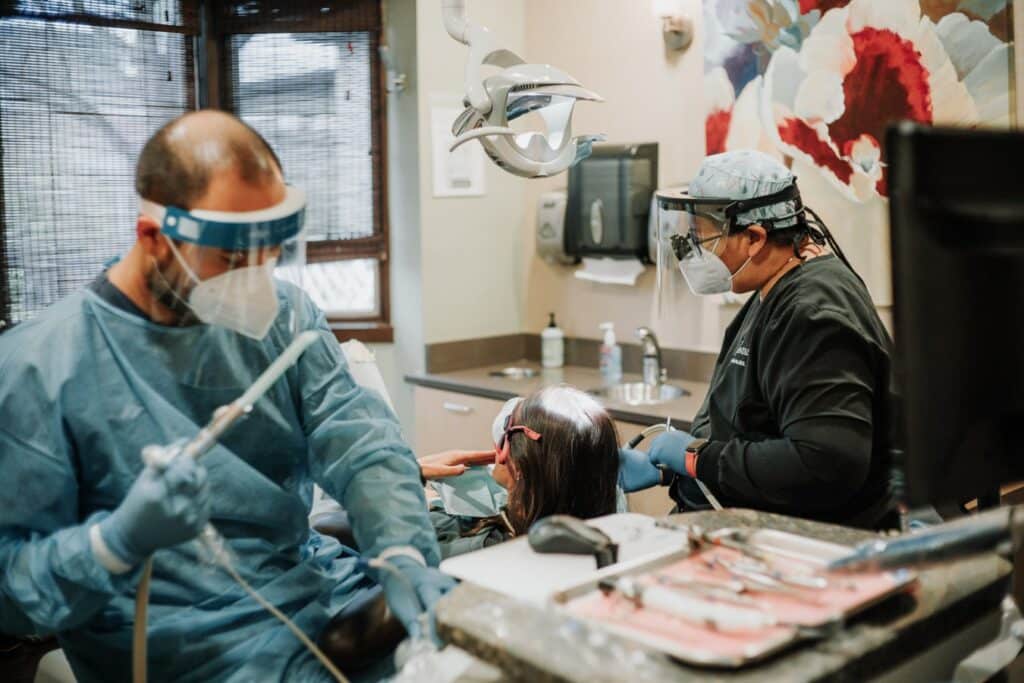
A complete, confident smile is more than just an aesthetic goal—it’s an investment in your overall quality of life. It’s the freedom to eat your favorite foods, laugh without hesitation, and speak with clarity. Dental implants offer a permanent, durable foundation for that confidence. But before you can enjoy the benefits, you need to understand the financial side. For many people in the Denver area, dental impant cost is a key part of the decision-making process. In this article, we’ll walk through the different components of the cost, explore financing options, and show you why this treatment is one of the best long-term investments you can make in yourself.
How Much Do Dental Implants Cost in Denver?
We frequently receive the same question from people in the Denver Metro Area – how much do dental implants cost in Denver? There are several factors, but we will give you a quick answer: Implant treatment costs in Denver vary from under $2,999 to well over $15,000.
Most would say that the advantages of dental implants far outweigh the initial cost. Dental implants give you the freedom to talk, laugh, eat, and smile confidently again after tooth loss. On this page, you will learn more about the factors that go into how much your dental implant treatment in Denver might cost.
Breaking Down the Cost of a Single Implant
When you’re looking at replacing a single missing tooth or single tooth implant, the total price tag is typically broken down into three key parts. Think of it like building something—you have the foundation, the connector, and the final visible piece. Each component has its own cost, and together they form the complete, functional tooth replacement that looks and feels natural.
Understanding these individual parts helps clarify where the money goes and why a high-quality implant is a worthwhile investment in your long-term oral health. The materials used, the precision required for placement, and the custom creation of your new tooth all contribute to the final cost.
The Implant Post, Abutment, and Crown
The first component is the implant post, a small titanium screw that acts as the new tooth root. This is surgically placed into your jawbone. Next is the abutment, which connects the post to your new tooth. Finally, the crown—the part that looks like a tooth—is custom-made to match your other teeth and attached to the abutment.
According to CareCredit, the average cost for a complete single dental implant can range from $1,500 to $6,000. The national average sits around $2,143, but this can vary based on the specifics of your case. This price covers all three essential components that work together to restore your smile.
Costs for Different Implant Solutions
If you’re missing more than one tooth, your options expand beyond single implants. Solutions like implant-supported bridges or full-arch replacements are designed to restore larger sections of your smile with fewer individual implants. These advanced treatments offer incredible stability and a natural appearance, but their costs are structured differently than a single implant. The price will depend on how many teeth are being replaced and the specific technique used by your dental surgeon. These solutions are transformative, providing a permanent fix that eliminates the hassles associated with traditional dentures or partials.
Implant-Supported Bridges
An implant-supported bridge is a great option when you have several missing teeth in a row. Instead of replacing each tooth with its own implant, this method uses two implants to anchor a bridge that holds three or more prosthetic teeth. This approach is more stable than a traditional bridge and helps preserve the health of your jawbone. It’s an efficient way to restore function and aesthetics to a larger gap in your smile. For patients seeking durability and a natural look, a fixed zirconia bridge can be an excellent choice. The average cost for an implant-supported bridge is around $5,195, making it a cost-effective solution for multiple missing teeth compared to placing individual implants for each one.
Full-Arch Replacements
For those missing most or all of their teeth in an upper or lower arch, a full-arch replacement is a life-changing solution. Often called “All-on-4” or “All-on-X,” this procedure uses just a few strategically placed implants (typically four to six) to support a full set of beautiful, permanent teeth. You get the security and function of a full smile without needing an implant for every single tooth.
According to GoodRx, a full-arch replacement can cost between $15,000 and $30,000 or more per arch. While it’s a significant investment, it provides a durable, long-term solution that allows you to eat, speak, and smile with complete confidence.
Additional Procedures That Affect Cost
The final cost of your dental implant treatment isn’t just about the implant itself. Several other procedures may be necessary to ensure the implant is successful and lasts a lifetime. These preparatory steps are crucial for creating a healthy foundation for your new tooth. From initial scans that map out your treatment plan to procedures that build up bone support, these additional services are tailored to your unique anatomy. Your dentist will walk you through exactly what you need during your consultation, so there are no surprises along the way.
What Your Dental Implant Quote in Denver Should Include?
When you see a wide range quoted for dental implant cost in Denver, it’s usually because not all estimates include the same things. Some advertised prices only cover the implant post itself and leave out essential parts of the treatment. A true, all-in dental implant cost should account for the surgical placement of the implant, the abutment that connects the implant to the tooth, and the custom crown that restores function and appearance. It should also factor in diagnostic imaging, follow-up visits, and any necessary preparatory procedures.
When comparing providers, always ask whether the quoted price includes bone grafting, sinus lifts, anesthesia or sedation, and post-surgical care. These steps are not optional add-ons in many cases. They are often required to ensure the implant heals properly and lasts in the long term. Understanding exactly what is included upfront helps you accurately compare costs and avoid unexpected expenses later in the process.
Initial Consultation and Imaging
Your journey begins with a thorough consultation, which includes a dental exam and advanced imaging like X-rays or a CT scan. This step is essential for your dentist to assess your jawbone health, plan the precise placement of the implant, and create a personalized treatment strategy.
If you don’t have dental insurance, GoodRx notes that these initial exams and X-rays can add between $200 and $450 to your total cost. This diagnostic phase is the blueprint for a successful outcome, ensuring your new implant has the best possible start. You can often find new patient forms online to fill out ahead of time to make this first visit even smoother.
Bone Grafting and Sinus Lifts
For a dental implant to be successful, it needs to fuse with a sufficient amount of healthy jawbone. If you’ve had a missing tooth for a while, you may have experienced bone loss in that area. A bone graft is a procedure that adds bone material to your jaw to create a solid foundation for the implant, which can cost around $600. If you need an implant in your upper jaw, a sinus lift might be required to create enough space, adding $1,500 to $2,500 to the cost. These procedures are vital for ensuring the long-term stability and success of your implant.
Anesthesia and Sedation
Your comfort during the implant procedure is a top priority. The cost of anesthesia or sedation is another factor to consider in your total treatment price. The type of sedation you choose will affect the cost, which can range from $50 to hundreds of dollars per hour, according to GoodRx.
Options can range from local anesthesia that numbs the area to deeper sedation for those with dental anxiety. Your dental team will discuss the best options to ensure you have a comfortable and stress-free experience during your surgery.
Other Key Cost Factors
Beyond the main components and preparatory procedures, a few other variables can influence the final price of your dental implants. These factors are often related to the specific materials used, the location of the tooth being replaced, and the overall complexity of your surgery.
Each of these elements requires a different level of skill, time, and resources, all of which are reflected in the cost. Discussing these details with your dental team will give you a complete picture of your investment.
Implant Materials: Titanium vs. Zirconia
Most dental implants are made from a titanium alloy, a biocompatible material that has been trusted for decades for its strength and ability to integrate with bone. However, some patients may opt for zirconia implants, which are a metal-free, ceramic alternative.
Zirconia can be a great choice for people with metal allergies or for those who want a white-colored implant post. As noted by GoodRx, these alternative materials may cost more than traditional titanium. The experienced professionals on our team can help you decide which material is the best fit for your specific needs and budget.
Location of the Tooth
Where the implant is placed in your mouth also plays a role in the overall cost. Replacing a front tooth, for example, often requires more detailed work to ensure the final result looks perfectly natural and matches the surrounding teeth.
This might involve more complex steps to shape the gums and create an ideal aesthetic outcome. Because of the extra precision and artistry involved, implants for highly visible teeth can sometimes be more expensive than those for molars in the back of your mouth.
Type of Implant Surgery
Not all implant surgeries are the same. The complexity of your individual case is a major factor in determining the cost. A straightforward implant placement in a healthy jawbone will be less expensive than a case that requires multiple extractions, bone grafting, and other preparatory work.
The more complex the surgery, the more time, skill, and resources are needed to ensure a successful outcome. Booking an implant specialist consultation colorado can help you understand your specific needs and plan the best approach. Seeing our team’s incredible results on our before and afters page can help you visualize the amazing transformations that are possible, no matter the complexity.
Are Dental Implants the Right Choice for You?
The success of your dental implant treatment will rely on the following oral states:
- Sufficient amount of bone in the jaw – Our team will take care of scans and x-rays.
- Clean and healthy mouths free of gum disease
- All tooth decay treated
Health Conditions and Candidacy
Your overall health plays a significant role in whether dental implants are the best path for you. Because the implant needs to fuse with your jawbone—a process called osseointegration—your body’s ability to heal is crucial. Certain health conditions, like uncontrolled diabetes or autoimmune disorders that affect healing, can increase the risk of complications. Smoking is another major factor, as it can restrict blood flow to the gums and slow down the healing process. During your consultation, it’s essential to be open about your medical history. This allows our team to get a complete picture and determine if you are a strong candidate for implants, ensuring the treatment is both safe and successful for your specific situation.
Potential Risks and Complications
While dental implants have an incredibly high success rate, it’s important to know that no surgical procedure is entirely without risk. Potential complications, though uncommon, can include infection at the implant site, damage to surrounding teeth or blood vessels, or nerve damage. In some cases, the implant may fail to integrate with the jawbone, which might require its removal. Choosing a highly experienced dental team is the best way to minimize these risks. An expert surgeon uses precise techniques and careful planning to ensure a smooth procedure and a successful outcome. You can see the results of our meticulous approach by viewing our before and after gallery, which showcases the life-changing smiles we’ve helped create for our patients.
What to Expect During the Dental Implant Procedure?
Dental implant procedures vary from remarkably simple to complex, which affects the total cost. In some cases, we can place your implants immediately, in others, we may need to rebuild bone that has atrophied before placing your implants. Other factors affecting the cost include the type of prosthetics (artificial teeth) we use and the number of implants that you need. The number of implants you “need” can also vary from dentist to dentist, based on their training, experience, and dental “philosophy.”
There are a number of patient factors like biting force, clenching habits, etc. which also affect the final number of implants for proper stress distribution. For example, in some patients dentists can build a full arch of permanent teeth supported by only four implants, whereas some patients based on their factors will need six or more. The dental implant procedure is thus, not always straightforward, the more complex the individual case, the more it could cost. However, once placed, dental implants can last for over two decades. For patients also seeking alignment improvements, options like Invisalign services can complement implants and help achieve a perfectly balanced, healthy smile.
What Factors Influence Dental Implant Costs?
Implant treatment costs can range from $2,999 to over $15,000.
Dental implant treatments vary widely, which is why it is important to request an estimate that includes the total cost of completing treatment. For example, some dentists provide quotes that do not include additional work you may need, such as bone grafting. In these scenarios, you could end up paying more than expected.
When you book your consultation at Dentistry of Colorado your dental specialist will provide you with a dental implant treatment plan where all fees and procedures will be suited to your individual needs and financing options will be presented.
Tooth implants are usually more costly than traditional alternatives like dentures. The implant cost in Denver relies on several factors, including the type of implant and procedure, how many teeth need to be replaced, and the number of implants that will be required for each need.
The Step-by-Step Implant Process
Understanding the journey to a new smile can make the entire process feel much more manageable. While your treatment plan will be tailored specifically to you, the dental implant procedure generally follows four key phases. From the initial chat to the final placement of your new tooth, each step is carefully planned and executed to ensure a durable, natural-looking result. Our team is here to guide you through every stage, making sure you feel comfortable and informed along the way.
1. Initial Consultation and Planning
Everything starts with a conversation. During your first visit, you’ll meet with one of our dental implant specialists to discuss if implants are the right solution for you. We’ll use advanced imaging like X-rays and 3D scans to get a clear picture of your jawbone health and structure. This allows us to create a precise, personalized treatment plan that outlines the entire process, timeline, and costs. It’s the perfect time to ask questions and learn about our financing and insurance options so you can make a confident decision about your care.
2. Implant Placement Surgery
Once your plan is set, the next step is the placement procedure. During this appointment, a small, biocompatible titanium post—which acts as the new tooth root—is surgically placed into your jawbone. Our expert surgical team performs this procedure with precision and care, ensuring you are comfortable throughout. This post serves as the strong anchor for your future crown, creating a stable foundation that is designed to last for decades with proper care.
3. Healing and Osseointegration
After the implant is placed, your body begins a remarkable process called osseointegration. This is where your jawbone naturally grows around and fuses with the titanium post, creating an incredibly strong and stable bond. This healing phase is essential for the long-term success of your implant and typically takes a few months. We’ll monitor your progress closely during this period to ensure everything is healing correctly before we move on to the final step of restoring your smile.
4. Abutment and Crown Placement
Once your jaw has fully healed, it’s time for the final touches. We will attach a small connector piece, called an abutment, to the top of the implant post. This piece sits just above the gumline and serves as the base for your new tooth. Finally, we secure your custom-crafted crown onto the abutment. Each crown is meticulously designed to match the color, shape, and size of your natural teeth, blending in seamlessly with your smile. You can see some of our stunning results on our before and afters page.
Recovery and Aftercare
Following your implant placement, it’s normal to experience some minor swelling, bruising, or discomfort for a few days. Most of our patients find that any discomfort is easily managed with over-the-counter pain relievers and subsides quickly.
We’ll provide you with detailed aftercare instructions to ensure your recovery is as smooth and comfortable as possible. This typically includes sticking to soft foods for a short period and maintaining your oral hygiene routine carefully. Long-term, caring for your implant is just like caring for your natural teeth: regular brushing, flossing, and routine dental check-ups are all you need to keep your new smile healthy and bright for years to come.
Are Dental Implants a Worthwhile Investment?
Dental implants provide a safe foundation to fix or replace teeth.
Dental implants are a great option for those with missing teeth. Losing a tooth affects how you look and how you chew. More importantly, in the long-term, teeth shift and the forces on your remaining teeth will increase. This can lead to further tooth loss in the future. You can rapidly spiral to having no teeth at all and might eventually require dentures. To make matters worse, tooth loss can also lead to bone loss, making implant solutions harder to be implemented and costs can rise dramatically.
Advantages of Dental Implants
- Permanent and durable
- Make dentures retentive and functional.
- Can be more cost-effective for a lot of years.
- Natural and comfortable fit
- Look and function like regular teeth.
- Don’t require modifications to adjacent teeth.
Longevity and Success Rates
When you’re considering a solution for missing teeth, you want something that will stand the test of time. The good news is that dental implants in Westminster are designed for durability. The implant post itself, which fuses with your jawbone, can easily last a lifetime—often well over 30 years with proper care. The crown attached to it, which is the part that looks like a tooth, may need to be replaced every 10 to 15 years due to normal wear and tear from chewing. This longevity makes implants a reliable and permanent fixture in your smile.
The success rates are just as impressive. Research consistently shows that dental implants have a success rate of around 97% over 10 years. With diligent oral hygiene, many last for decades without issue. This high rate is thanks to the biocompatible materials, like titanium, that integrate directly with the jawbone to create a strong, stable foundation. This process not only secures your new tooth but also helps prevent the bone loss that occurs after losing a tooth, making implants a fantastic investment in your long-term oral health.
How Do Implants Compare to Alternatives?
When you’re missing a tooth, it’s natural to explore all your options. For a long time, dental bridges and partial dentures were the go-to solutions. While they can fill a gap in your smile, they work very differently from dental implants and come with their own set of considerations. Understanding these differences is key to making a choice that feels right for your health, lifestyle, and long-term goals. Implants offer a modern approach that addresses not just the missing tooth but the underlying bone structure, providing a foundation that other methods can’t match. Let’s look at how they stack up against more traditional alternatives.
Dental Bridges
A dental bridge does exactly what its name suggests: it bridges the gap left by a missing tooth. This is done by placing crowns on the two adjacent teeth and fusing a replacement tooth in the middle. While this is a functional solution, its biggest drawback is the impact on those neighboring teeth. To fit the crowns, your dentist has to file down and alter what are often perfectly healthy teeth.
In contrast, dental implants are a standalone solution. They are placed directly into the jawbone without requiring any modifications to adjacent teeth, preserving your natural tooth structure and providing a secure foundation for a new tooth.
Partial Dentures
Partial dentures are another common alternative for replacing one or more missing teeth. These are removable appliances that can feel less stable and comfortable than a fixed solution like an implant. While they may seem more affordable upfront, they often don’t provide the same long-term value. Dental implants are designed for durability and can last for decades, making them a more cost-effective solution over time. Because they integrate with your jawbone, they also prevent the bone loss that can occur with missing teeth, helping to maintain your facial structure and prevent remaining teeth from shifting out of place.
Making Dental Implants More Affordable
The cost of dental implants is a significant investment in your long-term health and confidence, and it’s completely normal to wonder how you can fit it into your budget. The good news is that there are several ways to manage the expense, from using insurance benefits to exploring flexible payment plans. Understanding your options is the first step toward making your dream smile a reality. Let’s walk through the most common ways to make dental implants more affordable.
Does Dental Insurance Cover Implants?
This is one of the most common questions we hear, and the answer is: it depends on your plan. Dental insurance coverage for implants can vary quite a bit. Some private dental insurance plans may cover a portion of the procedure, often around 50% of the cost, but this is usually limited by a yearly maximum, which is typically about $1,500. It’s also common for insurance to cover certain parts of the treatment, like the final crown, but not the surgical placement of the implant post itself. The key is to look closely at your specific benefits to see what your plan offers for restorative or major dental procedures.
Understanding Your Plan’s Coverage
To get a clear picture of your out-of-pocket costs, you’ll need to review the details of your specific insurance plan. The total cost of your treatment can change based on several factors, including how many implants you need, the materials used, and whether you require additional procedures like a bone graft or sinus lift to prepare your jaw. We recommend calling your insurance provider directly for the most accurate information. Better yet, our team at Dental & Implant Centers of Colorado is happy to help you understand your benefits. We can review your plan and provide a detailed cost estimate during your consultation, so there are no surprises.
Medicare and Medicaid Considerations
If you have public health coverage, it’s important to know its limitations regarding dental implants. Original Medicare (Part A and Part B) generally does not cover routine dental care, and that includes dental implants. However, some Medicare Advantage (Part C) plans offer additional dental benefits, which might include partial coverage for implants. It’s worth checking the specifics of your Advantage plan. Medicaid coverage for adult dental care varies by state. In Colorado, while some dental services are covered, implants are typically only approved if they are deemed medically necessary, which is a high bar to meet.
Using Pre-Tax Funds like an FSA
If your employer offers a Flexible Spending Account (FSA), you have a great tool at your disposal. An FSA allows you to set aside pre-tax money from your paycheck specifically for out-of-pocket healthcare expenses. You can absolutely use these funds to pay for dental implants, including any costs not covered by your insurance. This is a smart way to reduce your overall taxable income while paying for your procedure with money that hasn’t been taxed, effectively giving you a discount on your treatment. Be sure to check your FSA contribution limits and plan your procedure accordingly.
Financing and Other Payment Options
Many people choose to finance their dental implant treatment, which allows them to break down the total cost into manageable monthly payments. Most dental offices, including ours, partner with third-party financing companies like CareCredit or offer in-house payment plans. While these options make treatment much more accessible, it’s important to be aware that they may come with interest and fees that can increase the total cost over time. At Dental & Implant Centers of Colorado, we are committed to transparency and will walk you through all available financing and insurance options to find a solution that fits your financial situation comfortably.
Exploring Your Dental Implant Options
- Implants for Individual Tooth Loss
- Multiple Dental Implants
- Full Mouth Reconstructions
- Same-day Implants/All-on-4
What’s Included in Your Free Consultation?
- Consultation with a treatment coordinator
- CT-Scan
- Finance Plan
If you want to find out more about dental implants in Denver, you can book a consultation at DICC and your dental specialist will provide you with the correct guidance and information. Get in touch now to get your dental implant consultation!
Frequently Asked Questions
Why is there such a wide price range for dental implants?
Think of a dental implant as a custom solution, not an off-the-shelf product. The final cost is tailored to your specific needs. The price reflects factors like the number of teeth being replaced, the materials you choose, and whether you need preparatory work like a bone graft to create a solid foundation. A simple, single implant will naturally cost less than a complex full-mouth reconstruction.
Are implants really worth the investment compared to dentures or bridges?
While options like dentures and bridges have a lower upfront cost, dental implants are a permanent investment in your long-term health. They are the only solution that functions like a natural tooth root, which prevents jawbone loss and keeps your facial structure intact. Plus, they don’t require altering healthy adjacent teeth, which can save you from more extensive dental work down the road.
Will my dental insurance help pay for my implants?
This is a great question, and the answer really depends on your specific insurance plan. Some policies cover a portion of the cost, while others may only contribute to the crown and not the surgical placement. The best way to get a clear answer is to review your benefits or let our team help you. We can check your coverage during your consultation to give you a precise estimate of your out-of-pocket costs.
What if I’ve been told I don’t have enough jawbone for an implant?
This is a common concern, but it doesn’t usually mean you can’t get an implant. Procedures like bone grafting are designed specifically to solve this problem. By adding bone material to your jaw, we can create the strong, stable foundation needed for the implant to be successful. This step ensures your new tooth will have the support it needs to last for decades.
How long does the entire dental implant process take from start to finish?
The process is a journey, not a single appointment, and the timeline varies for each person. After the implant post is placed, your jaw needs time to heal and fuse with it, which typically takes a few months. This healing phase is critical for long-term success. Once that bond is solid, we can then attach the final, custom-made crown. We will map out your entire personalized timeline during your initial consultation.
Key Takeaways
- Look beyond the implant price tag: Your total investment covers three key parts—the post, abutment, and crown—plus any essential prep work like bone grafts, ensuring a solid foundation for your new smile.
- Choose a solution that lasts a lifetime: Dental implants are a permanent fix that protects your jawbone and leaves healthy neighboring teeth untouched, offering superior long-term value compared to temporary options like bridges or dentures.
- Make your new smile fit your budget: You can make implants more affordable by using your dental insurance benefits, setting aside pre-tax FSA funds, and exploring flexible financing plans that break the cost into manageable payments.
For more insights, updates, and expert tips, follow us on LinkedIn.
