




Losing a tooth is more than a cosmetic issue—it triggers a chain reaction below the surface. Without a root for stimulation, your jawbone begins to shrink, which can alter your facial structure and cause surrounding teeth to shift. A single tooth implant is the only modern solution that truly stops this process. It doesn’t just fill the gap; it acts as a new tooth root, fusing with the bone to keep it strong and healthy. This makes the single tooth implant before and after transformation about so much more than a perfect smile. It’s about restoring your mouth’s underlying health for good.
Key Takeaways
- An Implant Stands on Its Own: Unlike a bridge, a single tooth implant doesn’t require altering healthy adjacent teeth. It fuses with your jawbone to create a permanent, standalone solution that protects your overall oral health.
- It’s a Worthwhile Investment in a Permanent Solution: The process is a multi-step collaboration with your dental team, but the result is a tooth designed to last a lifetime. With clear pricing and flexible financing, this long-term investment in your health and confidence is within reach.
- Long-Term Care is Surprisingly Simple: Maintaining your new implant is as easy as caring for your natural teeth. A consistent routine of daily brushing, flossing, and regular professional cleanings is all you need to protect your investment and keep your smile healthy.
What Is a Single Tooth Implant?
If you’re dealing with a missing or damaged tooth, you know it can affect everything from your confidence to how you eat. A single tooth implant is a modern, permanent solution designed to fix that. It’s the go-to option for replacing a tooth that’s been broken, needs to be pulled, or was even missing from birth. Unlike older methods like bridges, a dental implant doesn’t just fill the gap—it becomes a part of you, helping to keep your jawbone strong and the neighboring teeth in their proper place.
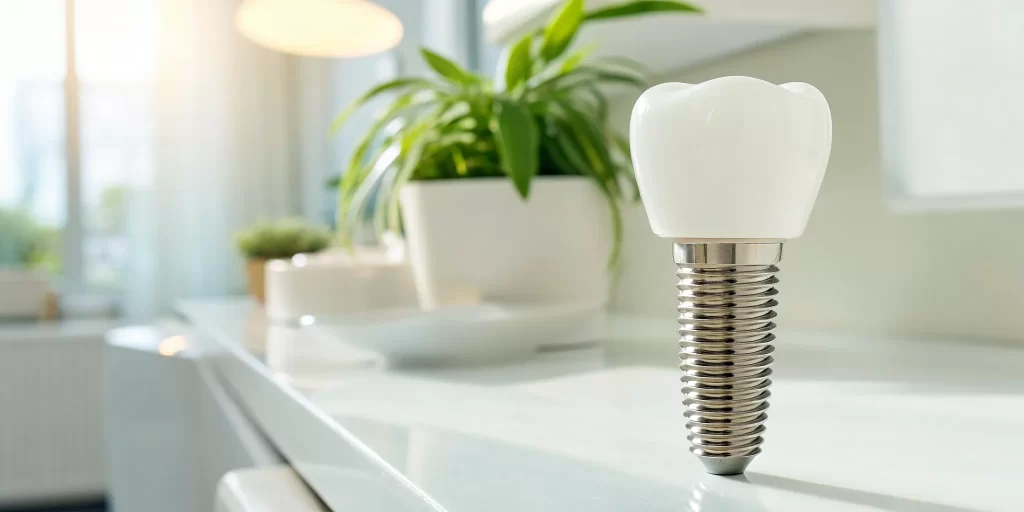
Think of it as building a new tooth from the ground up. The process involves three main parts: a titanium post that acts as the new root, a connector piece called an abutment, and a custom-made crown that looks and feels just like a natural tooth. This approach gives you a replacement that’s not only beautiful but also incredibly strong and durable. It’s a way to fully restore your smile’s appearance and function without compromising the health of your other teeth.
The Titanium Post: Your New Tooth’s Anchor
The magic of a dental implant starts with a small, screw-like titanium post. This post serves as the new root for your tooth and is the key to the implant’s stability. During a simple surgical procedure, one of our expert dentists will place this post directly into your jawbone where the original tooth was. Titanium is biocompatible, meaning your body accepts it as its own. This allows the post to create a solid, permanent foundation for your new tooth, ensuring it won’t slip or shift.
The Custom Crown: Your New, Natural-Looking Tooth
Once the foundation is set and fully healed, it’s time for the finishing touch: the crown. This isn’t a one-size-fits-all cap; it’s a custom-designed ceramic tooth that’s meticulously crafted to match your smile perfectly. We consider the color, shape, and size of your surrounding teeth to create a crown that blends in seamlessly. The goal is for your new tooth to look so natural that no one—not even you—can spot the difference. You can see the incredible before and after results for yourself.
How Your Implant Becomes Part of Your Jawbone
The real strength of a dental implant comes from a natural process called osseointegration. It sounds technical, but it simply means that your jawbone grows around and fuses directly with the titanium post. This creates an incredibly strong and stable bond, essentially making the implant a permanent part of your jaw. This fusion process is what sets implants apart from any other tooth replacement option. It typically takes a few months, but it’s this crucial healing period that ensures your new tooth has a rock-solid foundation built to last a lifetime.
How Long Do Single Tooth Implants Last?
When you invest in a dental implant, you’re choosing a solution built for the long haul. Unlike other options that may need frequent adjustments or replacements, a single tooth implant is designed for durability. The longevity comes down to its two main components: the titanium post that anchors into your jaw and the custom crown that restores your smile. Each part has its own impressive lifespan, and with the right care, they work together to provide a permanent fix for a missing tooth.
The Lifespan of the Implant Post
The titanium post is the core of your dental implant, and it’s engineered to last a lifetime. Once it’s placed in your jaw, the process of osseointegration begins, and your bone fuses directly to the post. This creates an incredibly strong, stable foundation that becomes a permanent part of your body. With proper care and regular dental check-ups, studies show that these posts can last for 25 years or even longer. This remarkable durability is why dental implants are considered the gold standard for tooth replacement—they don’t just fill a gap, they fully restore the root structure for a lasting result.
The Durability of the Dental Crown
While the implant post is protected below the gumline, the custom crown does all the daily work of chewing and is exposed to normal wear and tear. Because of this, the crown may need to be replaced after several years. However, with great oral hygiene—including daily brushing, flossing, and regular professional cleanings—a high-quality ceramic crown can easily last for 10 to 15 years or more. Think of it like the tires on a car; the car itself is built to last, but the parts that see the most action may eventually need an update. We make this process simple and discuss all long-term care and financing options upfront.
Is a Single Tooth Implant Your Best Option?
When you’re missing a tooth, it’s easy to feel overwhelmed by the different replacement options. You might have heard about bridges or partial dentures, and while they can fill a gap, they work very differently than a dental implant. Understanding these differences is the key to making a choice you’ll be happy with for years to come. A single tooth implant is often considered the best solution because it’s the only one that replicates the entire structure of a natural tooth, from root to crown.
This isn’t just about looks; it’s about function and long-term health. An implant stands on its own, integrates with your body, and helps maintain the health of your jawbone and surrounding teeth. Other options might seem simpler or less expensive upfront, but they come with trade-offs that can affect your oral health down the road. Let’s walk through how a dental implant stacks up against the alternatives so you can see why it’s the preferred choice for our patients and dentists alike.
Why Choose an Implant Over a Dental Bridge?
A dental bridge is a traditional way to replace a missing tooth. It works by literally “bridging” the gap with a false tooth that’s held in place by crowns attached to the healthy teeth on either side. The biggest issue with this approach is that your dentist has to file down those healthy neighboring teeth to fit the crowns over them. This permanently alters teeth that were perfectly fine to begin with, making them more vulnerable to future problems.
An implant, on the other hand, is a standalone solution. It’s anchored directly into your jawbone and doesn’t rely on any other teeth for support. This preserves the integrity of your healthy teeth and provides a much stronger, more stable foundation for your new tooth.
Avoiding Long-Term Problems with Bridges
While a bridge might seem like a straightforward fix, the preparation process can create issues later on. When healthy teeth are filed down to support a bridge, their protective enamel is permanently removed. This makes them weaker and more prone to decay or sensitivity over time. Essentially, you’re compromising two healthy teeth to replace one missing tooth. Choosing a dental implant avoids this problem entirely. Because it’s anchored directly into the jawbone, it functions independently and doesn’t put any stress on your other teeth. This approach not only gives you a stronger, more reliable replacement but also protects your overall oral health for the long haul by leaving your healthy teeth completely untouched.
How Implants Compare to Partial Dentures
A removable partial denture is another option you might consider. It consists of a false tooth attached to a plastic base that’s designed to match the color of your gums. While it fills the space, it essentially just rests on top of your gums and can be held in place with small metal clasps. Many people find partial dentures to be uncomfortable or unstable, causing them to slip while eating or talking.
More importantly, because a denture doesn’t stimulate the jawbone like a natural tooth root does, the bone in that area can begin to shrink over time. This can change the shape of your face and affect your overall oral health. Implants prevent this by fusing with the bone, keeping it strong and healthy.
A Permanent Solution for a Missing Tooth
When you’re investing in your smile, you want a solution that will stand the test of time. Dental bridges and partial dentures typically need to be replaced every 5 to 15 years due to normal wear and tear. This means more time in the dental chair and additional costs over your lifetime. A dental implant, however, is designed to be a permanent solution.
With proper daily care and regular check-ups, your implant can last for decades—or even the rest of your life. This incredible durability makes it the most reliable and cost-effective choice in the long run. We believe in making this lasting solution accessible, which is why we offer a variety of financing and payment plans to fit your budget.
Understanding the Treatment Timeline Comparison
It’s true that the timeline for a dental implant is longer than for a bridge or partial denture, but that extra time is what makes it a permanent solution. The process is a carefully planned collaboration between you and your dental team. After the titanium post is placed, your body needs a few months for osseointegration—the process where your jawbone fuses with the implant. This healing period is essential for creating the rock-solid foundation that allows your new tooth to last a lifetime. In contrast, bridges and dentures can be completed much faster, often in just a few weeks, but they are not designed to be permanent. That initial time investment for an implant means you avoid the cycle of replacements and future dental work that other options often require.
What to Expect During Your Implant Procedure
Getting a dental implant is a multi-step process, but it’s more straightforward than you might think. We handle everything with precision and care, ensuring you’re comfortable and informed from start to finish. Think of it as a collaborative project to rebuild your smile, with our team guiding you every step of the way. The entire process is broken down into three main phases: creating your plan, placing the implant, and finally, attaching your beautiful new tooth.
Step 1: Creating Your Personalized Implant Plan
Everything starts with a conversation. During your first visit, you’ll sit down with one of our specialists to talk about your goals and ask any questions you have. We’ll take a close look at your oral health, using advanced imaging to assess your jawbone. If you have a single missing, broken, or failing tooth, we’ll confirm if a dental implant is the best way to restore your smile and chewing ability. From there, we’ll create a treatment plan tailored specifically to you. Our entire team of experts is here to make sure your plan fits your needs perfectly.
Step 2: Placing the Implant Post
Once your plan is ready, we’ll schedule the procedure to place the implant. This involves positioning a small, biocompatible titanium post into your jawbone to act as a new tooth root. In some cases, we can place the implant on the same day a damaged tooth is removed. After the post is placed, your body begins a natural process called osseointegration, where the jawbone fuses with the implant. This creates an incredibly strong foundation. This healing period is crucial for long-term success, and we’ll provide a temporary tooth so you never have to go without a smile.
Step 3: Healing and Osseointegration
After the titanium post is placed, the most important part of the process begins. This is the healing phase, where a natural process called osseointegration takes place. It sounds complex, but it’s actually pretty amazing: your jawbone grows around and fuses directly with the titanium post. This creates an incredibly strong and stable bond, essentially making the implant a permanent part of your jaw. This fusion is what sets a dental implant apart from any other tooth replacement option. It typically takes a few months for this to complete, but it’s this crucial period that builds a rock-solid foundation for your new tooth. This integration not only provides unmatched strength but also helps maintain the health of your jawbone, preventing the bone loss that often occurs after losing a tooth.
Step 3: Attaching Your New Tooth
After the implant has fully integrated with your jawbone, you’ll come back for the final step. We attach a small connector, called an abutment, to the implant post. Then, we secure your new, custom-designed ceramic crown on top. We meticulously craft this crown to match the color, shape, and size of your surrounding teeth, ensuring it blends in seamlessly. The goal is a strong, stable, and natural-looking tooth that lets you eat and smile with complete confidence. You can see the incredible transformations in our gallery to get an idea of the final result.
Your Recovery: What to Expect After Implant Surgery
Once your implant is placed, your body begins the important work of healing. This recovery phase is just as crucial as the procedure itself for ensuring your new tooth is strong, stable, and lasts a lifetime. While every patient’s experience is unique, knowing what to expect can help you feel prepared and confident. Our team will give you detailed post-op instructions, but here’s a general guide to help you through the healing process. Following these steps carefully will set you up for a smooth recovery and fantastic results with your dental implants.
The First 48 Hours: Your Game Plan
The first two days after your surgery are all about rest and care. Your main job is to take it easy and allow your body to heal. Plan on clearing your schedule of any strenuous activities—this means no gym sessions, heavy lifting, or intense running. Gentle rest helps direct your body’s energy toward the surgical site. You’ll likely experience some swelling, which is a normal part of the healing process. Applying an ice pack to the outside of your cheek for 15-20 minutes at a time can help reduce swelling and soothe the area. Our expert team is always here to answer any questions you have during this initial period.
Returning to Your Normal Routine
After the first couple of days, you can gradually ease back into your normal activities. While the complete healing process, where the implant fuses with your jawbone, takes a few months, your daily life will get back to normal much sooner. The best part? Once healed, maintaining your new implant is just like caring for your natural teeth. A simple routine of daily brushing, flossing, and regular check-ups is all you need to protect your investment. With consistent care, the implant post itself is designed to last a lifetime, providing a permanent and stable solution. This straightforward approach to long-term care is one of the biggest benefits of choosing a dental implant to restore your smile.
How to Reduce Swelling and What to Eat
Managing swelling is key to staying comfortable. For the first 24 hours, continue using ice packs intermittently. After that, you can switch to a warm, moist compress to help ease any lingering tenderness. When it comes to food, think soft. For the first few days, stick to a diet of things like yogurt, smoothies, applesauce, mashed potatoes, and lukewarm soups. It’s important to avoid anything hot, spicy, crunchy, or hard that could irritate the implant site. Also, try to chew on the opposite side of your mouth. This simple step protects the implant as it begins to heal and integrate.
Dietary Guidelines for the First 24 Hours
For the first day, your diet should be exclusively liquids and very soft foods. The goal is to get the nutrition you need without putting any pressure on the new implant site. Think of things you don’t need to chew at all. Smoothies (without seeds), lukewarm soups, yogurt, pudding, and applesauce are all excellent choices. It’s also critical to avoid hot foods and drinks, as heat can increase swelling and discomfort. Stick to cool or room-temperature options to keep the area calm. Staying hydrated is important, but be sure to drink directly from a glass—do not use a straw, as the suction can dislodge the essential blood clot forming at the surgical site.
Your Healing Timeline and Follow-Up Appointments
Patience is a virtue during the full healing timeline. The magic of a dental implant happens over several months as it fuses directly with your jawbone in a process called osseointegration. This creates the incredibly strong foundation for your new tooth. We will schedule follow-up visits to monitor your progress and make sure everything is healing perfectly. Once the implant is fully integrated and secure, we’ll have you come back in to place your beautiful, custom-made crown. Soon enough, you’ll be able to see your own amazing transformation in our gallery of before and afters.
See the Transformation: Single Tooth Implant Before & Afters
Seeing is believing, right? When you’re considering a dental implant, looking at photos of real patient outcomes can make all the difference. It helps you visualize what’s possible for your own smile and builds confidence in the process. Our Before & Afters gallery is filled with stories of transformation, but it’s also helpful to understand the journey from that first procedure to the final, beautiful result. Let’s walk through what you can expect to see at each stage.
Restoring Your Smile’s Balance
Let’s be real: the area will be a little tender right after your implant is placed. You can expect some soreness and mild bleeding, especially within the first 24 hours. This is a completely normal part of the healing process. The good news is that for a single implant, the initial recovery is often quite fast—many people feel back to normal in just a couple of days. We’ll send you home with clear, simple instructions on how to care for the area, what to eat, and how to manage any discomfort. Our goal is to make your healing as smooth and easy as possible.
The Final, Seamless Result
After your implant has fully integrated with your jawbone, it’s time for the most exciting part: getting your new tooth. We attach a custom-designed ceramic crown to the implant post, and this is where the magic happens. This isn’t a one-size-fits-all solution; our team meticulously designs the crown to fill the gap perfectly. We also match the color, shape, and size to your surrounding teeth, creating a completely seamless and harmonious look. The final result is a strong, functional, and beautiful tooth that completes your smile. You can learn more about our approach to dental implants and see how we tailor each one to the individual.
A Look That’s Naturally You
Our ultimate goal is for your new implant to look so natural that no one—not even you—can tell it’s an implant. We achieve this by paying close attention to the smallest details, from the way the crown emerges from the gum line to its subtle texture and shade. It’s about more than just filling a space; it’s about restoring your smile’s unique character. When you can laugh, talk, and eat without a second thought, we know we’ve done our job right. Hearing our patients say they’ve gotten their confidence back is the best part of what we do, and you can read their stories in their own words on our testimonials page.
Confidence From Every Angle
When you browse before-and-after photos, you’ll see the incredible technical skill that goes into placing a single implant. But I encourage you to look beyond the close-ups. Notice the change in each person’s overall expression and the confidence in their full smile. A single missing tooth can make you feel self-conscious, but restoring it can have a huge impact on how you feel every day. Seeing these transformations helps you understand the true value of an implant: it’s an investment in your health, your happiness, and your confidence for years to come.
How Do Implants Compare to Natural Teeth?
When you lose a tooth, the goal is to find a replacement that feels and looks just like the real thing. While nothing can perfectly replicate what nature gave you, a dental implant is by far the closest and most effective solution available. It’s designed not just to fill a gap, but to fully integrate with your body, restoring your smile’s appearance, function, and underlying health. Let’s break down how they stack up.
Appearance: A Flawless, Natural Match
One of the biggest concerns people have is whether a replacement tooth will look fake. With a single tooth implant, that worry disappears. The visible part of the implant, the crown, is custom-made to be a perfect twin to your surrounding teeth in color, shape, and size. Our team meticulously designs it to create a seamless and harmonious look, ensuring it blends in so well that no one will know it’s an implant. You can see the incredible, natural-looking results for yourself in our before and after gallery. The final restoration isn’t just about filling a space; it’s about completing your smile in a way that looks and feels completely natural.
Function: Biting and Chewing with Confidence
A dental implant doesn’t just look like a real tooth—it works like one, too. The magic is in the titanium post that fuses directly with your jawbone, a process called osseointegration. This creates an incredibly strong and stable base for your new tooth, mimicking the function of a natural root. This means you can eat, speak, and smile with total confidence. Forget worrying about your tooth slipping or avoiding your favorite crunchy or chewy foods. Unlike other options that rest on the gums, an implant is a permanent, fixed solution that restores your full biting power and feels completely comfortable and secure. Our dental implant solutions are designed for this exact purpose.
Health: How Implants Preserve Jawbone Health
Beyond looks and function, a dental implant offers a critical health benefit that other tooth replacement options don’t: it preserves your jawbone. When you lose a tooth, the bone that once supported it begins to shrink away from lack of use. A dental implant acts as an artificial tooth root, stimulating the jawbone and keeping it strong and healthy. This prevents bone loss and protects your facial structure. Even if you’ve experienced some bone deterioration, it doesn’t mean an implant is off the table. We can often perform a bone graft to add strength and volume, creating a solid foundation for a successful implant. This holistic approach is a core part of our dental services.
Are You a Good Candidate for a Single Tooth Implant?
Deciding on a dental implant is a big step, and it’s completely normal to wonder if it’s the right choice for you. While dental implants are a fantastic, long-term solution for a missing tooth, a few factors determine if you’re an ideal candidate. The great news is that most people are! The key is to look at your oral health, your overall health, and the condition of your jawbone.
Think of it this way: for a new plant to thrive, it needs healthy soil. Similarly, a dental implant needs a solid foundation to be successful. Our team will walk you through a complete evaluation to make sure everything is perfect for your new tooth. Let’s break down what we look for.
The High Success Rate of Dental Implants
It’s natural to want assurance that you’re making a sound investment in your health. The great news is that single tooth implants have an outstanding track record, with success rates consistently reported at 95% or higher. This incredible reliability isn’t by chance; it’s due to a natural biological process called osseointegration. This is where your jawbone grows around and fuses directly with the biocompatible titanium post, creating a permanent, rock-solid foundation. Because of this powerful bond, the implant post itself is designed to last for decades—often for a lifetime—with proper care. While the custom crown on top may eventually need replacement from normal wear and tear, the underlying implant provides a lasting solution that makes it the most dependable and cost-effective choice for restoring your smile. Our team sees these successful dental implant outcomes every day.
Why Healthy Gums and Jawbone Are Key
The success of a dental implant hinges on having enough healthy jawbone to support it. After a tooth is lost, the bone in that area can start to shrink over time. That’s why a strong, dense jawbone is the perfect home for the titanium post to integrate and become secure. We also look for healthy gums. If you have signs of gum disease, we’ll need to address that first to create a healthy environment for your implant. A healthy mouth is the best starting point for a restoration that can last a lifetime.
How Your Overall Health Plays a Role
Because placing an implant is a surgical procedure, your general health plays a part in how well you heal. We’ll want to know about your full health history during your consultation. Conditions like uncontrolled diabetes or habits like smoking can sometimes slow down the healing process and affect the long-term success of the implant. Our goal is to ensure you have the smoothest recovery and the best possible outcome. By understanding the full picture, our expert dental team can create a personalized plan that sets you up for success from day one.
Age and Jaw Development Considerations
While there’s generally no upper age limit for getting a dental implant, there is a lower one, and for a very good reason. Your jaw needs to be fully grown before we can place an implant. Think of it like this: you wouldn’t build a permanent structure on a foundation that’s still settling. For younger patients, especially teenagers, the jaw is still developing and changing. Placing an implant too early can lead to issues down the road as the surrounding teeth and bone continue to shift. Since a dental implant is designed to be a permanent part of your smile, we want to ensure it’s placed at the perfect time for lifelong success. Waiting until your jaw development is complete means your new tooth will stay in the right position, maintaining the harmony and function of your smile for decades to come.
What If You Need a Bone Graft?
Hearing you don’t have enough jawbone for an implant can feel discouraging, but it’s usually not the end of the road. In fact, it’s a common situation we handle all the time. If your jawbone isn’t dense enough, a procedure called a bone graft can help. A bone graft adds bone material to the area, building it up to create a sturdy foundation for the implant. Even if you don’t have enough bone initially, this straightforward procedure can make a successful implant possible. It’s one of the many advanced services we offer to ensure more people can benefit from this life-changing solution.
How Much Does a Single Tooth Implant Cost?
Let’s talk about one of the most common questions we hear: “How much does a single tooth implant cost?” It’s a completely valid question, and we believe in being transparent about the investment you’re making in your smile and long-term health. While a dental implant is a significant purchase, it’s also a permanent solution that protects your jawbone and functions just like a natural tooth, making it an incredible value over a lifetime.
The final cost is unique to your specific needs. It depends on factors like the location of the tooth, the materials we use, and whether you need any preparatory work, like a bone graft, to ensure the implant has a solid foundation. During your consultation, we’ll walk you through a detailed treatment plan with a clear breakdown of all the costs involved—no surprises. We want you to feel confident and informed every step of the way. Our team is also here to help you explore all the payment and financing options available to make your new smile a reality.
What’s Included in the Price?
The cost for a single tooth implant typically ranges from $3,000 to $4,500. This price includes the three main parts: the titanium post that acts as the root, the abutment that connects the post to the crown, and the custom-made crown that looks and feels like your natural tooth. The final price can vary based on the complexity of your case. For example, if you need a bone graft to strengthen your jawbone before the implant can be placed, that will be an additional cost. We’ll give you a precise, all-inclusive quote during your initial consultation so you know exactly what to expect.
Breaking Down the Costs: Post vs. Crown
When you see the price for a dental implant, you’re looking at the cost of three distinct, high-tech components working together. First is the titanium post, which is the actual implant that gets placed in your jawbone to serve as the new root. Next is the abutment, a small connector piece that sits on top of the implant and holds the crown securely in place. Finally, there’s the custom-made crown, which is the beautiful, visible part of your new tooth. Each piece is essential for creating a permanent, functional, and natural-looking dental implant, and the total cost reflects the materials, expertise, and craftsmanship required for all three.
How Crown Materials Affect the Final Price
The material used for your crown can also influence the final cost. We typically use high-quality porcelain or zirconia because they offer the best combination of strength and aesthetics, allowing us to create a tooth that looks incredibly natural. The choice of material might depend on the location of the implant—for example, a molar needs to withstand more chewing force than a front tooth. Beyond the crown, other factors unique to your case, like needing a bone graft to build up your jawbone, can also affect the total investment. Our team will discuss all of these variables with you to create a clear, personalized plan that fits your specific needs and budget.
Will Your Dental Insurance Cover an Implant?
Navigating dental insurance can feel complicated, but our team is here to help. Coverage for dental implants varies widely between insurance providers and plans. Some plans cover a portion of the cost, while others may not cover implants at all, sometimes considering them a cosmetic procedure. The best first step is to contact your insurance provider directly to get a clear understanding of your specific benefits. Our administrative team has years of experience working with insurance companies and can help you maximize your coverage and file the necessary paperwork. We’re committed to making the financial side of things as smooth as possible for you.
Flexible Payment Plans to Fit Your Budget
We believe that everyone deserves a healthy, confident smile, and finances shouldn’t stand in the way. That’s why we offer several flexible financing and payment plans to fit your budget. Whether you prefer to pay in installments or use a third-party financing option like CareCredit, we can help you find a solution that works for you. Our goal is to make this life-changing treatment accessible. During your consultation, we can discuss these options in detail and help you with the application process. Your new smile is within reach, and we’re here to help you achieve it.
Understanding Warranties for Your Implant
When you make a significant investment in your health, like a dental implant, you want to know it’s protected. It’s smart to ask about warranties, and it’s helpful to know they often come in two parts. The titanium post that acts as your new tooth root typically includes a limited warranty from the manufacturer, which covers any defects in the materials. The custom crown that sits on top is separate. While these warranties offer a great safety net, the best guarantee for your implant’s long-term success is your own daily care. With consistent brushing, flossing, and regular check-ups, you are actively protecting your investment for decades. Our expert team is always happy to walk you through the specific details during your consultation.
How to Care for Your New Implant
One of the best things about a single tooth implant is how seamlessly it fits into your life—and that includes caring for it. You don’t need to buy special equipment or learn a complicated new routine. The goal is simple: keep your gums healthy and the area around your implant clean. Healthy gums are the foundation that will support your implant for decades, so giving them daily attention is the key to long-term success. Think of it as protecting your investment in a complete, confident smile.
Your new implant is made from biocompatible titanium and a durable porcelain crown, but the living tissue around it—your gums and jawbone—needs care to stay strong. Plaque can still build up around an implant just as it does on a natural tooth, which can lead to gum inflammation or infection if left unchecked. That’s why a consistent care routine is so important. It’s not about doing anything difficult; it’s about being consistent. With a few simple habits, you can ensure your new tooth looks and feels fantastic for a lifetime. It all comes down to a combination of great at-home care and regular visits with our team to make sure everything stays in perfect shape. We’ll walk you through everything you need to know, so you can feel confident and secure with your beautiful new smile.
Your Daily Routine for a Long-Lasting Implant
The good news is that maintaining your dental implant is a lot like taking care of your natural teeth. There’s no steep learning curve here! Your daily routine should include brushing twice a day with a soft-bristled toothbrush and flossing at least once a day. It’s especially important to clean around the implant post where it meets the gum line to prevent plaque from building up. Using a water flosser or interdental brushes can be a great way to reach this area effectively. An antibacterial, alcohol-free mouthwash can also help keep your gums healthy and your breath fresh.
Lifestyle Habits to Protect Your Implant
Beyond your daily cleaning routine, a few simple lifestyle choices can make a big difference in protecting your implant for the long haul. If you smoke, it’s a good idea to consider quitting, as smoking can slow down healing and increase the risk of complications. It’s also smart to be mindful of what you eat. While your implant is incredibly strong, avoid chewing on extremely hard things like ice or hard candy, which could potentially damage the porcelain crown. The most important habit, however, is scheduling regular check-ups and cleanings. These visits allow our team to monitor your implant, check your gums, and ensure everything is healthy. Consistent professional care is the best way to protect your investment and keep your entire smile in top shape.
Protecting Your Implant from Grinding (Bruxism)
Do you ever wake up with a sore jaw or a dull headache? You might be grinding your teeth at night, a common condition called bruxism. This unconscious habit can put a tremendous amount of pressure on your natural teeth and your new implant, potentially leading to complications over time. The good news is there’s a simple solution. We can create a custom-fitted night guard for you to wear while you sleep. This comfortable device acts as a protective cushion between your upper and lower teeth, absorbing the pressure from grinding. If you think you might be grinding your teeth, be sure to mention it to us. Protecting your dental implant from this extra stress is a key step in ensuring it lasts a lifetime.
Why Regular Dental Check-ups Are Crucial
Even with the most diligent home care, regular professional cleanings are essential to the longevity of your implant. These appointments allow our hygienists to use specialized tools to clean areas you might have missed, ensuring no plaque or tartar builds up around your implant. More importantly, these visits give our dentists a chance to check on the implant, the custom crown, and the health of your surrounding gums and bone. By seeing you regularly, our expert team can spot and address any potential issues long before they become serious problems, keeping your smile healthy and strong.
How to Spot Potential Issues Early
While implant complications are rare, it’s always smart to know what to look for. Being proactive about your oral health is your best defense. Pay attention to how your implant feels. If you notice any persistent pain, swelling, or bleeding around the implant site, it’s a sign you should give us a call. You should also let us know if the implant ever feels loose or like it’s shifting. Catching these things early makes them much easier to address. Your dental implant is designed to be a stable, permanent solution, so any change is worth a quick check-in with our team.
Related Articles
- Dental Implants vs Bridges: Which Should You Choose?
- Dental Implants Cost Westminster CO: A Full Breakdown
- Dental Implants Denver: Your Guide to a New Smile
- The Ultimate Dental Procedures List (With Costs)
Frequently Asked Questions
Does the dental implant procedure hurt? This is the number one question I get, and it’s completely understandable to be nervous. The procedure itself is not painful. We use local anesthesia to make sure the area is completely numb, so you’ll only feel some slight pressure. Afterward, it’s normal to have some soreness and tenderness for a few days, but most people say it’s very manageable with over-the-counter pain relievers and is less uncomfortable than having a tooth pulled.
How long does the entire process for a single implant take? Patience is key here, as the process is designed for long-term success. From your first consultation to your final crown, the entire timeline typically ranges from four to six months. The longest part of this is the healing period after the implant post is placed. This is when your jawbone fuses with the implant to create that super-strong foundation, and it’s a crucial step we can’t rush.
Will I have a gap in my smile while the implant is healing? Absolutely not! We understand that you need to be able to smile and feel confident throughout the entire process. While your implant is healing and integrating with your jawbone, we will provide you with a temporary, natural-looking tooth. This ensures your smile stays complete from the day you leave our office until your permanent crown is ready.
Is an implant really a better long-term investment than a cheaper option like a bridge? Yes, and for a few important reasons. While a bridge might have a lower upfront cost, it often needs to be replaced every 10 to 15 years. It also requires filing down two perfectly healthy teeth to support it. An implant is a one-time investment that can last a lifetime with proper care. It stands on its own without affecting other teeth and also prevents jawbone loss, protecting your overall oral health for decades to come.
What happens if my implant ever feels loose? A fully healed implant should feel completely solid and stable, just like a natural tooth. If you ever feel any movement, it’s important to call our office right away. While this is very rare, it could be something as simple as the crown needing to be tightened, or it could be a sign of an issue that needs our immediate attention. Don’t wait—let us take a look to ensure everything stays healthy.
